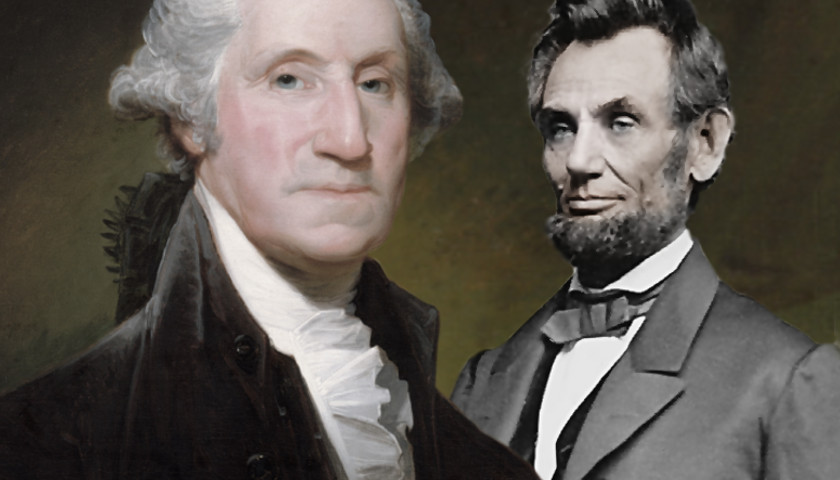
“This is Washington’s Birthday,” sings Fred Astaire in the movie classic Holiday Inn, “And I can’t tell a lie.” Americans of a certain age no doubt can remember when the day we now know as Presidents Day was called Washington’s Birthday, invariably celebrated on February 22. George Washington was officially born on February 11, 1731 according to the old Julian calendar; February 22, 1732 according to the Gregorian calendar now in use. In the early days of our nation Washington was universally revered for his role in the Revolution and the founding of the Republic; unofficial celebrations to mark his birthday were held throughout the nineteenth century.
Read the full storyAuthor: Intellectual Takeout
Commentary: Halloween’s Roots in the Christian Tradition
Conventional wisdom holds that Halloween is essentially a secular and pagan holiday, the result of the Christian Church appropriating an ancient Celtic harvest festival. But one strain of critical opinion tends to the view that the holiday was thoroughly Christian from the start.
In the church calendar, Halloween (All Hallows’ Eve) is the beginning of a triduum of holidays commemorating the dead, continuing with All Saints’ Day on November 1 and All Souls’ Day on November 2. It was common practice among the early Christians to commemorate the deaths of various martyrs at the places of their demise. In the 9th century Pope Gregory IV decided that the time had come for a single universal feast to commemorate all the saints, as well as a day to pray for one’s deceased loved ones. The pope chose a time of year—the end of harvest and the beginning of winter—when many people’s thoughts naturally turned to the idea of death.
The macabre aspects which have grown up around Halloween in modern times—the emphasis on witches, ghosts and other ghoulish figures, the glorification of gore and violence—have led many people to doubt its Christian character and many Christians to shun it. Yet according to some historians, these demonic elements of the holiday originated from a distinctively medieval Christian idea of exorcising evil by ridiculing it. Christian theology holds that Jesus conquered sin and death; and death loses its sting precisely when one is able to laugh at it.
Read the full storyCommentary: History of Presidents Day
“This is Washington’s Birthday,” sings Fred Astaire in the movie classic Holiday Inn, “And I can’t tell a lie.” Americans of a certain age no doubt can remember when the day we now know as Presidents Day was called Washington’s Birthday, invariably celebrated on February 22. George Washington was officially born on February 11, 1731 according to the old Julian calendar; February 22, 1732 according to the Gregorian calendar now in use. In the early days of our nation Washington was universally revered for his role in the Revolution and the founding of the Republic; unofficial celebrations to mark his birthday were held throughout the nineteenth century.
Read the full storyCommentary: Getting Serious About America’s Literacy Time Bomb
The 2024 National Assessment of Educational Progress, better known as the Nation’s Report Card, came out in January, and student reading scores slipped once again. About 40% of fourth-graders and 33% of eighth-graders scored below the test’s basic level. Although states like Alabama provided bright spots in this grim picture with improvement in reading and math, the continued overall decline in test scores is bad news for our country and its future.
Read the full storyCommentary: Rediscovering Long-Lost Conservatism
Have the political parties always held the positions they do today? Has the right moved further right, or the left further left?
The Republican Party of 2024 is far more liberal than the Democrat Party of the 1990s. With few exceptions, Republicans have consistently supported deficit spending, corporate welfare, and social welfare for decades now. This leaves many true conservatives looking like outliers.
Read the full storyCommentary: Halloween’s Roots in the Christian Tradition
Conventional wisdom holds that Halloween is essentially a secular and pagan holiday, the result of the Christian Church appropriating an ancient Celtic harvest festival. But one strain of critical opinion tends to the view that the holiday was thoroughly Christian from the start.
In the church calendar, Halloween (All Hallows’ Eve) is the beginning of a triduum of holidays commemorating the dead, continuing with All Saints’ Day on November 1 and All Souls’ Day on November 2. It was common practice among the early Christians to commemorate the deaths of various martyrs at the places of their demise. In the 9th century Pope Gregory IV decided that the time had come for a single universal feast to commemorate all the saints, as well as a day to pray for one’s deceased loved ones. The pope chose a time of year—the end of harvest and the beginning of winter—when many people’s thoughts naturally turned to the idea of death.
The macabre aspects which have grown up around Halloween in modern times—the emphasis on witches, ghosts and other ghoulish figures, the glorification of gore and violence—have led many people to doubt its Christian character and many Christians to shun it. Yet according to some historians, these demonic elements of the holiday originated from a distinctively medieval Christian idea of exorcising evil by ridiculing it. Christian theology holds that Jesus conquered sin and death; and death loses its sting precisely when one is able to laugh at it.
Read the full story