
by Emily Medeiros
In Texas, about 650,000 to 680,000 people are unemployed, yet more than 40,000 individuals are authorized to work in the state under active H-1B visas.
The H-1B visa program has become a central topic of debate across the country, including in Texas, with critics complaining that companies are hiring foreign workers instead of American employees.
As of 2026, the estimated number of H-1B visa holders in the United States is between 600,000 and 800,000.
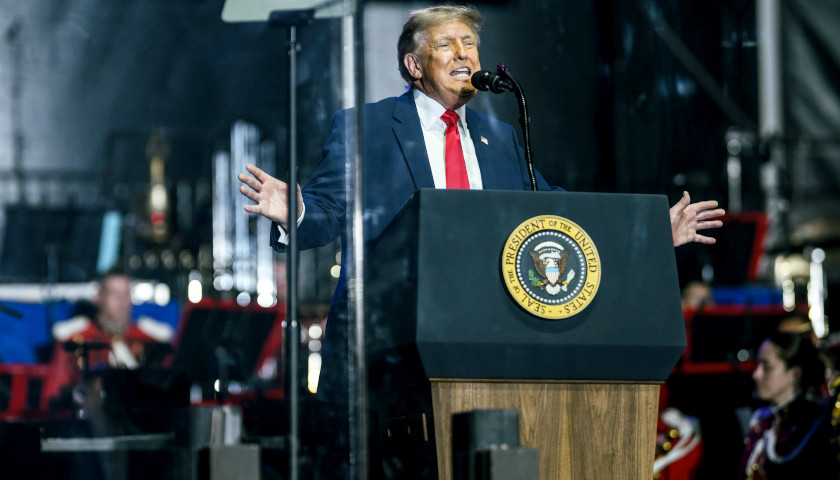
Last year, President Donald Trump’s administration said the Department of Justice would crack down on abuse of the visa system.
Despite those efforts, the program continues to flourish, with some Republican members of Congress calling on Trump to completely eliminate the visa program, arguing it allows employers to fill jobs with foreign workers rather than American citizens.
Lawmakers are also urging Trump to end the Optional Practical Training program, which allows foreign students to remain in the United States and work for nearly four years after they graduate. The program often incentivizes many employers because they receive a tax break for hiring foreign nationals.
Despite the calls to end the programs, Texas currently ranks second in the nation for both H-1B visa approvals and active H-1B workers.
From fiscal year 2025 through fiscal year 2026, employers in the Dallas-Fort Worth metroplex received approval for 33,455 H-1B visas. The largest recipient, Infosys Ltd., is an Indian multinational technology company that provides business consulting, information technology, and outsourcing services.
Headquartered in Bengaluru, India, Infosys operates in 59 countries and employs more than 320,000 people worldwide.
People from India get the overwhelming majority of H-1B visas. According to U.S. Citizenship and Immigration Services, in Fiscal Year 2024, 71% of H-1 B visas were issued to Indians. The next-closest countries were China at 12% and the Philippines at 1.3%.
Seventy-five percent of males in India received an H-1 B visa, compared to just 53% of males in China.
According to the company’s website, Infosys announced in November 2018 that it planned to hire 500 Texans at its office near Richardson. However, employment data showing how many U.S. citizens the company employs is not publicly available. According to U.S. Citizenship and Immigration Services, Infosys currently employs 3,195 H-1B visa holders in Texas.
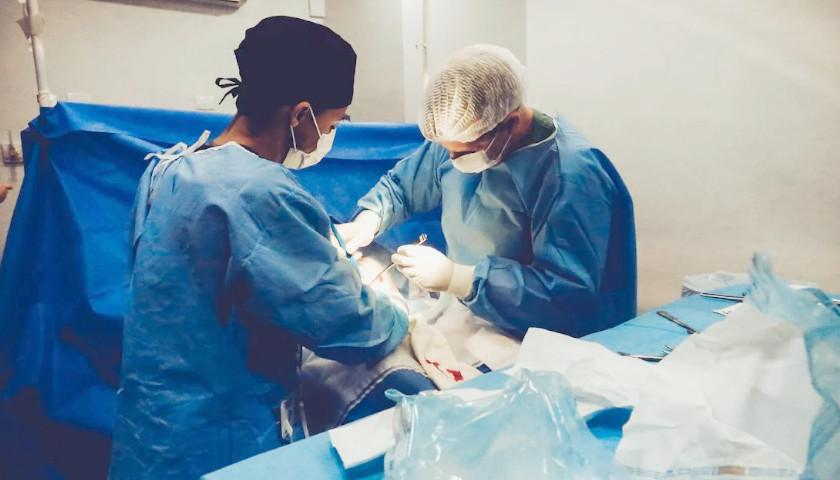
Other major H-1B employers in the Dallas area include Dallas Independent School District, with 337 approved H-1B workers, and UT Southwestern Medical Center, with 329.
In and around Austin, employers received approval for 10,094 H-1B visas during the fiscal years 2025 and 2026. The largest employers are Oracle Corp., Tesla Inc., and Dell Technologies.
The University of Texas at Austin also employed 280 H-1B visa holders during that period.
In the Houston area, employers received approval for 8,414 H-1B visas during the fiscal years 2025 and 2026. The largest employers are Hewlett Packard Enterprise, the University of Texas MD Anderson Cancer Center, and HP Inc.
The University of Texas Health Science Center at Houston employs 90 H-1B visa holders, while Rice University employs 91.
Earlier this year, Gov. Greg Abbott directed all Texas state agencies and public universities to freeze new H-1B visa petitions and review their current use of the program.
In addition to the healthcare and education industries, which employ H-1B visa holders, the tech industry is another major sector that brings in foreign nationals for American jobs.
According to federal government data, six of the top companies sponsoring H-1B workers are in the technology industry.
In a 2025 report, Simon Hankinson, a senior research fellow at The Heritage Foundation, recommended that Congress maintain a cap of H-1Bs at 65,000, reverse Biden administration changes allowing company founders to self-petition, and authorize employers to give hiring preference to qualified Americans over foreign applicants.
At the state level, advocacy group Texans for Strong Borders is urging lawmakers to adopt policies placing significant restrictions on H-1B and other foreign work visas. The organization also recommends that Texas “stop sending taxpayer dollars to entities that rely on H-1B labor.”
– – –
Emily Medeiros is a Texas correspondent for Daily Signal. Zachery Schmidt is the digital editor of The Star News Network and contributed to this story.