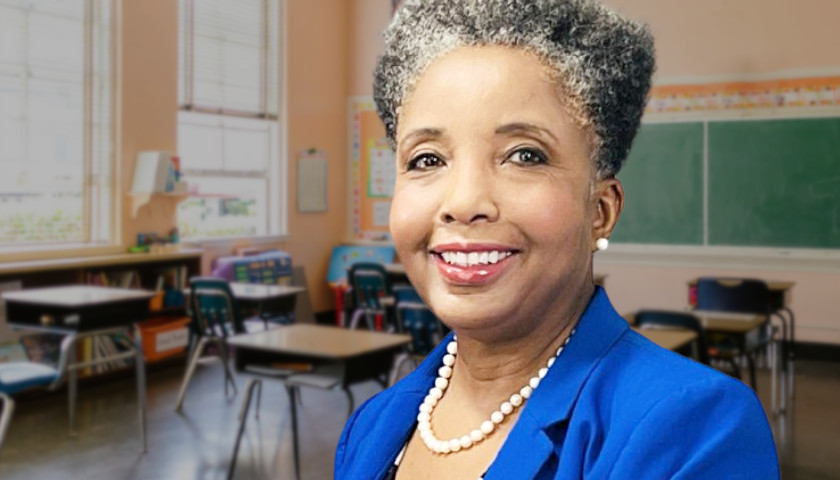
Dr. Carol Swain, a retired college professor who was tenured at Vanderbilt University and Princeton University, praised British educator Katharine Birbalsingh’s approach to education, arguing that schools and universities should place greater emphasis on traditional teaching methods, academic fundamentals, and exposure to competing viewpoints.
Swain’s remarks came during Monday’s edition of The Michael Patrick Leahy Show after hearing a clip of Birbalsingh, dubbed “Britain’s Strictest Headmistress,” discuss concerns about how history and culture are taught to younger generations, including the argument that students are increasingly exposed to narratives focused on oppression rather than a broader understanding of historical events.
“I think she’s spot on, and she might be Britain’s next William Wilberforce,” Swain said of Birbalsingh.
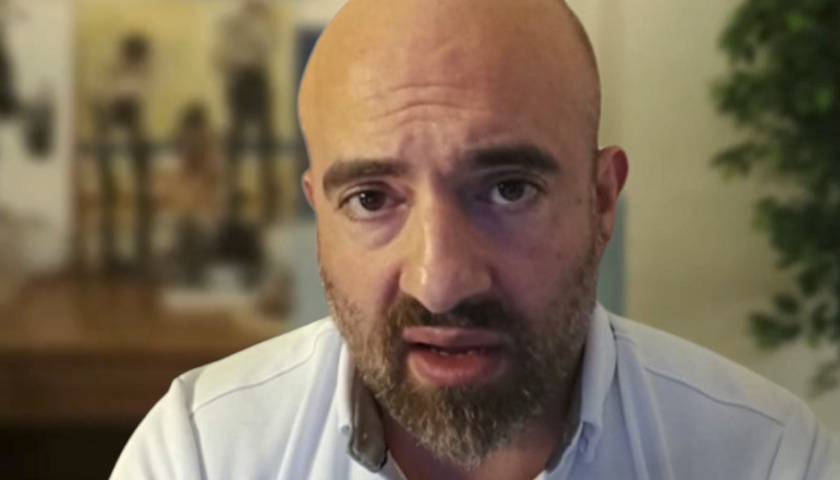
Birbalsingh, founder of London’s Michaela Community School, argued that many young people are taught a limited view of history centered around groups “struggling under the oppressive dead white man,” criticizing what she described as an “oppressor lens” in education.
Swain said she believes similar issues exist within American education, including elite schools and universities.
“A lot of the elite private schools in the United States and around the world are teaching the things that we know that are not educating young people, and they would all be better off if they returned to the traditional methods that she endorses,” Swain said.
Swain pointed to concerns about students’ academic preparedness, arguing that many young people are entering higher education without sufficient foundational skills.
“We know that the miseducation is occurring in K-12 as well as the colleges and universities where the young people go, and they’re not prepared,” Swain said.
She said many students require remedial education after beginning college, arguing that schools should prioritize literacy, mathematics, and critical thinking.
Swain also criticized what she described as a lack of open debate and ideological diversity in education.
“They can give you their personal pronouns, and they can talk about the atrocities of history, and white privilege, and how to become an anti-racist, but they cannot handle even any kind of critical dialogue,” Swain said.
She argued that students develop stronger reasoning skills when they are exposed to competing ideas.
“They’re not focusing on exposing students to divergent views,” Swain said. “The only way you learn critical thinking skills is to have to wrestle with ideas, and wrestling with ideas is not compatible with indoctrination. The two don’t go together.”
Swain, who left academia in 2017, said she believes some higher education leaders are beginning to reconsider how colleges operate as public confidence in universities declines.
“More and more people have come to the conclusion that things have to change in higher education and that they’ve taken a wrong turn,” Swain said.
She noted that some young people are increasingly choosing alternatives to traditional four-year degrees, including trade schools and entering the workforce directly.
“Today their surveys show that the majority of Americans don’t believe that a college education is worth it,” Swain said. “A lot of young people don’t believe it’s worth it, and people are making other decisions.”
Swain said colleges and universities will need to provide greater value to remain viable.
“To the extent that people decide that that’s not so important because they’re not really getting educated, that spells doom to many colleges and universities that will go out of business,” she said.
Swain added that she would consider returning to teaching if given the opportunity, saying she remains committed to higher education and believes students benefit from being challenged by a range of perspectives.
“I care about higher education, and I think that there needs to be more exposure for the students, more exposure to people that are not pushing a party line that will challenge their worldviews,” Swain said.
Watch The Michael Patrick Leahy Show – your AMERICA FIRST news talk!
– Watch now here on X
– Watch LIVE on YouTube / Rumble / Roku / AppleTV
– Listen on Spotify
– Listen on WENO AM760 in Nashville
– Read more at @TheTNStar pic.twitter.com/ZyFihktWRV— Michael Patrick Leahy (@michaelpleahy) July 20, 2026
– – –
Kaitlin Housler is a reporter at The Tennessee Star and The Star News Network.
Photo “Carol Swain” by Carol Swain.