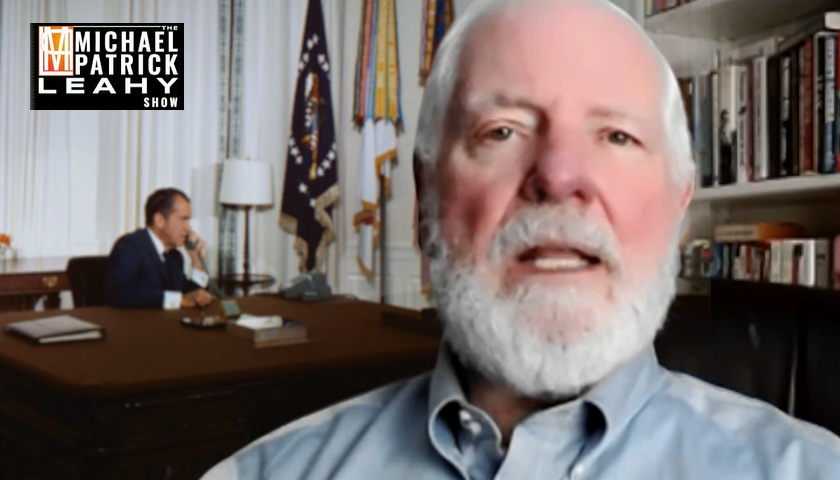
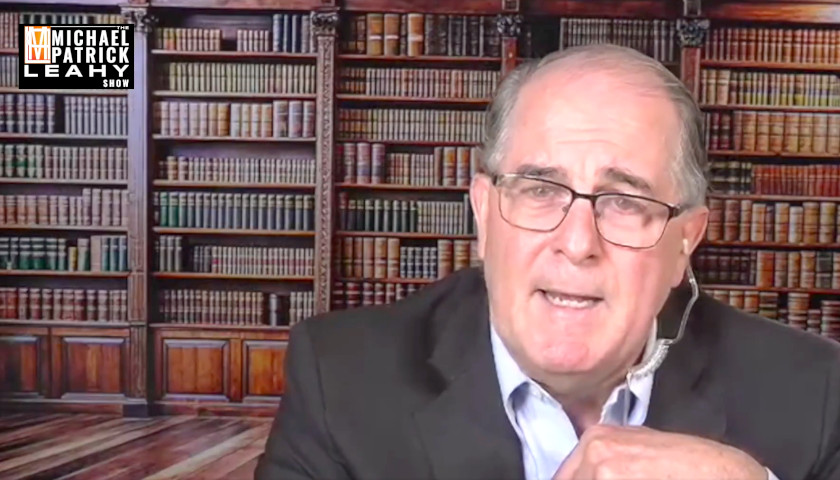
Former Kansas Attorney General Phill Kline said Friday the Trump administration’s release of newly declassified election documents should force a long-overdue national reckoning over election security, transparency, and the vulnerabilities of America’s voting systems, arguing that concerns once raised across party lines have become politicized and ignored.
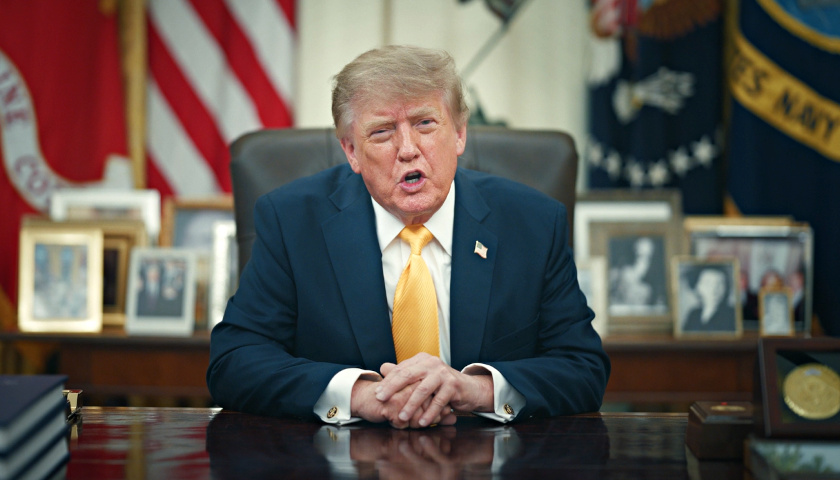
Speaking on The Michael Patrick Leahy Show following President Trump’s primetime address Thursday evening, Kline argued that concerns about election infrastructure have become unnecessarily partisan, despite longstanding acknowledgments by government officials that election systems face cybersecurity risks.
“It is still stunning to me that in the United States we still cannot speak about the incredible vulnerabilities of our elections in a bipartisan fashion,” Kline said.
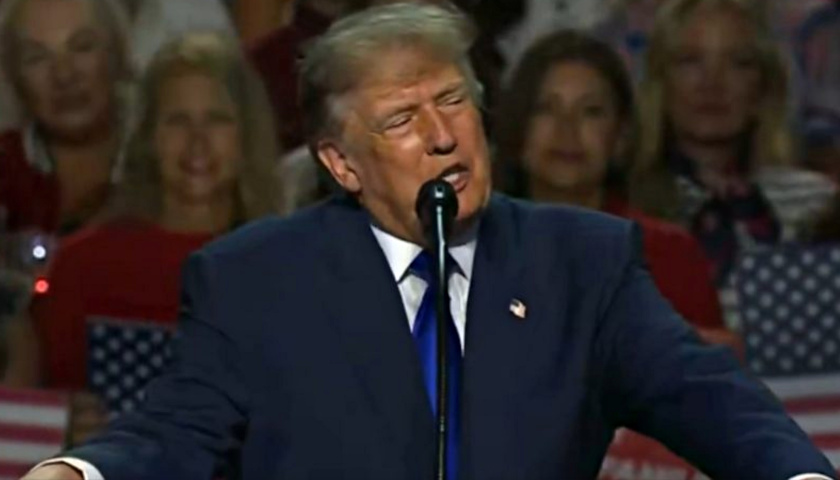
The White House released a series of declassified intelligence assessments and investigative materials following Trump’s address, asserting they document foreign election interference efforts, vulnerabilities in electronic voting systems, alleged suppression of intelligence regarding China’s acquisition of American voter data, voter registration investigations, and the presence of noncitizens on state voter rolls.
According to the White House, the documents span intelligence assessments from January 2020 through June 2026 and describe cyber threats from foreign adversaries, including China, Russia, Iran, and North Korea.
Kline said many of the issues raised by President Trump were previously discussed by Democrats following the 2016 election.
“You know, it’s quite fascinating… many of the problems that the president brought up last night were issues that the Democrats raised in 2016 regarding the vulnerability of machines, the vulnerability of our voter rolls, and so forth,” Kline said.
“But when it came to Trump and those vulnerabilities and the intelligence community internally acknowledging them, we can’t speak about them,” he added.
Kline said documents released by the administration reveal internal intelligence community discussions about foreign access to election-related systems.
“In reading the documents that Trump released after his news conference, what you see is that very internal debate within the intelligence community, in that they knew that China was attempting and did, in many ways, gain access to poll books and so forth, as did Russia,” he said. “But they were debating about the intent of that engagement.”
Kline argued that election administration lacks sufficient transparency.
“Presently in the United States, if an election clerk who is elected by the people at the local level gains access on their own to the software and the machines that count and tally the votes, they can go to prison,” Kline said.
He also claimed election officials who decline to certify election results due to perceived irregularities face criminal consequences.
“If a local election official looks at the election and how it was managed and decides that the election results are not to be relied upon because of irregularities, and they vote not to certify, they can go to prison,” he said. “I mean, that by itself should shock the American public that we have non-transparent elections.”
Kline further argued election systems are overseen by a limited number of vendors and federal officials.
“They are controlled by about nine vendors and one federal agency… That’s the only people who can look at how our elections are actually done and reviewed, and election results certified,” he said.
Kline repeatedly said election vulnerabilities deserve greater public discussion regardless of political affiliation.
“Our elections are incredibly vulnerable, and what’s stunning to me is we still cannot talk about it. We can’t speak about it,” he said.
Kline also criticized major national news organizations, arguing journalists should investigate the newly released materials rather than dismiss them.
“They’re not journalists in the traditional sense,” Kline said. “A journalist seeks to understand what the truth is… These are rip-and-read journalists. They get their stories packaged. They don’t investigate it, and they are pushing a narrative before the story is even written.”
Asked what he expects to come next following the White House document release, Kline said additional disclosures could focus on relationships between government agencies and private organizations involved in election administration.
“There’s much, much more that can be revealed,” Kline said. “These public-private partnerships need to be looked into thoroughly, and I’m hopeful that they will release them.”
Kline concluded by arguing that political opposition to Trump has prevented objective consideration of the newly released materials.
“People are irrational in their hatred of Trump, and their primary objective is to diminish the President rather than report what is out there,” Kline said.
— Michael Patrick Leahy (@michaelpleahy) July 17, 2026
– – –
Kaitlin Housler is a reporter at The Tennessee Star and The Star News Network.