
by Steven Richards
More than two decades ago, the leader of the National Socialist Party of America decided he wanted out of the white nationalist movement. The leader approached the Southern Poverty Law Center, which has positioned itself as the nation’s preeminent watchdog of “hate,” and for helping people get out of such groups.
The individual was out of money and no longer wanted to be a part of the movement. But, instead of helping the individual break free, the SPLC had something else in mind.
The organization allegedly offered him a monthly salary funneled through a fictitious entity to maintain the extremist organization, according to a superseding indictment of SPLC handed down by a grand jury in Alabama this week.
11 counts of wire fraud, bank fraud and conspiracy to commit money laundering
And, this was not the only time SPLC allegedly encouraged members of violent extremist organizations to remain in exchange for payment, ostensibly to provide intelligence to the organization. The indictment shows that on at least two other occasions, SPLC offered payments to entice individuals to remain affiliated with extremist organizations.
The details contained in the revamped indictment, which charges SPLC with 11 counts of wire fraud, bank fraud and conspiracy to commit money laundering, shed further light on how SPLC was playing a secret double game: allegedly manufacturing the very extremism it claimed to be fighting to keep its fundraising machine humming.
The SPLC was first indicted by the grand jury in April. According to federal prosecutors, the SPLC secretly funneled more than $3 million from 2014 to 2023 to individuals associated with violent extremist groups, including the Aryan Nations, the Ku Klux Klan and the National Socialist Party of America. The superseding indictment alleges the organization actually paid out about $4.1 million.
SPLC claims these were legitimate payments for undercover informants to monitor threats
The Justice Department alleges the SPLC utilized a network of shell companies – with names like “Center Investigative Agency” and “Fox Photography” – to disguise payments to individuals associated with those groups. Many of these companies were “fictitious,” meaning they were not incorporated and performed no real service.
While the SPLC claims these were legitimate payments for undercover informants to monitor threats, the FBI and DOJ allege the funds were used to ensure that “hate” remained visible enough to justify the SPLC’s mission and purpose, Just the News previously reported.
The recent indictment alleges that even as the SPLC publicly decried “white supremacy,” it was bankrolling the very figures who could provide the inflammatory social media posts and public controversies the SPLC needed to trigger a constant stream of donations, making it wealthier than many colleges and universities. As of late 2024, the organization’s consolidated financial statements showed nearly $790 million in net assets.
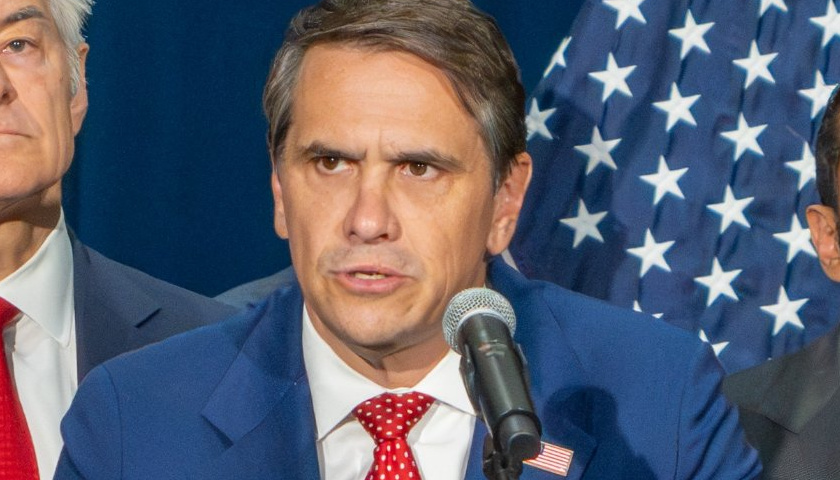
“The SPLC is manufacturing racism to justify its existence,” acting Attorney General Todd Blanche said in an April 21 statement announcing the indictment. “Using donor money to allegedly profit off Klansmen cannot go unchecked.”
The superseding indictment contains new details about one of those undercover informants, which the SPLC calls “field sources.” F-30, as the individual was identified in the indictment, “led the National Socialist Party of America, was a member of the Ku Klux Klan, and was the leader of a faction of the Aryan Nations that had chapters in approximately 17 states,” the indictment reads.
In 2010, the still-unnamed individual, called “F-30” in the indictment, wanted to exit the “the white nationalist movement” and reached out to SPLC, unsolicited, for help. The government alleges that after the individual shared with the organization a plan to leave, SPLC instead offered the individual a monthly salary of about $2,500 plus expenses “to continue to lead and maintain the violent extremism organization” he told the organization he wanted to leave.
SPLC purportedly set up F-30 with a pay card from the fictitious company “Rare Books,” which was used to move over $70,000 “in donors’ money” from SPLC to the individual’s account.
“F-30 used the donors’ money to, among other things, travel to extremist rallies, host extremist rallies, donate money to leaders of other extremist organizations, recruit new members into his extremist organization, publish racist and extremist material for the purpose of recruiting new members, both inside and outside of prison, and create racist paraphernalia to sell at rallies to raise more money for his extremist organization,” the indictment alleges.
Despite their requests to get help leaving the movement, prosecutors say SPLC offered them a salary plus expenses to stay in it.
Prosecutors allege that while SPLC was using donor money to fund F-30’s activities, the organization softened the language on its webpage about F-30 at the individual’s request in order to make it easier for the individual to recruit new members.
SPLC allegedly dealt in a similar manner with two additional individuals, both members of the Ku Klux Klan, who were identified only as F-31 and F-32 in the indictment. Those individuals, who feared for their safety, sought SPLC’s assistance to leave.
The pair reached out to the SPLC around 2010 after F-32 saw media coverage about the civil rights organization helping another person leave an extremist group, coverage that reportedly included the SPLC paying for tattoo removals. According to prosecutors, an SPLC employee invited them to Montgomery for a meeting, then, despite their requests to get out of the movement, offered them a $1,200 monthly salary plus expenses to stay in it.
Once financially backed, they agreed to remain members. The payments to F-31 and F-32 were also routed through “Rare Books Warehouse.”
SPLC funds were allegedly used to pay for making Klan robes and hoods
F-31 rose from a rank-and-file member to a leadership role, actively recruiting new members using donor money, while F-32 used funds to purchase materials to make Klan robes and hoods, and both attended cross-burning events reimbursed by the SPLC, according to the indictment.
In response to the original indictment, SPLC said it would “vigorously defend” itself against what it described as false allegations.
“Taking on violent hate and extremist groups is among the most dangerous work there is, and we believe it is also among the most important work we do,” interim CEO and President Bryan Fair said in a statement. “The actions by the DOJ will not shake our resolve to fight for justice and ensure the promise of the Civil Rights Movement becomes a reality for all.”
Fair is slated to appear for testimony at a House Judiciary Committee hearing on Friday, just days after the superseding indictment was handed down by the Alabama grand jury.
The embattled CEO, the latest in a parade of SPLC leaders who have come and gone amid scandals, internal revolts, and high-profile departures — including co-founder Morris Dees in 2019 and Margaret Huang’s 2025 resignation following a staff no-confidence vote — is now set to testify just days after the superseding indictment.
The timing is especially striking: even as the federal charges landed, the organization was quietly advertising for a permanent CEO with a compensation package of up to $525,000 in total annual pay, complete with a headhunter search touting a “pivotal moment” to shape the future of civil rights.
“This apparent superseding indictment attempts to shore up the flaws in the initial charges, but it changes nothing,” the SPLC’s lawyer, Abbe Lowell, told CBS News after the superseding indictment. “The SPLC did not lie to its donors, it did not mislead banks it did business with, and its informant program prevented violence and saved lives.”
– – –
Steven Richards joined Just the News in August 2023 after previously working as a Research Analyst for the Government Accountability Institute (GAI) in Tallahassee, Florida. Executive Editor of The Tennessee Star and The Star News Network Christina Botteri contributed to this report.



It’s 2026. Time for the SPLC to end.