
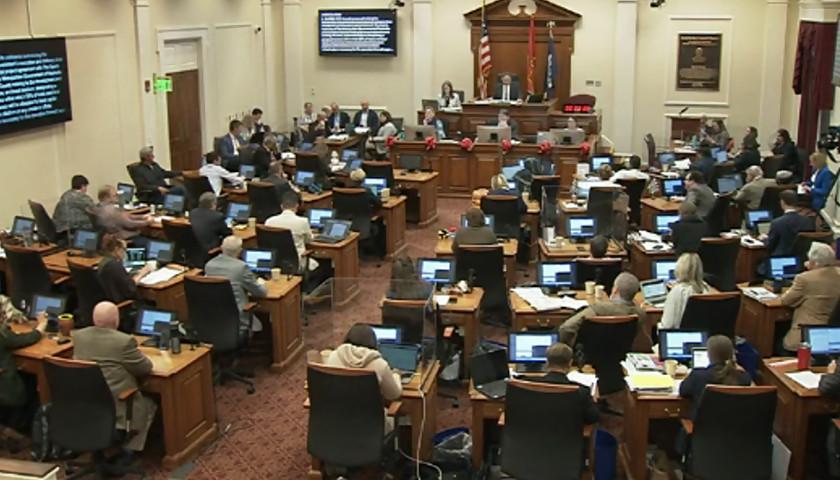
The Tennessee Supreme Court on Monday upheld a state law capping the size of metropolitan councils at 20 members, rejecting a constitutional challenge brought by the Metropolitan Government of Nashville and Davidson County over legislation that would reduce the size of its 40-member Metro Council by half.
In an opinion issued November 2, the state’s highest court ruled that the Tennessee General Assembly did not violate the Tennessee Constitution’s Exemption Clause by imposing the 20-member limit on metropolitan councils.
The decision resolves a legal challenge filed by Metro Nashville and a group of Davidson County residents against state officials, including Governor Bill Lee, following the enactment of the law in 2023.
The legislation, signed by Lee in March 2023, capped the number of voting members on metropolitan councils at 20, requiring Metro Nashville to reduce its council from 40 members.
Metro Nashville filed a lawsuit against Lee shortly after the law was enacted, arguing that the legislation violated several provisions of the Tennessee Constitution, including the Local Legislation Clause and the Exemption Clause.
A three-judge trial court panel ruled in July 2024 that the law violated both constitutional provisions and permanently blocked its enforcement. The state appealed, and the Tennessee Court of Appeals reversed the decision in June 2025, ruling that the 20-member cap did not violate either provision.
Metro Nashville subsequently appealed the ruling to the Tennessee Supreme Court, which agreed to hear the case in September 2025.
While the appeal was pending, the General Assembly amended the challenged law in 2026, removing provisions that formed the basis of Metro Nashville’s Local Legislation Clause challenge.
In Monday’s opinion, authored by Justice Sarah K. Campbell, the Supreme Court determined that the amendments rendered the Local Legislation Clause challenge moot because they addressed the alleged constitutional defect. The court therefore vacated the lower court’s judgment on that portion of the case.
However, the court determined that the Exemption Clause challenge remained relevant because the 20-member cap itself remained unchanged.
The court rejected Metro Nashville’s argument that the constitutional exemption for consolidated governments prevented the General Assembly from imposing statutory restrictions on the size of metropolitan councils.
The justices concluded that the Exemption Clause only exempts metropolitan governments from certain constitutional requirements governing county executives and county legislative bodies, not restrictions imposed separately through state law.
“We hold that the Exemption Clause relieves consolidated governments of the constitutional requirements imposed on legislative bodies in article VII, section 1, paragraph 2. But it does not prevent the legislature from imposing other requirements,” Campbell wrote. “We therefore agree with the Court of Appeals that the legislature’s twenty-member cap on metropolitan councils does not violate the Exemption Clause.”
The court affirmed the Court of Appeals’ ruling on the Exemption Clause and remanded the case to the trial court for further proceedings consistent with its opinion.
Following the decision, Vice Mayor and Metro Council President Angie Henderson and Charter Revision Committee Chair Clay Capp issued a joint statement indicating that Metro officials would review the ruling and consider its implications.
“This is a somber day for democracy in Tennessee,” Henderson said. “The hyperpartisan hubris of a relatively small clatch of state legislators and lobbyists who initiated this legislation remains staggering,” Henderson added.
Capp said he believes the state constitution should have protected Nashville’s charter from the legislation and announced plans for the Charter Revision Committee to meet next week to begin discussing the decision.
Henderson and Capp said they would also call a special committee meeting in the Council Chamber, inviting the entire Metro Council to discuss the ruling.
Monday’s ruling comes ahead of Nashville’s 2027 Metro election, when voters will choose the mayor, vice mayor, and Metro Council members, with the court’s decision allowing the state-mandated 20-member council cap to take effect for that election.
– – –
Kaitlin Housler is a reporter at The Tennessee Star and The Star News Network.