
by Steven Fincher
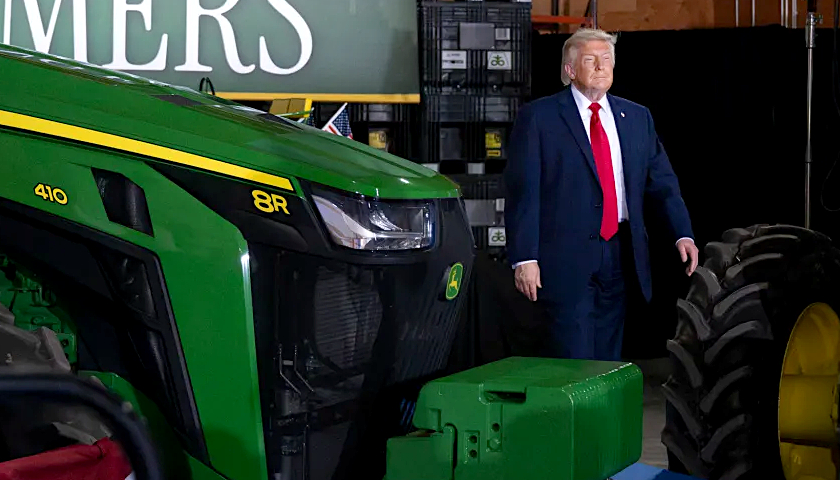
John Deere and the Trump administration this week announced that relief is coming to farmers who have long suffered because they weren’t personally allowed to repair their own broken farm equipment.
This matters, particularly in Tennessee, where 41 percent of the state’s land is used for agriculture and where many farmers rely on John Deere equipment. And it also matters to American consumers. Farmers wake up at the crack of dawn and invest countless hours of their time and energies to grow food to keep the grocery stores stocked and our bellies fed. If something interferes with their ability to do their jobs, then that compromises not only our food security but the nation’s economic security.
If asked to name something that hindered them, farmers would no doubt say broken farm equipment.
Previously, only officially authorized dealers frequently had the tools and software to fix it at their disposal. Tennessee farmers, smack dab in the middle of planting or harvest seasons, drove long distances to their nearest authorized dealers for repair work they could have performed themselves. Sometimes they had to wait for a dealer to visit their farms before they could get their machine fixed.
For many years, this was a lingering problem.
For farmers, broken equipment can cost a substantial amount of time and money. Equipment breakdowns during planting or harvest seasons cost them dearly in lost yields. Not having a quick fix when equipment breaks down is only one more problem for farmers to worry about. A tractor that’s sidelined for days while its owner waits on an officially authorized dealer means missed planting windows, spoiled harvests, or extra feed costs.
In 2023, John Deere was one of the first manufacturers to sign a voluntary Right to Repair (R2R) agreement with the American Farm Bureau But questions remained about how federal emissions rules applied to certain repair-related software functions. After Deere sought clarification, the EPA confirmed that temporary overrides of emission-control systems are permissible when used for the “purpose of repair.” The clarification removed an important regulatory obstacle to expanding repair access.
But the icing on the cake was this new agreement with the Trump administration. Under the terms, Deere will give farmers and independent repair shops the same diagnostic software and repair tools it already provides its authorized dealers. It demonstrates that manufacturers can expand repair access without compromising proprietary technology.
The fact that farmers didn’t have the right to repair their own equipment seems almost inconceivable. Can you imagine owning a broken couch or a broken television set and you were plenty capable of repairing it yourself, but you were told you couldn’t?
There really is no difference between that and what farmers have been through.
Tennesseans value limited government, property rights, and self-reliance. The Trump Right to Repair initiative it restores all three.
The next time someone tells you this administration isn’t looking out for the people that harvest our crops and provide us our food, remind them of this.
– – –
Steve Fincher is a seventh generation farmer, the managing partner of Fincher Farms, and a former member of Congress from Tennessee.