by Amanda Head
As home values skyrocket, taxpayers grow increasingly frustrated with “dinner table issues” such as confidence in a secure financial future and anxiety over “affordability.” Republican-led states enjoy budget surpluses, as a new trend of eliminating property taxes is emerging in red states.
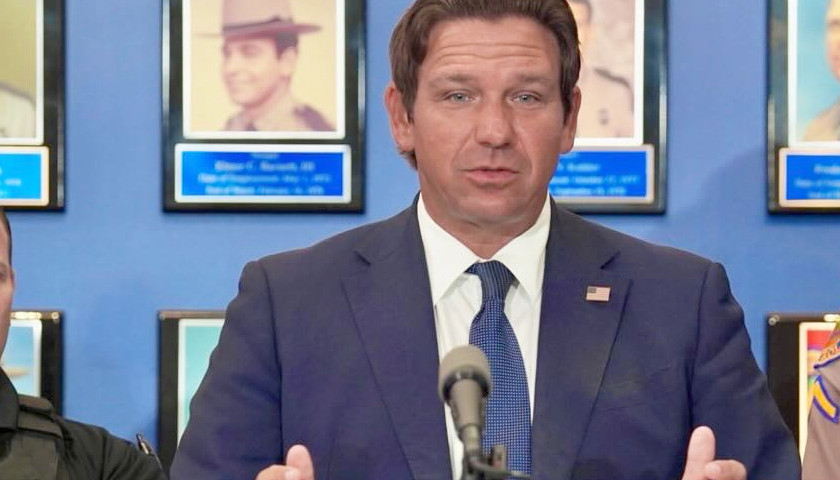
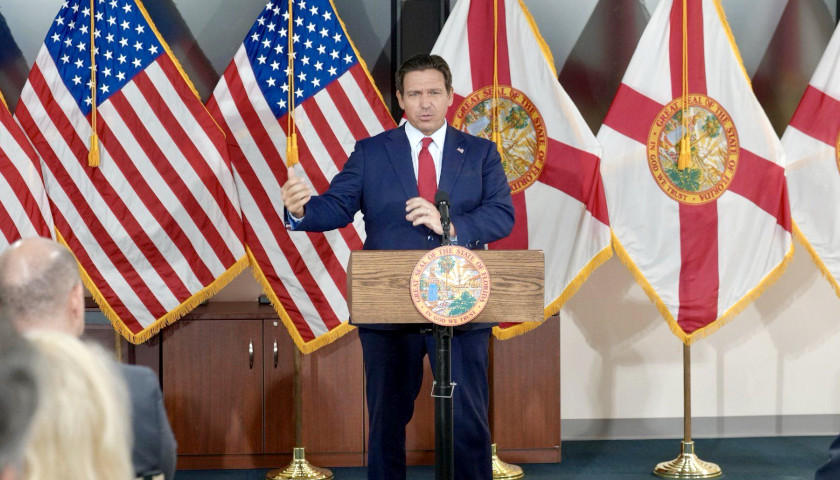
On Tuesday, the Florida State Legislature approved a November ballot measure that would abolish property taxes for most primary homeowners across the sunshine state.
The vote came after Florida Governor Ron DeSantis called the state legislature to a special session, citing rapidly rising property values, local tax collections surging from $32 billion in 2019 to a projected $60 billion currently (and $83 billion by 2032), and inflation burdens on residents.
Moves for property tax relief on primary homes becomes more frequent
Several states are already moving toward major property tax relief for primary homeowners, mirroring Florida’s push to raise the homestead exemption to $250,000 and eventually eliminate non-school taxes on homesteaded homes.
In Texas, Governor Greg Abbott has prioritized eliminating school-district property taxes for homeowners in 2026, using state surpluses to replace lost revenue while capping local spending growth.
Wyoming lawmakers are debating full elimination of residential property taxes, offset by sales-tax increases, subject to voter approval.
Indiana’s lieutenant governor has called property-tax repeal a top legislative goal, while Ohio features grassroots campaigns for a constitutional ban and ballot initiatives in Nebraska and Oklahoma target homestead exemptions or outright abolition.
Tennesseans will have a chance to vote in November on Amendment 2, which would amend the state Constitution to prevent Tennessee from issuing state-related property taxes. Gov. Bill Lee will serve as the statewide chairman for the “Yes on 2” campaign, which supports the amendment.
Senate Speaker Pro Tempore Ferrell Haile, who is the campaign’s Middle Tennessee regional director, said, “Amendment 2 will provide an additional constitutional safeguard against a future state property tax and help preserve Tennessee’s reputation as one of the best places in the nation to live, work, and raise a family. I’m honored to serve as Middle Tennessee Chairman for this important effort.”
“70% of voters believe their taxes are too high,” poll says
The trend is emerging at a time when historic numbers of Americans are angry about the amount of taxes they pay.
A Fox News survey in April found a record 70% of voters believe their taxes are too high, up 11 points from the previous year. Gallup polling similarly shows 59% of Americans saying the amount of federal income tax they pay is too high, a level that has remained elevated since 2023.
Pew Research indicates 41% are bothered “a lot” by the personal amount they pay, while 60% now feel they contribute more than their fair share relative to government services received—up from 56% in 2023. WalletHub’s March 2026 survey echoes this, with 66% viewing their current tax rate as too high.
If Florida’s plan succeeds at the ballot, it will prove that states can fund core services (police, fire, schools) without treating homeowners as perpetual renters. Success stories might inspire copycat legislation and referendums across the country, pressuring even blue states — so far, addicted to a high tax-and-spend cycle — to follow and redefine true homeownership nationwide.
Budget surplus makes the move less risky
Red-state budget surpluses have provided critical fuel for ambitious property tax relief efforts. Texas stands out with a roughly $24 billion surplus entering the 2026-27 biennium, drawn from strong revenue growth, conservative budgeting, and a healthy Rainy Day Fund.
Lone Star lawmakers have directed billions of this into school tax compression, homestead exemptions, and rate reductions.
Florida maintains robust reserves as well at $15.7 billion in its FY2025-26 budget, with a stabilized fund at its legal cap, enabling ongoing tax restraint and homeowner protections.
Other Republican-led states like Wyoming, Indiana, and Ohio have leveraged post-pandemic revenue windfalls and energy/economic growth for similar moves, funding exemptions, credits, and caps while building rainy-day reserves.
Another reason to flee
Americans are increasingly migrating from blue (Democrat-leaning) states to red (Republican-leaning) ones, voting with their feet amid policy and economic differences. Property taxes, or lack thereof, could exacerbate the trend.
From 2020–2025, blue states like California, New York, Illinois, New Jersey, and Massachusetts saw massive net domestic out-migration, with these five alone losing nearly 3.7 million people cumulatively.
In 2024–2025, blue states lost about 478,000 to net internal migration, while red states gained over 399,000. Top destinations include Texas, Florida, North Carolina, South Carolina, Tennessee and Arizona.
One of the most often cited reasons to move to red states is lower taxes, but affordable housing, cost of living, crime, and regulatory environment are frequent reasons as well.
This shift has already cost blue states congressional seats via decennial reapportionment based on Census data. After the 2020 Census, California lost 1 seat, New York lost 1, and Illinois lost 1 (among others), while Texas gained 2 and Florida gained 1.
Projections for the 2030 Census suggest further blue-state losses—potentially California losing up to 4, New York and Illinois 1–2 each—shifting power to growing red states like Texas (+4) and Florida (+3–4).
– – –
Amanda Head is a reporter for Just the News. Zachery Schmidt is the digital editor of The Star News Network and contributed to this story.
Photo “Ron DeSantis” by Ron DeSantis.