by Amanda Head
President Trump’s China fight has moved off the trade floor and into Americans’ pockets, from the robocalls on their phones to the cloud supporting their apps. In a single week, his administration cut China’s biggest carriers off from U.S. phone numbers and moved to stop Beijing from renting American AI chips through overseas data centers.
The Federal Communications Commission (FCC) nis “strengthening our first line of defense against bad actors and illegal robocallers,” FCC Chairman Brendan Carr said Thursday.
Carr has warned about the threat before: “The CCP is constantly exploring for ways to breach our networks,” Carr said in 2025, pointing to the Salt Typhoon hacks as evidence of state-sponsored interference with global communications.
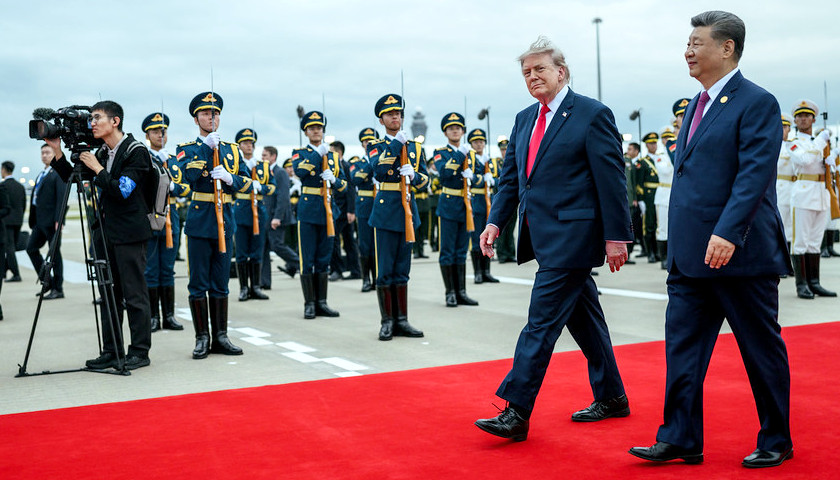
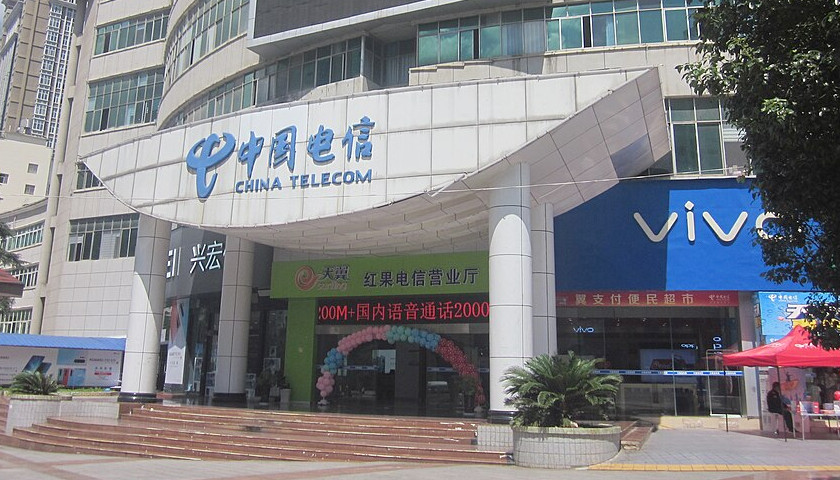
The FCC voted Thursday to bar China Mobile, China Telecom and China Unicom from directly obtaining U.S. phone numbers. The vote came hours after Trump’s talks with Xi Jinping in Shenzhen. Direct access has let internet-based calling providers obtain American numbers cheaply, without routing through intermediate carriers. Under the new rules, providers must pass new security certifications before they get numbers at all.
For regular Americans, the relief should be readily apparent. Consumers received more than 4 billion robocalls in October, up 4.7% from September. One recent report found scam victims lose an average of $4,000.
More than a nuisance, as privacy intrusions and scams abound
The robocall fight doubles as a counterintelligence fight. The same three carriers were already blocked from providing international telecom service to the U.S. That hacking campaign stole Americans’ call records in late 2024. PBS reported that although the FBI did not publicly identify any of the victims, officials believe that senior U.S. government officials and prominent political figures are among those whose communications were accessed.
Thursday’s order also shuts out calling providers that rely on equipment from Huawei, ZTE and other companies on the FCC’s national security blacklist. It builds on a year of steady pressure. Last month, the commission voted to bar Chinese labs from testing U.S. electronics starting in December 2028, and Hong Kong carrier HKT agreed to halt its operations in the U.S. by September 2027, according to U.S. News and World Report.
For years, decoupling from China meant tariffs, soybeans and factory jobs. Now it means who gets to put a call through to your kitchen table or teenager’s backpack.
Where the chips may — and may not — fall
Phone lines are only one layer in play. Days before the FCC vote, the Department of Commerce issued a new rule requiring licenses for advanced chips sent to overseas data centers that sell significant computing power to companies based in restricted countries like China. The rule targets a workaround in which firms on the restricted list could rent American AI power they were barred from buying outright.
That matters beyond Silicon Valley. The chips behind banking apps, search engines and customer-service bots are the same ones Beijing wants for its own AI ambitions.
Trump pushed further on Friday. He said American companies building data centers abroad would face a “tremendous tax”. “China will take all of them, and we’re not allowing that to happen,” Trump said.
He also urged communities to welcome data centers and extract concessions from developers. Critics note he offered no tax rate incentive, timeline or mechanism. The direction is still consistent: keep the phone numbers, the chips and the computing power behind American walls.
A handshake abroad, but a firewall at home
Beijing is not pleased. China’s commerce ministry on Sunday accused the FCC of trying to “wantonly smear and maliciously suppress” Chinese firms, according to Canadian broadcaster CP24.
Trump spent the week shaking hands and signing deals in Asia while his regulators tightened the rules at home. The approach treats diplomacy and defense as two tracks rather than a trade-off. More may be coming.
The FCC is weighing whether to bar Chinese telecom firms from connecting to U.S. networks at all and from operating data centers on American soil.
– – –
Amanda Head is a reporter for Just the News.
Photo “China Telecom Building” by Huangdan2060. CC BY 3.0.