by Ben Whedon
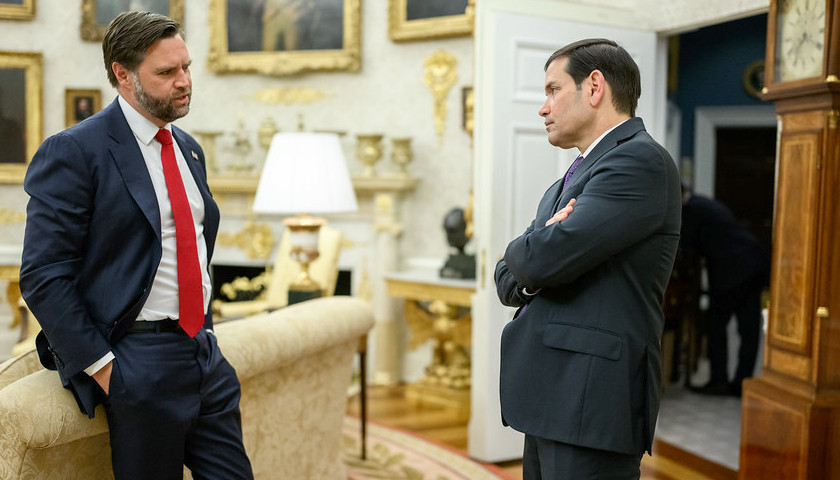
Democrats’ big midterm wins last week have rattled what previously appeared largely as a two-man race between presumptive frontrunners Vice President JD Vance and Secretary of State Marco Rubio, opening the door for other potential bids.
Each have presided over the United States’ unpopular war with Iran that in no small part resulted in midterm voters taking control of Congress away from the GOP and giving it to Democrats.
Sixty-three percent of voters said the U.S. made the wrong decision in taking military action against Iran, according to one exit poll.
Trump still plans to raise money through his super PACs to keep his influence over the party. But the midterm losses pose a challenge to his future influence, including how much sway he’ll have in who will be the GOP’s 2028 presidential nominee when he leaves the White House after a second and final term.
Among the others considered possible top contenders, and whose stature now appears elevated, are Florida Gov. Ron DeSantis and Texas Sen. Ted Cruz.
DeSantis said Friday, however, he is not interested in running in 2028.
Others reportedly expressing interest include former New Jersey Gov. Chris Christie, Nebraska Rep. Don Bacon and Sens. John Kennedy, of Louisiana, and Rand Paul, of Kentucky.
Polling has consistently shown Vance in the lead, with 38% support, compared to Rubio’s 26%, according to the RealClearPolitics polling average. DeSantis is at 8% while Cruz is at 2.8%. None of the four have announced a bid for the GOP presidential nomination.
Those four potential candidates seem to have already become proxies for different blocs within the GOP coalition, whether they intended to or not.
The vice president is seen as closely aligned with the online right, new right, and populist factions of the GOP.
However, he said Wednesday in an X post: “The reason we lost is the war. The president himself said so last night.
Vance reportedly first showed the post to Trump, but the comments have raised questions about whether he will be the preferred MAGA candidate.
Rubio remains a favorite of the foreign policy establishment. He said the Trump administration’s war against Iran was not “necessarily popular” but needed to stop a nuclear threat.
Cruz has long positioned himself as a traditional constitutionalist while DeSantis seems to be carving out a lane as the only one of the four with an established record in an executive office.
“We are very likely to have a competitive primary,” Jeremy Carl, a former Trump administration official who is generally part of the pro-Vance camp and a favorite of the online right, said on social media.
“I’d expect to see Vance, DeSantis, and Cruz in there – maybe Rubio as well. And any candidate, even one who I otherwise like, who has the seemingly organized support of a lot of the ‘old guard’ is not going to get my vote. And I know I’m not alone in that regard.”
Each of the possible candidates and their factions also come with their own baggage. For Vance, his ties to the online right, in particular podcasters such as Tucker Carlson, have drawn accusations of extremism and sown distrust within some GOP circles.
Rubio, at the helm of the administration’s foreign policy, will also likely have to justify the war to voters, and the resulting higher prices of some goods in the U.S.
He seems to already be the recipient of some of the “old guard” support that Carl indicated would turn him away.
Rep. Marlin Stutzman, R-Ind., for example, backed Rubio for president last week.
The British tabloid The Independent reported last week, based on unnamed sources, that Rubio was mulling an exit from the White House to prepare for a presidential bid, but the State Department has denied such assertions.
Cruz has expended much of his energy supporting Israel amid the war, which will likely limit his appeal to voters already frustrated with entanglements in the Middle East.
For DeSantis, it’s in part the Trump camp that could still be skeptical of him after he tried to challenge Trump for the party nomination in 2024.
Complicating Cruz’s chances are the GOP losses in his home state, including voters electing a Democrat as a senator for the first time since 1988.
Trump has generally been hesitant thus far to throw his support behind Vance, sometimes floating Rubio when reporters ask about 2028.
According to a McLaughlin & Associates poll that came after the midterm elections, Vance is still the favorite to be the Republican presidential nominee in 2028. The vice president leads Republicans with 38% of voters, while Rubio is in second place at 17%. Donald Trump Jr. came in third place with 14%, and DeSantis came in fourth place with 7%.
For Democrats, the poll showed former Vice President Kamala Harris leading the pack with 28%. California Gov. Gavin Newsom is in second place at 16%, while former Secretary of Transportation Pete Buttigieg and Rep. Alexandria Ocasio-Cortez tied in third place at 9%
– – –
Ben Whedon is a reporter for Just the News. Zachery Schmidt is the digital editor of The Star News Network and contributed to this story.