

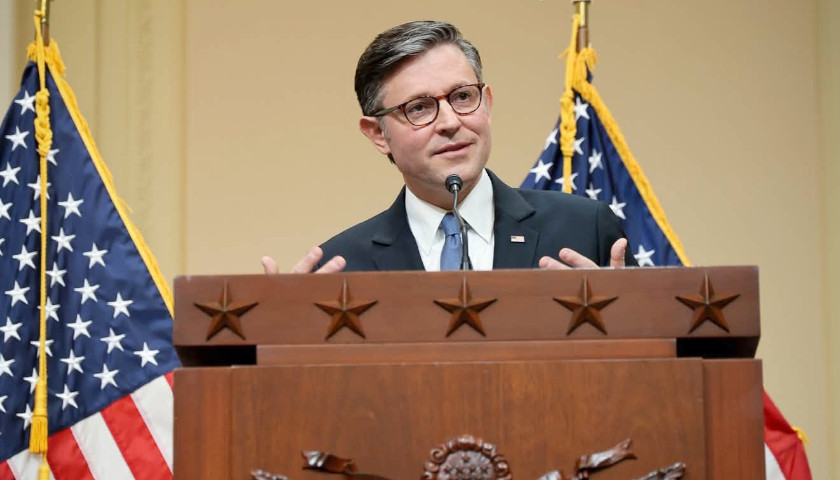
U.S. Representative John Rose (R-TN-06) on Tuesday initially voted down a procedural vote to keep the federal government open, but after he acknowledged “productive conversations,” and House Speaker Mike Johnson (R-LA-04) confirmed they spoke but “no promises were made,” he flipped his decision and allowed the bill to proceed.
In the first attempt at the procedural vote, Rose joined the Democratic Party and U.S. Representative Thomas Massie (R-KY-04) to vote down the bill, after earlier pointing to reporting that Senate Majority Leader John Thune (R-SD) had yet to commit to using a form of filibuster to pass the Safeguard American Voter Eligibility (SAVE) Act, which would require proof of citizenship when registering to vote in federal elections.
While the SAVE Act already passed the House, and Thune pledged to bring the SAVE Act to a vote in the Senate, Rose received praise from pundits for working to have the election integrity bill merged into in the government funding bill, citing the Senate Majority Leader’s reported lack of commitment to use a “standing” filibuster in order to pass the legislation without a 60-vote majority.
Gunther Eagleman, the social media influencer and pundit, wrote in a post to X that Rose, “DROPS A HARD NO on advancing the government spending bill,” citing the report about Thune.
🚨 JUST IN: Rep. John Rose (R-TN) DROPS A HARD NO on advancing the government funding bill, after Senate Leader Thune backtracked on his promise to bring the SAVE Act to the floor!
Rose isn’t playing: “House Republicans MUST hold the line and refuse to fold on something as… pic.twitter.com/FyunVeXwAs
— Gunther Eagleman™ (@GuntherEagleman) February 3, 2026
Another pundit, Eric Daugherty of Right Line, wrote of the holdouts in a post to X, “They are NOT letting up the pressure. Rose can still switch his vote to allow the package to pass if he receives additional assurances from Johnson or Thune.”
🚨 JUST IN: Rep. John Rose (R-TN) VOTES NO on advancing government spending bill after Leader Thune "backtracked" on bringing the SAVE Act to the Senate floor
"House Republicans MUST hold the line and refuse to fold on something as fundamental as election integrity. The SAVE Act… pic.twitter.com/PDCOSOd7y5
— Eric Daugherty (@EricLDaugh) February 3, 2026
Prior to the vote, Rose himself wrote in a post to X, “House Republicans MUST hold the line and refuse to fold on something as fundamental as election integrity. The SAVE Act belongs on must-pass legislation.”
🚨@LeaderJohnThune is already backtracking on what he reportedly told some House Republicans: that if we reopened the government, he’d keep his word and bring the SAVE Act to the floor.
House Republicans MUST hold the line and refuse to fold on something as fundamental as… https://t.co/AYkQudcr7w
— Congressman John Rose (@RepJohnRose) February 3, 2026
Despite the excitement on social media, Rose switched his vote about an hour later. He reportedly acknowledged “productive conversations,” but denied speaking with Thune or President Donald Trump before the flip.
Johnson confirmed to reporters that he spoke with Rose shortly after the second procedural vote ended successfully.
When a reporter asked Johnson exactly what he did to flip Rose’s vote, Johnson told the press no promises were made, and instead pointed to Rose’s gubernatorial campaign, where multiple polls have shown him trailing U.S. Senator Marsha Blackburn (R-TN) in a distant, second place.
“No promises,” Johnson told the media. “John is engaged in a tight race for the governorship of Tennessee, and he’s thoughtful about that. He wants a fair fight there, so that’s what we discussed, but no promises.”
Asked whether expected the budget bill would see more detractors ahead of its final House vote, Johnson told reporters, “I don’t, no. It should pass fine.”
Johnson on how he flipped Rep. John Rose to vote YES and move to final vote of bill to reopen govt. Says “no promises” made.
“John is engaged in a tight race for the governorship of TN. He’s thoughtful about that and he wants a fair fight there and so that's what we discussed” pic.twitter.com/ZVF4xf7bs5
— Manu Raju (@mkraju) February 3, 2026
The legislation ultimately passed the House without an additional ‘no” vote from Rose.
While Johnson described Tennessee’s race for governor as “tight” in his remarks acknowledging the conversation, a Beacon Center poll released on Monday found Blackburn held a 47-point lead over Rose, her nearest challenger, securing the support of 56 percent of likely Republican primary voters compared to just 9 percent who intend to vote for Rose.
An additional 7 percent of respondents told pollsters they intend to vote for State Representative Monty Fritts (R-Kingston), while 28 percent were undecided.
Blackburn’s lead was statistically unchanged from another Beacon survey conducted last November, when Blackburn held a 49-point lead over Rose and a 52-point lead over Fritts. Polling from last August showed Rose supporters registering in double digits, before Fritts entered the race.
While Rose’s action threatened to derail the spending bill on Tuesday, just last week, the congressman attacked U.S. Senator Lindsey Graham (R-SC) for another effort that would have derailed the budget bill. Graham sought to preserve a provision allowing senators to sue the federal government over Biden-era spying and to introduce new language to ban sanctuary cities at the federal level.
Graham is “no better than the Democrats,” wrote Rose in one post to X. In another, he added, “he’s furious that the House voted again last week, unanimously, to repeal a corrupt payout scheme that stuffs senators’ pockets with more than $500,000 each in taxpayer money.”
Rose attacked Graham just weeks after the longtime senator attended a fundraising event for his former chief of staff, Van Hilleary, who is running for Rose’s congressional seat. Although he is not legally barred from running for both federal office and governor, Rose said last March that he would not seek reelection when he announced his gubernatorial bid.
Tennessee’s 2026 gubernatorial primary election is set to be held in just over six months on August 6.
– – –
Tom Pappert is a 2025 recipient of the Dao Prize and the lead reporter for The Tennessee Star. He also reports for the Star News Network. Follow Tom on X. Email tips to [email protected].
Photo “John Rose” by John Rose.


This really makes it look like Rose’s “no” vote was more about political theater than principle, especially since he reversed himself so quickly. If he’s already trailing that badly in the polls, stunts like this seem unlikely to win voters’ trust.
Welcome to age of Trump where any vote not to fund the swamp is grandstanding.