
CNBC claimed on Saturday that its annual “Top States for Business” survey identified Tennessee as the “worst place to live” in the United States. However, a review of the researchers’ earlier data shows the claim about Tennessee depends largely on a category previously titled “Life, Health, and Inclusion.”
Originally named “Quality of Life” in the version of the CNBC survey published from 2007-2019, the category was rebranded in 2021 as “Life, Health, and Inclusion.” The publication reported that the category was modified in order to incorporate “new metrics on the battle against Covid-19, health care in general, and the corporate push for inclusiveness.”
In 2022, CNBC added “availability of child care” to the category, as well as “how friendly the states are toward emerging industries including cryptocurrencies and cannabis.”
By 2023, the category’s importance appeared to have only grown. The publication listed “Life, Health, and Inclusion” as the third most important category in 2023, when it explained that abortion access, local discrimination laws, and “voting rights” were all considered to generate a score:
With workers in short supply, companies are seeking to locate in states that can attract a broad array of talent. That makes quality of life an economic imperative. We rate the states on livability factors like per capita crime rates, environmental quality, and health care. We look at worker protections. We look at inclusiveness in state laws, including protections against discrimination of all kinds, as well as voting rights, including accessible and secure election systems. With studies showing that childcare is one of the main obstacles to employees returning to the workforce, we consider the availability and affordability of qualified facilities. And with surveys showing a sizeable percentage of women considering reproductive rights in deciding where they are willing to live and work, we factor abortion laws into this category as well.”
Then, without providing an explanation, CNBC quietly renamed the category back to “Quality of Life” in its 2024 survey.
Despite the name change, the researchers appear to have maintained similar criteria, with the publication appearing to merely swap phrases like “abortion laws” for more politically neutral terms in its 2024 edition:
With unemployment low and workers still in short supply, companies are seeking to locate in states that can attract a broad array of talent. That makes quality of life an economic imperative. We rate the states on livability factors like per capita crime rates, environmental quality, and health care. We look at worker protections. We look at inclusiveness in state laws, including protections against discrimination of all kinds, as well as voting rights, including accessible and secure election systems. With studies showing that childcare is one of the main obstacles to employees returning to the workforce, we consider the availability and affordability of qualified facilities. And with surveys showing a sizeable percentage of younger workers would not live in a state that bans abortion, we factor reproductive rights in this category as well.”
The CNBC definition of “Quality of Life” grew again in 2025, which happened to be the first year CNBC declared Tennessee to be the worst state to live.
This increase in size appears to be related to worker protections. In 2024, the publication declared, “We look at worker protections.” In 2025, this sentence was replaced with the longer statement, “We look at worker protections including livable wage policies, paid leave, and rights to organize.”
Whether called “Quality of Life” or “Life, Health, and Inclusion,” the category is said to track states’ efforts to attract and retain a qualified workforce. However, its metrics do not appear to be closely tied to the survey’s actual ranking of business friendliness in Tennessee.
For example, in 2025 the survey found Tennessee was the 8th best state in America for businesses, but the worst state in the union for quality of life.
The same gap appears in this year’s report, which saw Tennessee drop slightly to the 9th best state for business, but drew viral attention for the claim Tennessee is the worst state for residents to live.
Those who expressed shock include former FBI Deputy Director Dan Bongino, who questioned the study during his Monday podcast.
CNBC have decided that the worst States to live in happen to be Tennessee and Texas! WTH? 😆😆
What say you @Shawn_Farash and @johnrich ?BONGINO: “This has got to be a joke! I think we’re getting scammed… This cannot be real! Does this match up with reality, or are you living… pic.twitter.com/kj48cbDSM7
— MAGA Kitty (@SaveUSAKitty) July 13, 2026
“This has got to be a joke, I think we’re getting scammed,” said Bongino. “The number one worst state, Tennessee, what? People are moving to Tennessee in droves, ask Shawn Farash or John Rich.”
Florida Governor Ron DeSantis similarly wrote in a post to X, “If Tennessee was really the worst state to live in people wouldn’t be moving there in large numbers, which they are. Typical nonsense.”
DeSantis’s remarks prompted a harsher response from conservative pundit Tomi Lahren, a Tennessee resident.
“It’s okay we are full we actually don’t need any PR,” wrote Lahren. “We are happy if people go elsewhere and take their Lib s*** somewhere else!”
CNBC released its survey as Tennessee reported record first-quarter business filings and economic indicators that largely outperformed national averages, in a report released by Secretary of State Tre Hargett.
That report found Tennessee added almost 64,000 new residents last year while losing fewer than 20,000, making it one of the top destinations for domestic migration.
– – –
Tom Pappert is a 2025 recipient of the Dao Prize and the lead reporter for The Tennessee Star. He also reports for the Star News Network. Follow Tom on X. Email tips to [email protected].
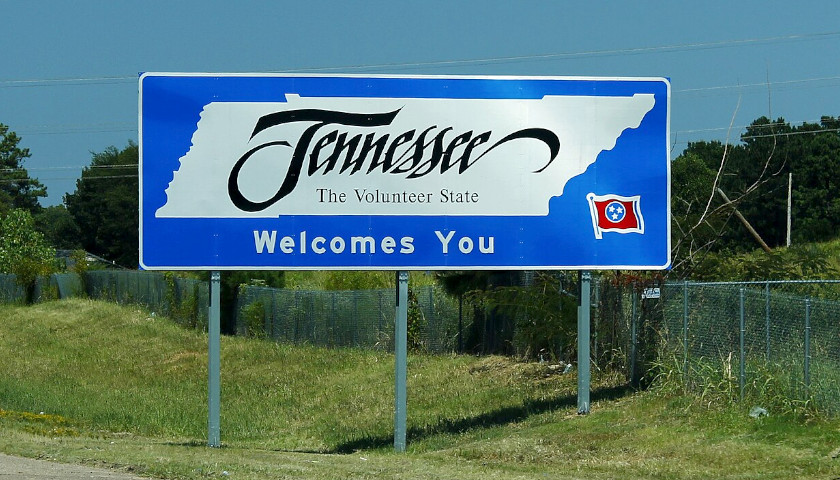
Photo “Tennessee Welcome Sign” by formulanone. CC BY-SA 2.0.