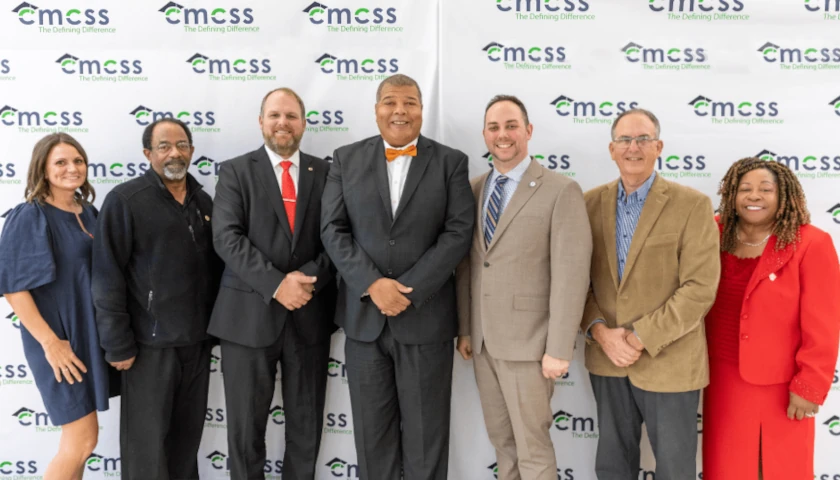
The Clarksville-Montgomery County School Board voted to pass a resolution on Tuesday establishing a neutral stance on school choice vouchers being debated by state lawmakers in the Tennessee General Assembly.
Read the full storyTag: vouchers
North Carolina Legislature Overrides Democrat Governor, Passes Sweeping School Choice Measure
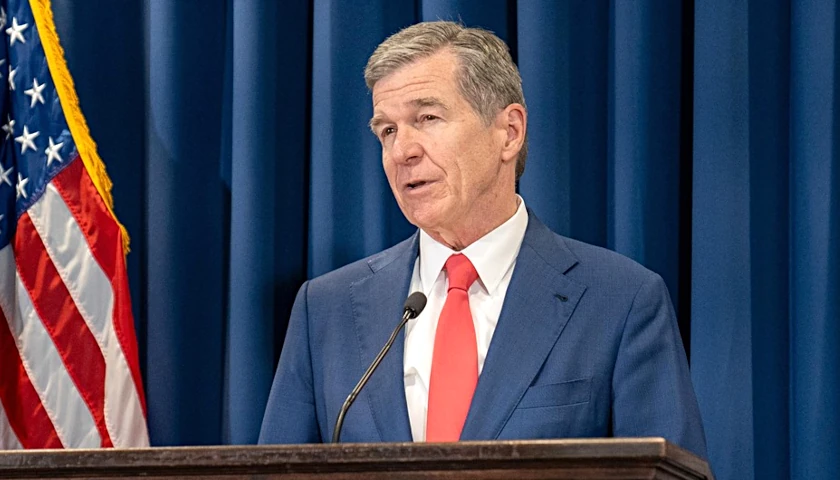
The North Carolina legislature successfully overrode Democratic Gov. Roy Cooper’s veto Wednesday in a measure that opens up school choice vouchers to over 50,000 students.
The bill, Require ICE Cooperation & Budget Adjustments, added additional funds to the state’s school choice program for the thousands of students that have been held on a waitlist, according to The Center Square. Cooper vetoed the bill in September claiming it would have a “disastrous impact” on public schools, but the North Carolina House voted against the governor on Tuesday and the Senate finalized the veto override in a vote on Wednesday.
Read the full storyQuestions Continue to Surface Around Company Contracted to Manage Tennessee Education Savings Accounts
The Tennessee Department of Education (TDOE) awarding Students First Technologies (SFT) a contract to manage the state’s Education Savings Account (ESA) program continues to raise concerns.
“Our government owes citizens the responsibility of providing the best service at an affordable price. Often they outsource services that could be done better or more efficiently in-house. ” JC Bowman, executive director of Professional Educators of Tennessee told The Tennessee Star, “When that work is outsourced it needs to be with people who have the adequate experience and skills to deliver quality service. We need to know who does the work, and they must be held accountable.”
Read the full storyTennessee Department of Education Partners with Private Firm to Manage Education Savings Account Program
The Tennessee Department of Education (TDOE) started a 5-year, $3.65 million contract with a private firm to manage the state’s Education Savings Account (ESA) program. While DBA Students First Technologies (SFT) is a relatively new company, ownership said it feels confident in its ability to partner with the state in serving Tennessee families exploring alternative education opportunities.
Read the full storyIn Pittsburgh, Massive School Spending Hasn’t Bought Massive Achievement
A Pittsburgh-based think tank’s analysis published this week shows the city’s public schools spend far more per student than the average public school even as achievement severely lags.
Examining student testing statistics and finance data, the brief by the Allegheny Institute for Public Policy (AI) determined that Pittsburgh Public Schools spend almost $30,000 per pupil — among the highest spending figures in the state — while their institutions score woefully low.
Read the full storyNew Poll Finds Solid Majority of Wisconsin Voters Want to See More Equitable Funding for Choice Schools
Liberals talk a lot about equity — until it comes to funding popular parental school choice programs.
A new poll by the Wisconsin Manufacturers & Commerce Foundation finds voters overwhelmingly believe there should be equitable funding for public, choice and charter schools.
Read the full storyIndiana Expands School Choice to Nearly All K-12 Students as Republican-Led States Continue Momentum
Indiana scored the latest school choice victory with nearly all, save for 3.5 percent of families with school-age children, qualifying for the state’s new voucher program, The Wall Street Journal editorial board noted last week.
“The hits keep coming on school choice in Republican-run states,” The Journal editors observed, detailing:
The new law raises the income cap to 400% of the free- and reduced-price lunch income level, which is now about $220,000 for a family of four. The bill also removes the other criteria for eligibility so that any family under the income limit can apply. Tens of thousands of additional students could qualify, and a legislative analysis projects that some 95,000 students might use the program in 2025, up from about 53,000 in 2023.
Read the full storyTennessee ESA Expansion Bill Moves to State House Floor for Final Vote
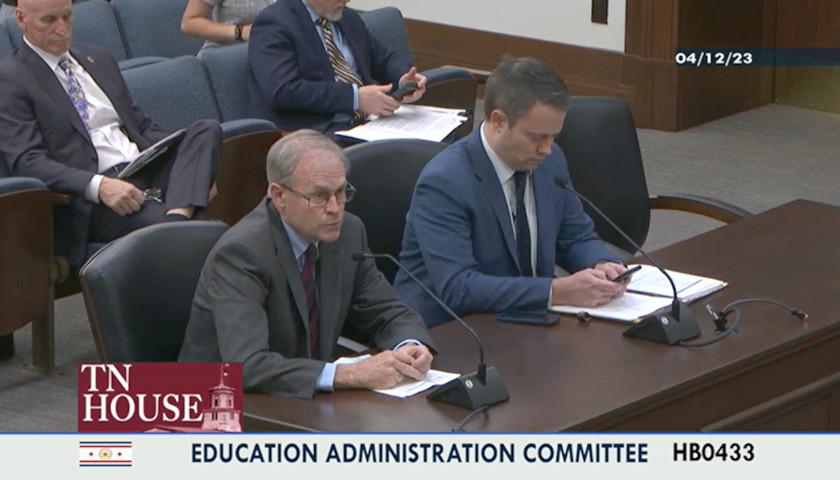
A bill expanding eligibility rules for Tennessee’s Education Saving Account (ESA) pilot program passed out of the House Education Administration Committee on Wednesday and is headed to the House floor for a final vote.
The bill would open the door for students in Chattanooga and Knoxville to enroll in private schools using state scholarship money.
Read the full storyState Committee Rolls Education Savings Expansion Bill to Next Week Due to Lack of Input from Tennessee Department of Education
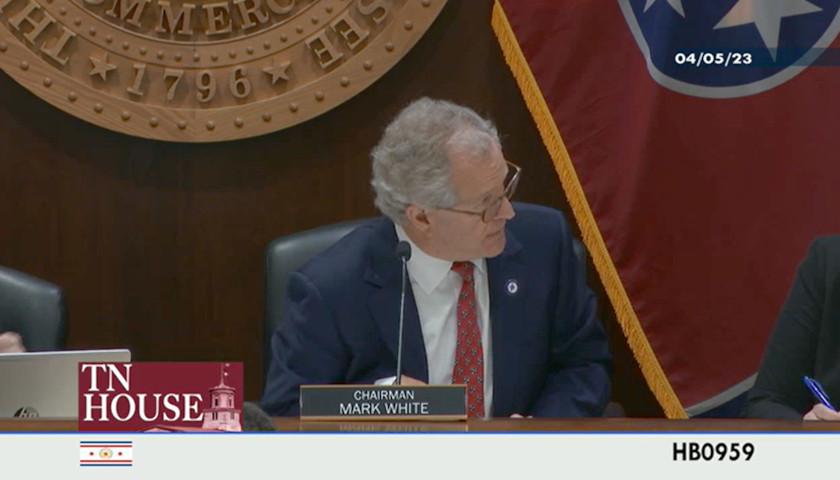
The State House Education Administration committee rolled a bill until next week that is designed to expand Tennessee’s Education Savings Account (ESA) pilot program. The postponement on Wednesday was necessitated because the Tennessee Department of Education (TDOE) was unavailable to supply lawmakers with needed information.
HB0433 would expand eligibility for enrollment to those who attend school in a district with five or more priority schools identified as being in the bottom 10 percent for performance. Currently, only students in Nashville, Memphis, and the Achievement School District (ASD) are eligible. This bill would allow students in Knoxville and Chattanooga. The Senate companion has already passed, but that version only includes Chattanooga.
Read the full storyLegislative Session Finds Tennessee Lawmakers Poised to Expand and Amend Existing Education Policies
The 113th Tennessee State General Assembly is set to convene at noon on Tuesday, January 10, and preliminary indications are that the state’s Department of Education (TDOE) will not be supporting any new initiatives this year. The official position of the TDOE is that the administration sets the legislative agenda for state agencies, but in the past, the department has led the charge on several occasions – including, but not limited to, literacy, high-quality materials, and school funding.
For their part, legislators appear to be looking to amend – and in some cases expand – past efforts to improve student educational opportunities. This year’s legislative agenda forsakes the bold initiatives of the recent past in order to tweak and expand existing laws. Education Savings Accounts (ESA), TISA, and the 3rd-grade retention policy are all on the table for modification this year.
Read the full storyMetro Nashville Government Files Notice of Appeal on ESA Ruling
Metro Nashville Government, along with Shelby County Government, has filed a notice of appeal on a court ruling dismissing their lawsuit over education savings accounts (ESA) legislation. This is the latest round in a series of legal actions brought forth in response to legislation passed in 2019. The filing of an appeal indicates that Nashville Government plans to continue its fight against legislation narrowly passed in 2019.
On November 23rd, of this year, a three-judge panel – made up of Chancellor Anne Martin, Judge Tammy Harrington, and Judge Valerie Smith – released a ruling in response to the initial lawsuit denying standing to the plaintiffs. In the court’s opinion, adjustments made by the state to offset potential losses in school funding for impacted districts, make any article arguments for lost funding purely hypothetical. That ruling cleared the plate of all legislation filed in opposition to the go signature legislation.
Read the full storyGovernor Lee’s Voucher Program Clears Another Legal Hurdle
Tennessee’s Education Savings Account (ESA) plan, often portrayed as a voucher program, won another legal challenge filed by opponents of the controversial legislation that targets Memphis and Nashville schools. A three-judge panel appointed by the Tennessee Supreme Court and made up of Chancellor Anne Martin, Judge Tammy Harrington, and Judge Valerie Smith, has ruled that the parties challenging the legislation have no legal standing. As a result, all challenges are dismissed.
This action, at least temporarily, removes all legal hurdles facing the 2019 Education Savings Account law. The law provides money for families to offset private school tuition, should they choose to pursue that option due to inadequate traditional school options.
Read the full storyFlorida NAEP Results Offer a Potential Harbinger for Tennessee
The release of the “Nation’s Report Card” on October 24th has led to a variety of pronouncements from a variety of experts. Many have expressed grave concerns over the potential effects on students, due to lost instructional time during the recent COVID pandemic. The value of this national test, designed to measure fourth and eighth-grade student learning, is in of itself a hotly debated issue. While the interpretation of the results of the National Assessment of Educational Progress (NAEP), which supplies the data for the Report Card, may be open to debate, they do offer a large trove of valuable information that can be used in the consideration and evaluation of policy. In some cases, providing a warning of future outcomes.
This year, Florida is publically celebrating its successful outcomes. In the wake of the positive results, Governor DeSantis sent out a press release using NEAP results to defend his response to COVID and his commitment to keeping schools open,
“We also knew that younger and at-risk students would be the most impacted if schools were closed, and the results speak for themselves. In Florida our 4thgrade students rank #3 in Reading and #4 in Math, achieving top 4 in both English and Math for the first time in state history, while lockdown California and New York aren’t even in the top 30.”.
While Florida’s fourth-grade results are exceptionally positive, they don’t tell the whole story.
Read the full storyBuckeye Institute Report Offers Solutions to Ohio Students’ Learning Loss
Responding to major learning loss suffered by Ohio students as a result of the school closures following the onset of the COVID-19 pandemic, the Columbus-based Buckeye Institute recommended policy solutions this week to help students regain what the education system did not provide.
On March 30, 2020, Republican Governor Mike DeWine ordered all in-person K-12 schooling closed throughout the state for the remainder of that school year. Students instead participated in “virtual classrooms” wherein they would watch their teachers’ instructions online. During the 2020-21 school year, many school districts continued to keep school buildings closed at least part-time.
Read the full storySchool Choice Supporters Encouraged by Latest Marquette Poll on Vouchers
More parents in Wisconsin are getting behind the idea of school choice.
The latest Marquette Law School Poll shows 58% of voters in the state support the idea of ending limits on vouchers for private or religious schools. That would open up school choice to more than just low-income families in many parts of Wisconsin. The poll says 33% of voters oppose the idea.
Read the full storyJC Bowman Commentary: School Funding, Vouchers, and the ASD
It is back to work for state legislators. The first week of the legislature has been very busy. While criticizing politicians is a national activity and a form of amusement for many, the truth is that most of these folks are good people, working hard, and trying to do the right thing for our state. It is always the good, bad, and ugly in any political system.
Read the full storyTennessee Lawmakers Introduce Bill to Award Funding to Families Impacted by School Closures, COVID Mandates
State Senator Mike Bell (R-Riceville) and State Representative Michael Curcio (R-Dickson) introduced a bill on Monday to award funding to families impacted by school closures or various COVID mandates.
The legislation, SB1647/HB1671, would award vouchers to parents who choose to relocate their child to a different school because of the issues.
Read the full storyCommentary: Breaking the Progressive Union Monopoly on Public Education
It’s hard to imagine a worse time for public education in America. The COVID-19 pandemic has cost millions of K-12 students a year of education, and Joe Biden has been elected president. At a time when innovation in public education is needed more than ever, Biden has appointed Miguel Cardona to serve as Secretary of Education.
To understand why Cardona, who previously served as Connecticut’s education commissioner, is not going to improve schooling in America, just consider the endorsements he’s received.
Read the full storyCommentary: Minority Communities Stand to Lose the Most Because of Judge’s ESA Decision
Next time you hear progressives talk about how they are the ones who are sticking up for minority communities, ask them to square their opposition to educational freedom – or the ability for families to customize their child’s education.
Progressives cheered this week as Nashville Chancellor Anne C. Martin ruled that the state’s education savings account program is “unconstitutional” because of an obscure section in our constitution where it talks about “home rule.”
Read the full storyLegal Motion Seeks to Block Implementation of Tennessee Education Savings Account Program
A legal motion filed Friday in Davidson County asks the courts to halt the implementation of the Tennessee Education Savings Account (ESA) Program.
Read the full storyGov. Lee Pushes Education Department to Launch School Vouchers a Year Early, in 2020-2021 Academic Year
Tennessee Gov. Bill Lee is pushing to launch his school voucher program a year early, in the 2020-2021 school year, education blog Chalkbeat said. The General Assembly had set a deadline of the 2021-2022 school year, the blog said. Lee told the Tennessee Department of Education to work with the Tennessee Board of Education to make the early launch happen for the Education Savings Account (ESA), or vouchers. Chalkbeat also said the early launch would move up the pace of expected lawsuits by organizations like the Tennessee Immigrant & Refugee Rights Coalition, which is preparing to challenge the law’s constitutionality. The law excludes students whose families enter the country illegally. Other critics say they worry about the potential for fraud. At least five school systems that have formally opposed vouchers have not done a good job of preparing their students for college, The Tennessee Star reported in May. The five school systems in Tennessee that have come out to formally oppose school vouchers haven’t exactly done that great of a job preparing students for college. This, according to statewide statistics members of the Tennessee Higher Education Commission reported last week. As The Tennessee Star reported, representatives from some of…
Read the full storyOhio School Voucher Program Doubles as More Public Schools Fail to Make The Grade
After a staggering number of Ohio public schools failed to make the grade, the state’s voucher and charter school system is poised for tremendous expansion. In Ohio, if the public school test scores of a student’s home district fall below a certain level, calculated by the Ohio Department of Education, a number of the students are automatically granted vouchers to attend private school and charter schools are permitted to establish themselves. This is intended to both give children from every country access to quality schools and alleviate the student burden on the lagging school. The public schools performed so poorly that charter schools will have 600 times more areas to expand into, and student access to vouchers will more than double. Teacher unions and many in the progressive activist community have aggressively opposed both school voucher programs and charter schools. They argue that these programs siphon off funding from the already financially strained school system. In addition, a number of private schools in Ohio were founded as religious institutions. While none can legally force children to engage in religious activity against their will, progressives maintain that as they are still religiously-oriented, it is a violation of the ‘separation church and state.’ Ironically, it was an…
Read the full storyJC Bowman Commentary: Open Enrollment is a Choice
As the focus on education choice is elevated by Governor-elect Bill Lee, maybe the easiest place to find initial consensus is with open enrollment. We must expand open enrollment policies in our public school districts.
Read the full storyGubernatorial Candidate Bill Lee: ‘I Would Be a Strong Advocate for School Choice’
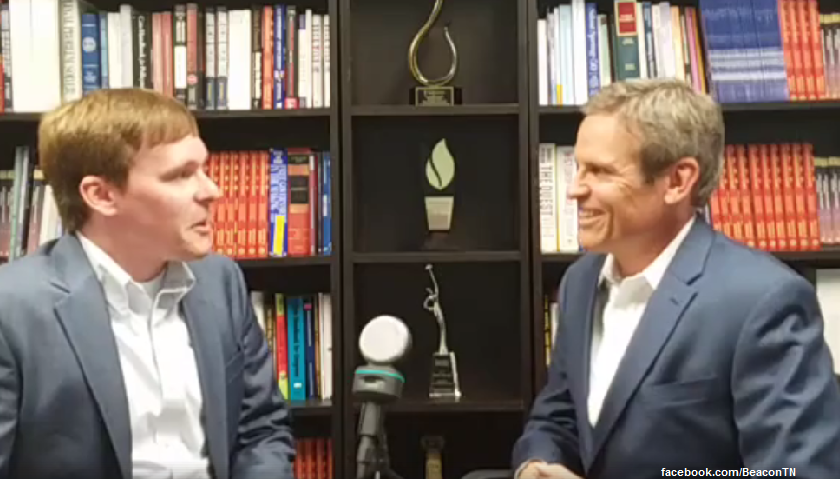
Republican gubernatorial candidate Bill Lee announced his support for school choice and charter schools during a Facebook Live interview with the Beacon Center in Nashville on Thursday. The Williamson County businessman has made education one of the key themes of his campaign. Justin Owen, President of the Beacon Center, interviewed Bill Lee one-on-one at the Beacon Center’s studios in Nashville on Thursday for about 13 minutes. It was the first of a series of Facebook Live interviews the Beacon Center plans to conduct with every major candidate for governor in Tennessee. Lee responded to a question posed by Jacob from Nolensville, relayed to him by Owen. “What will you do, if anything, to expand K-12 school choice to get at those education reforms?” Owen asked of Lee. “I had children that were home schooled, and were educated in private school, and were educated in public school. The reason that we had different kids educated different ways in my family is that I really do believe fundamentally that how my children are educated and where they are educated those decisions are best made at home, so parents need choices and they need options,” Lee said. “So I would be a strong…
Read the full story