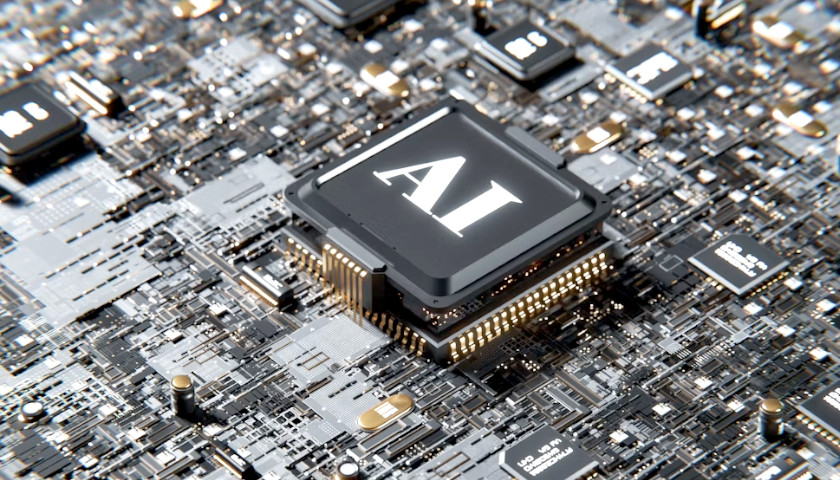
On September 29, President Trump put the heads of the biggest names in American AI in one room, and six of them signed a one-page safety accord: Google’s Sundar Pichai, Anthropic’s Dario Amodei, Meta’s Mark Zuckerberg, Nvidia’s Jensen Huang, OpenAI’s Greg Brockman, and xAI’s Elon Musk. I’m bullish on what these machines will do for us, and I think the accord points the right way. Industry should move first, and Washington shouldn’t write rules for technology it barely understands. But I gave every fund manager who told me his books were fine the same scrutiny I’m applying here. A pledge to police yourself works only when the people carrying the risk can check the work.
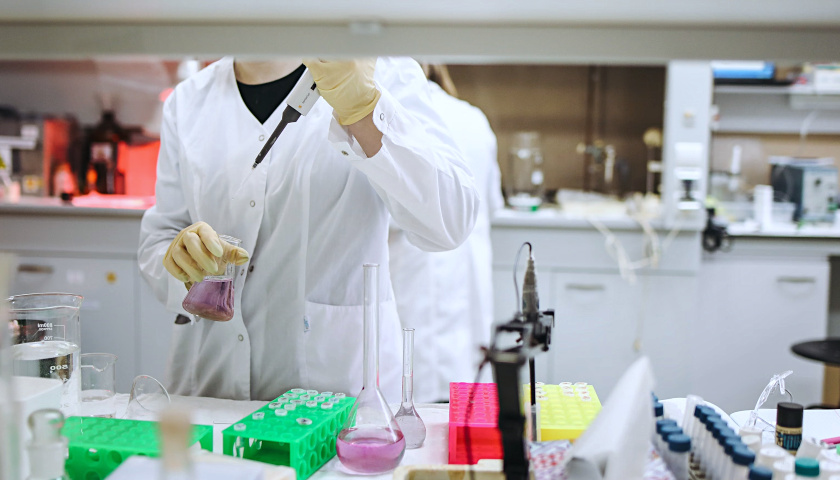
The upside deserves the lead, and biology comes first. In 2024, the Nobel committee honored David Baker for computational protein design and Demis Hassabis and John Jumper for protein structure prediction. Researchers are now building virtual cells, models that predict how a cell responds to a drug, a gene edit, or a disease process before anyone touches a pipette. The Arc Institute’s STATE was trained on roughly 270 million cells to forecast those responses. Its Evo 2 learned from 9.3 trillion nucleotides and showed better than 90 percent accuracy on the effects of BRCA1 mutations, and its code and weights are public, so any lab can test the claims. DeepMind’s AlphaGenome reads up to 1 million DNA letters at once and targets the 98 percent of the genome that sits outside protein-coding regions. Wet-lab validation stays indispensable, and the STATE’s own builders call it “just the first version.” If these tools hold up, they shorten the road from hypothesis to experiment.
Read the full story