
by Alex Welz
Three years ago, the Middle East underwent a generational transformation.
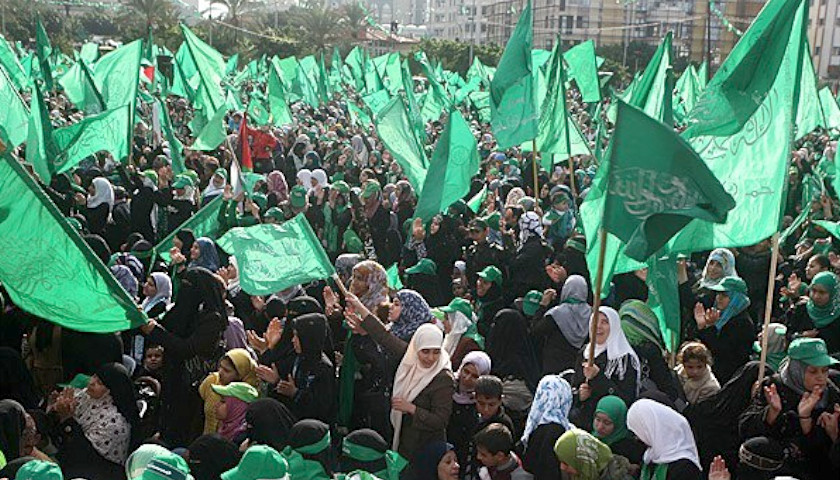
Hamas launched Operation Al-Aqsa Flood in the early hours of Oct. 7, 2023, massacring civilians, pillaging entire communities, and dragging hundreds (including 12 Americans) back to the Gaza Strip as captives.
While this proved to be a monumental tactical victory for Hamas—the deadliest single day for the Jewish people since the Holocaust—it set into motion a consequential series of events that would go on to unravel the Iranian-led Axis of Resistance and permanently alter the regional landscape.
Before Oct. 7, 2023, Hamas and its partner terror syndicate Palestinian Islamic Jihad were in firm control of the entire Gaza Strip. The enduring threat Israel faced from its southwest was clear from May of that year, when hundreds of rockets were launched from Gaza across the border. Hassan Nasrallah’s Hezbollah, the Lebanese terrorist organization and crown jewel of Iran’s proxy network, was entrenched on Israel’s northern border as the most heavily armed non-state actor in the world.
By mid-2023, the Syrian regime, another ally of Tehran bordering Israel to the east, gained readmittance into the Arab League and seemed to have emerged victorious from its 12-year civil war. Iran-backed militias in Iraq faced little internal pressure, and Iran felt sufficiently insulated from Israeli reprisals.
The outlook in October 2026 looks vastly different. Israel’s devastating response to the Hamas assault returned the surviving hostages, secured a framework for the terrorist organization’s eventual disarmament, and drastically reduced the group’s base of operations.
Since last year’s ceasefire, Israel has not experienced sustained rocket fire from Gaza, and a Board of Peace plan remains on the table for a technocratic Palestinian government to oversee the territory, with international peacekeepers playing a substantial role.
Israel’s retaliation against Hezbollah—which entered the fray on Oct. 8, 2023, shelling northern Israel in solidarity with Hamas—consisted of eliminating Nasrallah (the group’s vaunted, almost cult-like leader), the infamous pager operation, and the degradation of the organization’s weapons stock, with roughly 70% of Hezbollah’s firepower having been damaged and much of its southern infrastructure uprooted.
The group’s belligerence even provoked the historically timid Lebanese government to sign the Trilateral Framework with the United States and Israel in June—the first direct Lebanese-Israeli engagement of its kind since the 1980s—aimed at disarming the organization.
The rapid Syrian rebel offensive in December 2024 dislodged the 55-year-old al-Assad regime from power, depriving Iran of its most expansive land corridor in the region. In its place now sits a Sunni Islamist government with a disturbing history of its own, but an unequivocal hostility to Iran.
President Ahmed al-Sharaa has said that Israel and Damascus share “common enemies” and has openly pushed for a defense deal with Jerusalem.
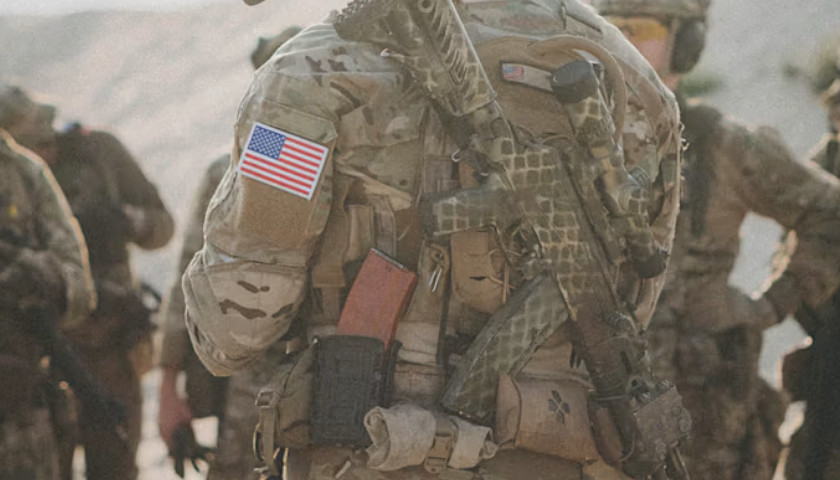
Although U.S. forces completed their withdrawal from Iraq at the end of September, Iraqi Prime Minister Ali al-Zaidi has set a June 2027 deadline for the disarmament of Iran-backed militias that operate independently of the Iraqi armed forces. The region should not expect an idyllic outcome, but the sheer political will—much like in Lebanon—to take such a firm and open stance against subversive networks is a welcome sign.
Hamas may have succeeded in the narrow sense of postponing a soon-to-be normalization between Israel and Saudi Arabia in 2023, but three years later, a diplomatic pact between the two remains a matter of “when,” not “if.”
The more significant post-10/7 breakthrough was a shift in the Israeli psyche: No matter how much Qatari aid Israel allowed into Gaza, how many Israeli work permits were issued, and how modern, expensive, high-tech, and fortified the border wall was, Hamas and other radical forces could not be placated.
Acceptance of this reality supercharged Israeli action across the region to further safeguard its interests and ensure the security of its people. This has come at a predictable cost to Western approval ratings, which have, indeed, taken a dramatic hit. Israel has instead cultivated diverse, strategic partnerships spanning India, Greece, the United Arab Emirates, Morocco, Azerbaijan, Cyprus, and Somaliland that stand to counterbalance increasing hostility from traditional Western allies.
Today, Israel stands as the preeminent military and economic power of the region. Challenges remain—such as an expanding Houthi footprint across the Red Sea—but Jerusalem should acknowledge the enviable position it now holds. In contrast, the walls are increasingly caving in on Tehran, with its economy in freefall, its military in tatters, its population restive, and its proxy network a shell of what it once was.
Decisive action, not accommodation, has produced the current state of the region.
Hamas no longer presents an acute military threat to Israel; Hezbollah is no longer the kingmaker it once was in Lebanon; Bashar al-Assad has fallen and now looks on from Moscow; rogue Iraqi militias may soon be confronted; and Operations Epic Fury and Economic Outcast have placed Iran on its most fragile footing since 1979’s Islamic Revolution. Hamas’s Oct. 7 “victory” proved too costly, undermining the very cause it sought to advance.
– – –
Alex Welz is a Senior Research Associate for the Middle East and North Africa at The Heritage Foundation.
Photo “Israeli Victims of October 7th” by Lizzy Shaanan Pikiwiki Israel. CC BY 2.5.