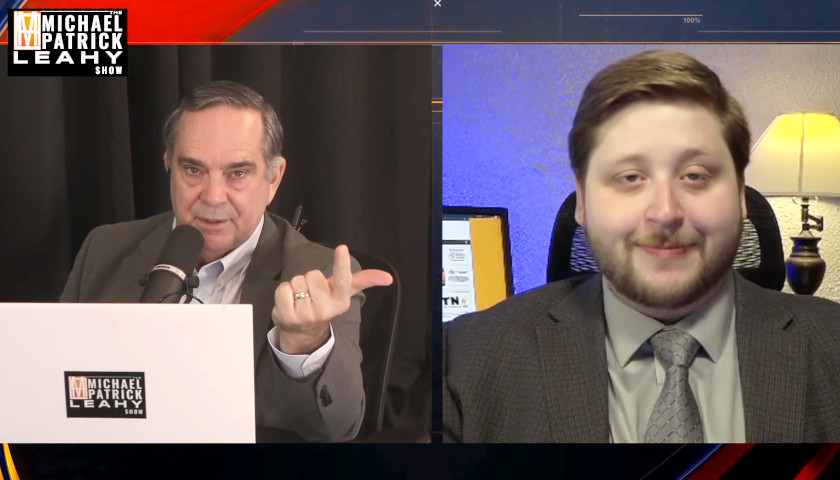
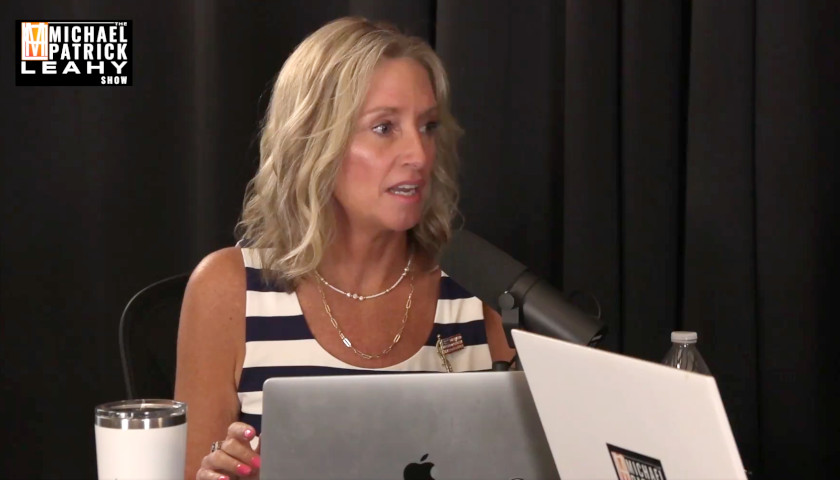
EJ Haust, official guest host of The Michael Patrick Leahy Show, is raising concerns over reported artificial intelligence (AI) clauses in contracts for child voice actors on the kids’ cartoon program Peppa Pig, arguing the matter extends far beyond one children’s television series and represents a warning about the future of AI-generated voices.
Speaking on Friday’s show, Haust discussed reports that Peppa Pig owner Hasbro is requiring child voice actors to sign contracts granting the company rights to “use, clone, train, and reuse” their voices indefinitely for AI-generated content.
“I like to bring you the stories that are flying under the radar a little bit, but also have larger world implications,” Haust said. “Hasbro… is reportedly requiring child voice actors to sign contracts that grant the company rights to use, clone, train, and reuse their voices indefinitely for AI-generated content and commercial assets, and it’s also framed as a take it or leave it clause.”
According to Deadline, nearly 1,000 industry professionals have signed an open letter organized by the Agents of Young Performers Association criticizing AI clauses in children’s performance contracts. The letter argues that children cannot meaningfully consent to the long-term use of their voices by AI.
Haust said her immediate concern centered on consent.
“My first thought was they’re children,” she said. “They don’t have the ability to consent to turning over their voices.”
Although parents or guardians ultimately sign contracts on behalf of child performers, Haust questioned whether that should give companies perpetual rights over a child’s voice.
“But what happens in 15 years when they’re like, ‘I don’t want you to do that anymore. I was a kid. I didn’t consent to that?’… It creates this very muddy puddle.”
During the segment, Leahy and Haust listened to an AI-generated demonstration voice that Hasbro presented to investors. Haust admitted the quality of the synthetic voice surprised even her.
“It’s not,” she said after Leahy remarked that the recording sounded like a real child. “That was the AI… introducing this new program… Even I got tricked.”
Haust argued the demonstration illustrated how rapidly AI voice technology has advanced and why the issue should concern far more than the entertainment industry.
“The reason I wanted to bring it here is because I think we need to have a larger conversation about deepfakes, and what is possible,” she said. “That voice you heard was a child actor not saying those things, but they took the voice of that child and made that video.”
She warned that similar technology could eventually be used against public figures.
“Think about now your regular actors… And what they can do. Think about illegally cloning a politician and their voice, what can we do with that? We could make them look like they said or did anything,” Haust said.
She also argued that requiring children to surrender voice rights could limit their future careers.
“They’re literally asking these child actors to sign away their ability to work in the future for that organization and probably elsewhere,” Haust said. “Now, it’s one thing if they’re an adult and they can consent, but these children don’t know what it means.”
She added that the reported contract structure leaves young performers with little negotiating power, noting, “Hasbro thinks that they have such the upper hand that they literally put this clause in saying, ‘Eh, if you won’t do it, somebody else will.’… So it’s a take it or leave it. ‘If you don’t want to agree to this, goodbye. We’ll find someone else.'”
While acknowledging the excitement surrounding AI, Haust predicted audiences will eventually place greater value on authentic human creativity.
“I think we’re going to swing the pendulum,” she said. “Authentic human interaction, actors, content, art is going to become special again.”
“We’re just in that honeymoon phase with AI where it all seems really exciting,” Haust continued. “You’re never going to get the same kind of excitement from an AI-generated concert… That’s never going to be replaced by AI.”
Haust concluded by stressing how the controversy surrounding child actors offers an opportunity to address broader concerns before AI-generated media becomes even more pervasive.
“It’ll happen to politicians, it’ll happen to actors,” she said. “But because it’s children, I think we’ve got an opportunity to raise awareness.”
Tune in now to The Michael Patrick Leahy Show – your AMERICA FIRST news talk!
– Watch LIVE here on X
– Watch LIVE on YouTube / Rumble / Roku / AppleTV
– Listen on Spotify
– Listen on WENO AM760 in Nashville
– Read more at @TheTNStarhttps://t.co/g2xdhRIlEh— Michael Patrick Leahy (@michaelpleahy) June 26, 2026
– – –
Kaitlin Housler is a reporter at The Tennessee Star and The Star News Network.