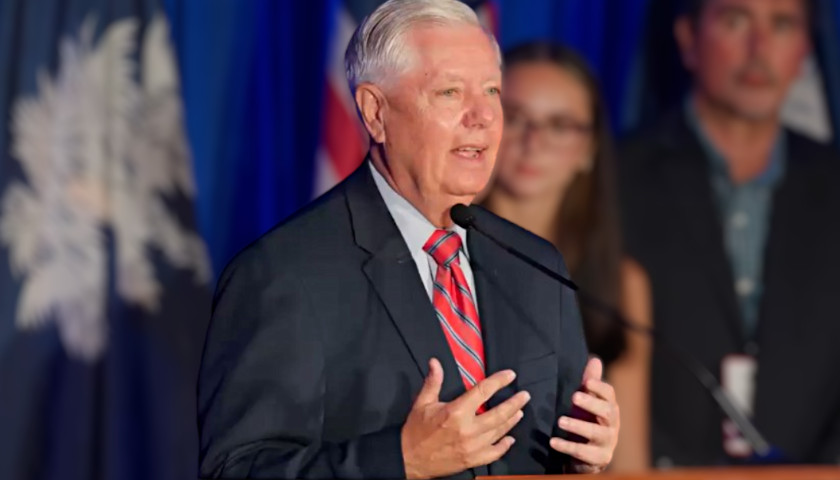
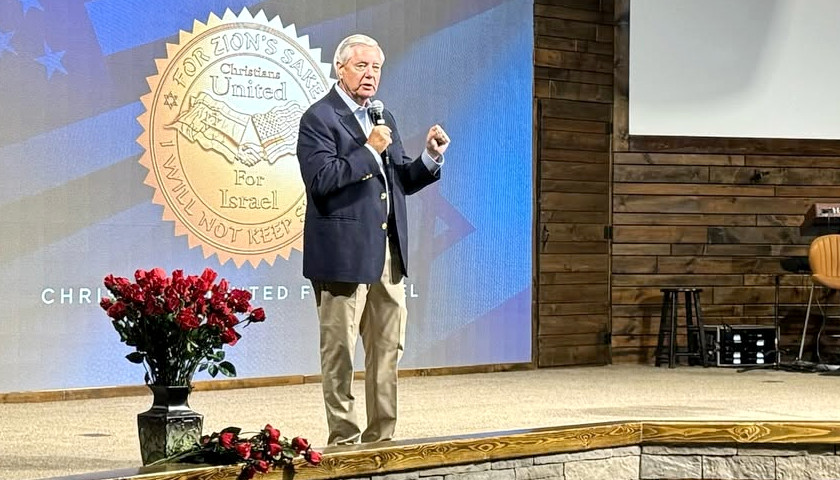
Following the death of U.S. Senator Lindsey Graham (R-SC) at age 71 from what his office described as a “brief and sudden illness,” with a preliminary medical examiner finding of an aortic dissection related to hardened arteries, Dr. Omar Hamada said the senator’s death underscores the importance of preventive medicine, arguing that earlier detection may have saved his life.
Graham died Saturday evening in Washington, D.C., after returning from a congressional trip to Ukraine, where he had met with Ukrainian President Volodymyr Zelenskyy and toured a munitions factory just one day before his death.
A preliminary medical examiner’s finding determined Graham suffered an aortic dissection related to hardening of the arteries, with a final cause of death pending toxicological and microscopic testing.
Appearing Monday on The Michael Patrick Leahy Show, Hamada said Graham’s death should serve as a reminder that many serious cardiovascular conditions can be identified and treated before they become fatal.
“This is another thing that can kill you immediately,” Hamada said. “But again, if we keep doing the things that we’re supposed to be doing as far as preventive medicine, there’s really no reason for most people to die of this suddenly.”
Hamada explained that an aortic dissection occurs when the inner lining of the body’s largest artery tears, allowing blood to force its way between the layers of the vessel wall.
“An aortic dissection is basically where the wall of the aorta kind of shears off as blood gets behind it because of an injury to the lining because of vascular disease, and it basically shuts off blood flow to anything past that point, what we call distal to that point,” he said. “And so the heart’s pumping blood, but it’s not going anywhere except into the walls of the aortic vessel. It’s not getting to the rest of the body. So it’s pretty much immediately fatal.”
According to Hamada, while an aortic dissection is often catastrophic once it occurs, the underlying disease process can frequently be detected before it reaches that point.
“If he had, for example, a whole body MRI or some preventative scans like that the precursors to that would have been picked up and it could have been avoided,” Hamada said. “When people have aortic disease, we can replace the aorta with Gore-Tex grafts and other types of materials. He could still be alive had he done the right thing at the right time.”
When asked whether Graham’s demanding travel schedule could have increased his cardiovascular risk, Hamada said prolonged travel, lack of sleep, and stress can contribute to cardiac events.
“Certainly. It increases stress, decreases sleep so his pressure’s probably gonna be elevated, and then also his stress level will be elevated, cortisol elevated. So it puts him at a higher risk of a cardiac event,” he said.
He added that long periods of sitting during travel also increase the risk of deep vein thrombosis, noting that blood clots are another potential concern for travelers.
Hamada concluded by stressing that the takeaway from Graham’s death should not simply be the tragedy itself, but the opportunity to encourage preventive screening and earlier intervention.
“The point I want our listeners to take away from this is that this isn’t always preventable, but so many of these things that people are dying of … we’re all gonna die, right? We’re all going to die of something,” Hamada said. “But at such a young age, speaking in terms of where we are in society today, we’ve gotta say that so many of these things are pre-diagnosable—we have the ability to pre-diagnose them and to avoid them, and to live much longer lives.”
Hamada said he believes Graham’s death illustrates the potential value of identifying cardiovascular disease before symptoms emerge.
“He could have had another 20 years,” Hamada stressed. “If we had caught this last year and repaired his vessel, he could still have another 20 years. So there was no reason for him to die so young.”
Tune in now to The Michael Patrick Leahy Show – your AMERICA FIRST news talk!
– Watch LIVE here on X
– Watch LIVE on YouTube / Rumble / Roku / AppleTV
– Listen on Spotify
– Listen on WENO AM760 in Nashville
– Read more at @TheTNStar https://t.co/pYAcNaH8k7— Michael Patrick Leahy (@michaelpleahy) July 13, 2026
– – –
Kaitlin Housler is a reporter at The Tennessee Star and The Star News Network.
Photo “Lindsey Graham” by Lindsey Graham.