
by Jordan Schachtel
American technological infrastructure is the building block for our modern lives. Data centers are not some side issue or a fringe zoning dispute; they account for a significant part of the physical foundation of the American economy. They are the functional infrastructure that can put the United States in a position to reindustrialize and onshore our economy, while allowing us to have the tools we need to compete with China. The loudest forces working to stop that buildout fall into exactly two categories: people who are simply misinformed about what these facilities actually do, and people who are being actively used, wittingly or not, to psyop American communities into fighting against their own country’s interests.
Every generation has an infrastructure fight. Some generations argued over interstate highway buildouts. Others, tragically, thanks to a very similar hysteria, set America back on the nuclear energy front by half a century. Today, the NIMBY fight is over a big warehouse full of computer servers, known as a data center, and whether America can keep building the physical machinery that runs our new innovation age.
Let’s be clear about what’s at stake. Data centers aren’t a luxury item. They are plumbing behind almost everything we do. Virtually every text message, every hospital record, every weather forecast, and every question you type into your keyboard passes through one of these buildings. And right now, the United States and China are locked in a race to see who can source the most computing power through these facilities. In all likelihood, whoever wins the buildout race will also end up dominating the most valuable technology of the next 50 years.
Let’s get a sense of how close that race really is. This week, the Chinese company Moonshot AI officially launched its newest AI model, called Kimi K3, and it’s making big waves online. Multiple reports put it at roughly 2.5 trillion parameters, which would make it the largest open-source AI model ever released out of China, with the ability to read and reason over documents nearly 1 million words long in a single sitting. Ahead of launch, the Financial Times reported that industry insiders expected Kimi K3 to match, or even beat, Anthropic’s flagship model, Claude Opus 4.8, and early benchmarks already show it beating OpenAI’s GPT-5.5 on several coding tests. The potential for China to usurp us in AI isn’t a scary hypothetical for some future decade. It’s our current reality. If antagonistic forces like Gov. Kathy Hochul win the day and impose sweeping data center moratoriums and bans, America could very well find itself with an inferior output.
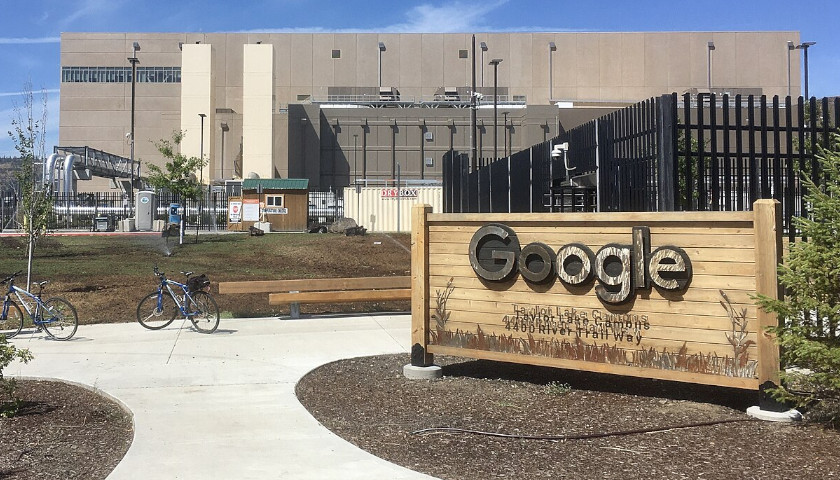
Now let’s talk about the scare stories you’ve probably heard about data centers, because most of them leave out the second half of the picture. Yes, these buildings use water and electricity. But the companies building them have been working hard to fix exactly these problems, and that part rarely makes the news. Microsoft cut the amount of drinking-quality water used at one of its Washington state facilities by 97 percent, and it’s now building data centers designed to use almost no water at all, by cooling themselves with a sealed, recycled loop instead of evaporating water into the air. Google has paid for water-restoration projects that put back more water into local supplies than several of its data centers use. Big tech companies are also increasingly building or buying their own power plants, including the prospect of nuclear projects, instead of just pulling more electricity off the local grid. These are engineering problems, and engineers are solving them.
Of course, that doesn’t mean every data center project is handled well, or that citizens shouldn’t ask hard questions about its own water supply and power lines before a company breaks ground. It means the blanket claim that a data center equals bad is just nonsense.
Data centers have tremendously bolstered tax revenue for local governments. In Loudoun County, Virginia, officials expect almost $900 million in property tax revenue from its data centers this year alone, nearly as much as the county’s entire budget. Missouri’s data centers brought in hundreds of millions of dollars in tax revenue in a single year. That money can go straight into schools, local infrastructure, and property tax reductions for citizens. Add in the tens of millions of dollars in construction jobs a single large data center campus creates while it’s being built, plus the permanent tech and trades jobs that follow, and the claim that these projects bring nothing to a community falls apart. Again, this doesn’t mean every data center deal is a good one; some are surely bad deals for taxpayers, and residents are right to demand transparency. But that’s a reason to negotiate a better deal for a worthy construction project, and not a reason to ban the whole industry.
Moreover, some of the loudest “grassroots” opposition to data centers isn’t grassroots at all. An investigation by the Bitcoin Policy Institute traced a network of activist nonprofits funded by Neville Roy Singham, an American businessman who sold his consulting company for $785 million in 2017 and moved to Shanghai, China, working alongside Chinese state media outlets to push the same message: stop American AI infrastructure. The report links this network to campaigns that helped delay or block roughly $23.6 billion in data center projects, contributing to local building bans and construction freezes around the country. One group Singham funds, CodePink, run by his wife, Jodie Evans, has openly described opposing American data centers as part of fighting a “new Cold War on China,” almost word-for-word language that turned up in Chinese state media days later.
This isn’t just a think-tank whitepaper anymore. CBS News reported this week that Singham is under criminal investigation by a federal grand jury in New York. The investigation reportedly started by looking into whether Singham broke the Foreign Agents Registration Act (FARA). It has since grown into a criminal tax investigation over whether he illegally moved money through nonprofits he controls. In Congress, the head of the House Ways and Means Committee has demanded documents on whether Singham’s groups are coordinating with Chinese officials, and the head of the Senate Judiciary Committee has separately pushed the Justice Department to determine whether CodePink should be forced to register as a foreign agent.
Surely, most of the inquiries about data centers in your town or city are genuine and deserve to be heard. But two things can be true at once. There are real local concerns, and there are foreign-linked influence and astroturf campaigns aimed at deliberately thwarting American infrastructure and innovation.
Nobody has to rubber-stamp every developer who shows up with blueprints, and communities have every right to negotiate hard. Due diligence is warranted, but we can’t let ideological degrowthers and foreign governments talk this country out of building the infrastructure that will decide if America leads in the decades to come.
– – –
Jordan Schachtel is an independent journalist who covers AI, tech, and world politics, and he’s the publisher of The Dossier on Substack.
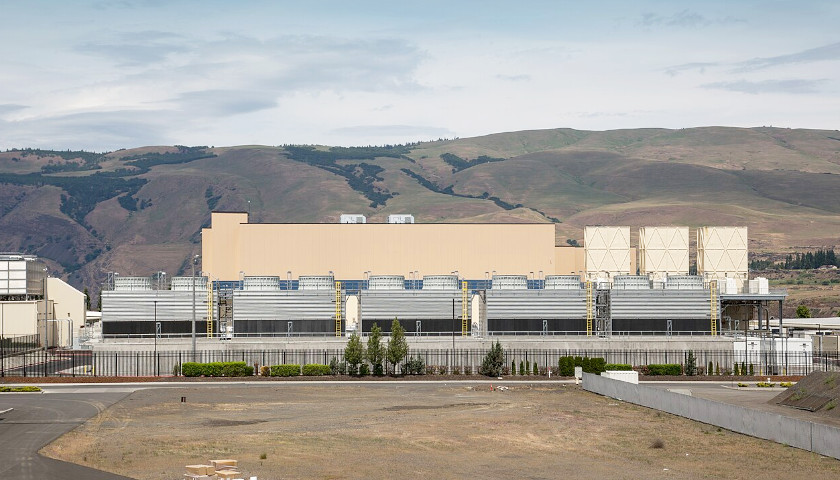
Photo “Data Center” by Tony Webster. CC BY 2.0.


I will support data centers 100% if you can assure us that additional ones will not expand the ability of the surveillance state to spy on us.