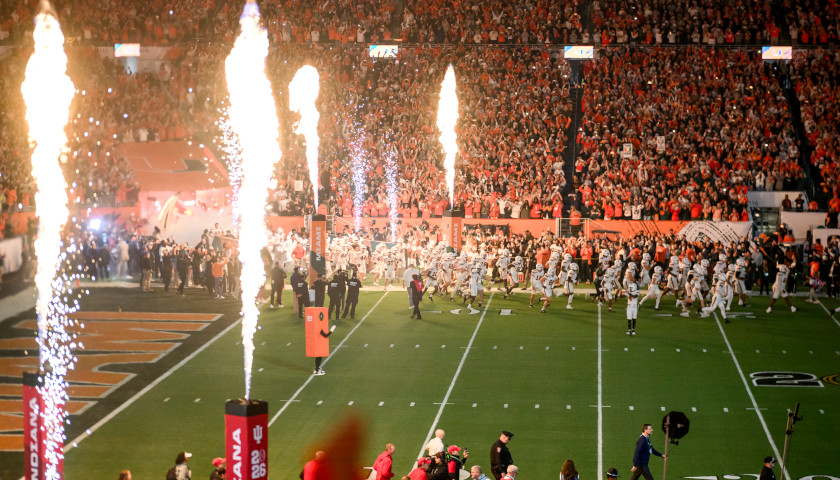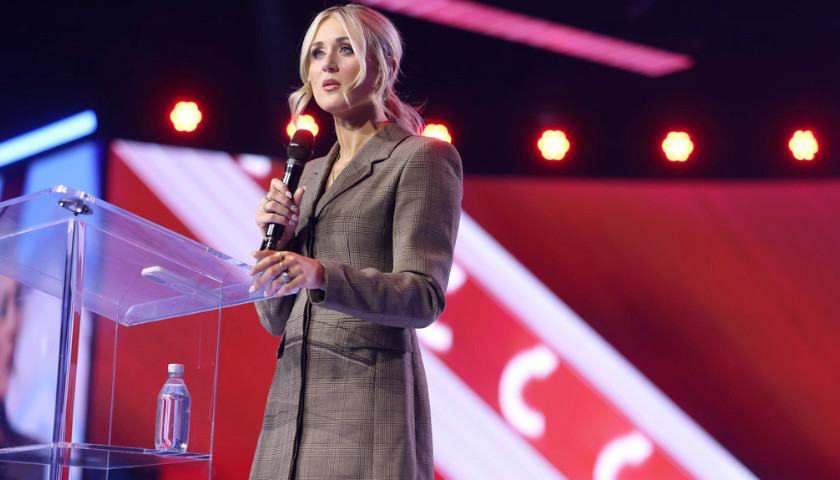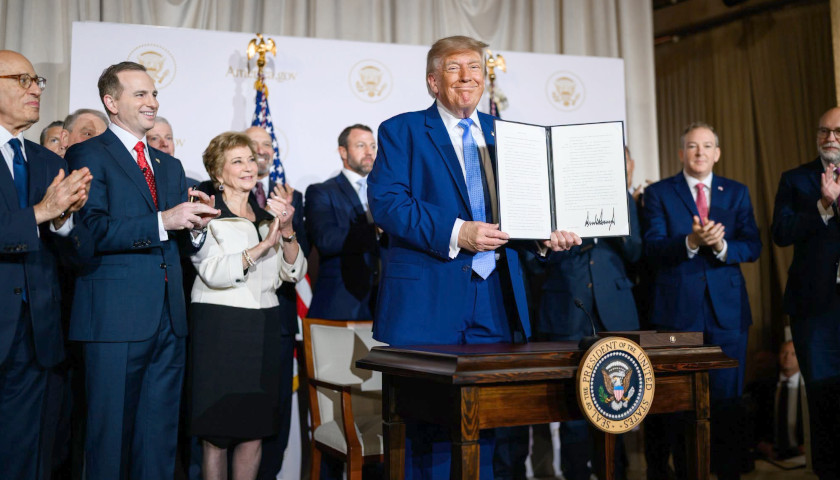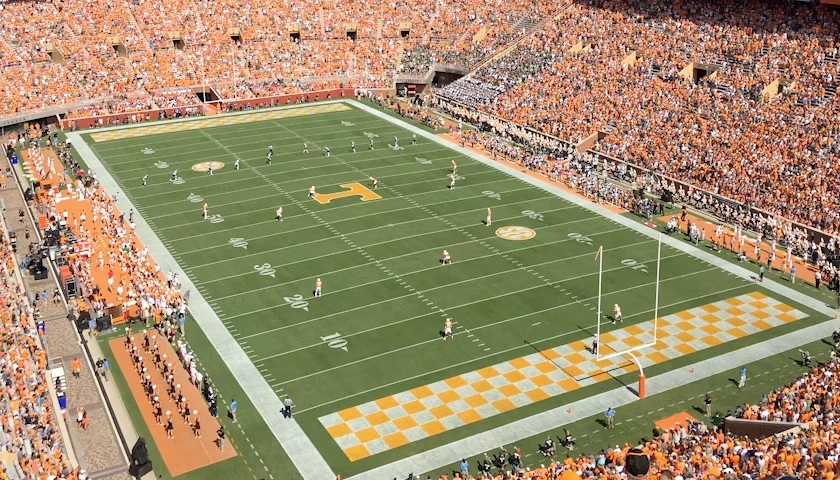
Congress is on the verge of passing major college sports regulations, but it remains to be seen whether it can pass them on time.
The U.S. Senate passed the bipartisan Protect College Sports Act (PCSA) 77-22, which seeks to regulate the ever-changing world of college athletics.
The bill establishes rules for college athletic eligibility, including transfer rules, and regulations for name, image, and likeness (NIL).
PCSA creates rules for revenue sharing with college players, prevents agents from taking more than 5 percent in fees from student-athletes, and guarantees players’ scholarships and healthcare five years post-eligibility.
The bill protects women’s and Olympic sports from being cut and prevents state laws that prohibit biological males from competing in female sports from being eliminated.
Despite the bill passing last week, the U.S. House is on recess until after the midterm elections, with expected plans to return to session on November 9th.
House Speaker Mike Johnson (R-LA-04) said he expects the House to consider the PCSA when it returns, according to Front Office Sports reporter Amanda Christovich.
The House will have around eight weeks to pass the bill until the 119th Congress ends on January 3rd, 2027. If the bill is not passed by then, the process will need to start again in the next congressional session.
When Representative Michael Baumgartner (D-WA-05) introduced the PCSA’s companion bill in June, it got assigned to the House Judiciary, Energy and Commerce, and Education and Workforce committees. However, the bill never got a hearing in these committees.
Education and Workforce Committee Chairman Tim Walberg (R-MI-05) and Energy and Commerce Committee Chairman Brett Guthrie (R-KY-02) said one of their main concerns about Congress attempting to regulate college athletics is whether student-athletes would be considered employees.
“Without addressing employment, smaller universities along with women’s and Olympic programs may face massive financial burdens and be forced to cut programs and scholarships across their athletic departments,” they said in a May statement.
“Between employment uncertainty, a private right of action that could invite years of costly litigation, and vastly expanding the scope of the bill, we are concerned this may inadvertently further destabilize college athletics,” they added.
The Senate-passed PCSA does not address whether student-athletes will be considered employees. The bill takes a “neutral” position on the topic.
Last year, the House attempted to pass its own version of a bill that would regulate college sports called the Student Compensation and Opportunity through Rights and Endorsements (SCORE) Act.
This bill would have prevented student-athletes from being considered employees.
Furthermore, the SCORE Act would have given intercollegiate athletic associations, such as the NCAA, the ability to create rules around player eligibility, transfers, recruiting, revenue sharing, and NIL disclosure agreements.
The SCORE Act also would have broadly shielded the NCAA, athletic conferences, and schools from antitrust liability related to NIL, revenue sharing, recruiting, athlete eligibility, and transfers.
House Education and Workforce and Energy and Commerce committees passed the SCORE Act, but the bill never went to the House floor for consideration.
House Majority Leader Steve Scalise (R-LA-01) told The Washington Sun last week that if the House takes up the bill, amendments will be introduced that “will keep the focus of the bill on letting the schools govern themselves.”
Scalise told the outlet that allowing the schools to have “strong antitrust protections” will prevent courts from overruling “the decisions made by the schools.”
“Look, we’ve got our own process. We want to make sure we get this right, because it’s really important that we allow the schools to govern themselves,” he added.
– – –
Zachery Schmidt is the digital editor of The Star News Network. Email tips to Zachery at [email protected].