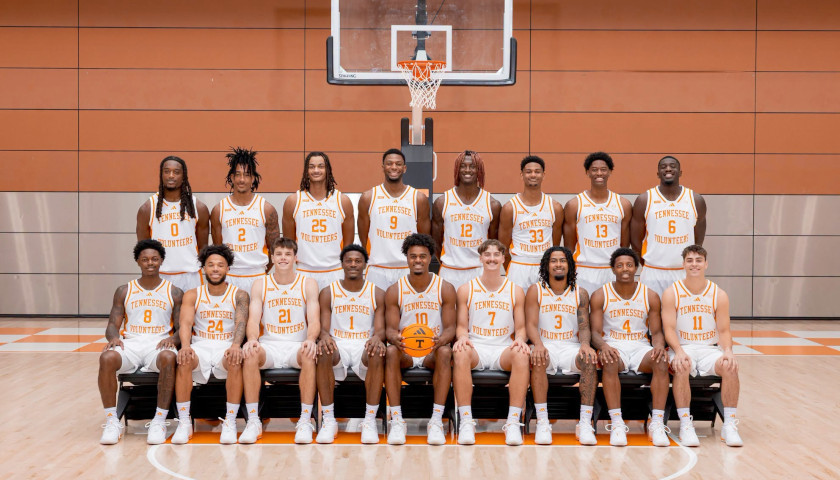
The University of Tennessee (UT) and its men’s college basketball team released a mock collective bargaining agreement (CBA) that offers a potential framework for college athlete employment.
The mock CBA addresses compensation, healthcare, player movement, academics, and enforcement.
Athletes.org, which is a players association, and three player representatives, graduate student Tyler Lundblade, junior Campbell Duncan, and sophomore DeWayne Brown II, developed the CBA and took it to UT’s athletic director, Danny White.
The athletes and school finalized the CBA after multiple rounds of negotiations.
The player association said other sports and conferences could adopt the CBA. UT’s college football team is also working with athletes.org to develop its own separate CBA with the school.
White said UT takes “a lot of pride in being extremely athlete-centric, and listening to our players’ interests through athletes.org has shown that sharing perspectives through meaningful dialogue isn’t something to be afraid of.”
“Collective bargaining is a proven model that works across all of professional sports and, through athletes.org, athletes can help create a healthy, durable solution for the future of college athletics,” he said.
Lundblade said working with the player association “has shown us what’s possible.”
“College athletes are mature enough to bring in billions of dollars of revenue every year; we’re also mature enough to sit at the table, negotiate for ourselves, and come to an agreement on a CBA that works for both us and college sports,” he said.
Duncan noted athletes “operate like professionals in every facet of our lives: from our schedules and practices to how we handle our business.”
“Having a players association and a CBA solidifies our seat at the table, empowering us to negotiate our working conditions, protect our rights, establish benefits for during and after our playing days and ensure our voices are heard as decisions are made about our livelihoods,” he explained.
The athletes’ CBA would replace the current revenue-sharing agreements and university-affiliated NIL deals with a universal services agreement that would pay players for their athletic services.
The CBA would include a bargained salary cap paired with a required spending floor, mandatory minimum compensation for all rostered players, and a freshman pay scale.
Player contracts would include performance bonuses for athletes who perform well and stay at the university for more than two years.
Under the CBA proposal, injured athletes would be allowed to keep their entire guaranteed compensation for the contract year and keep their scholarships.
The CBA would require UT to provide health care-related coverage at least two years after athletic-related injuries. UT would also be required to provide five-year coverage to people who stay on the team for more than two years, as well as lifetime coverage for catastrophic injuries.
The CBA would also provide players access to mental health professionals outside of the athletic program.
Regarding transfers, the proposed CBA would allow a 15-day window starting one week after the national championship, with anti-tampering rules and a five-year eligibility clock.
If a player’s athletic obligations force him off of his intended major, the CBA would require UT to fund the degree completion for up to 10 years after his final season.
Agents representing players must be certified and be subject to a 5 percent cap on agency fees. Caps would not exist for NIL agreements not subject to CBA review.
An independent arbitrator would handle any player grievances.
– – –
Zachery Schmidt is the digital editor of The Star News Network. Email tips to Zachery at [email protected].
Photo “University of Tennessee’s Men’s College Basketball Team” by Tennessee Basketball.