
by Ashe Short
Ohio State University has agreed to pay the federal government a $2.1 million settlement over allegations the school didn’t disclose employee affiliations with China when seeking federal research funding, becoming the latest university to settle over such allegations.
The public research university received an undisclosed amount of funding from NASA and the National Science Foundation from November 2012 to August 2023, during which it failed to disclose on the grant application any foreign government support received by the top researchers.
Researchers are prohibited from using grant funds in collaboration with China, its government-run universities, or any Chinese government-owned companies.
“American universities that benefit from the federal government’s support for scientific research and advancement must fully disclose all foreign funding in their grant applications,” Assistant Attorney General Brett A. Shumate of the Justice Department’s Civil Division said in the agency’s announcement Monday of the settlement. “We will continue to hold accountable any university that fails to comply with disclosure requirements designed to protect research security and federally funded scientific achievements.”
According to an eight-page document signed by both parties, “the settlement agreement is neither an admission of liability by OSU nor a concession by the United States that its claims are not well founded.”
Though a senior official at NASA’s Office of Inspector General called the settlement a “major financial recovery on behalf of the American public,” the sum represents a tiny fraction of what OSU received in grants over the years. In 2024, the school received more than $81 million in research grants just from the NSF, though much of that likely didn’t involve China-linked researchers.
The settlement resolves allegations that starting in 2014, OSU’s annual Faculty Activity Reports identified affiliations with Chinese universities and research organizations, but did not disclose that information when seeking grants from NASA or NSF.
The agreement document also states OSU denies allegations related to failing to disclose that a former professor, C.K. Shum, and other school personnel who were members of his lab were affiliated with, listed on grant applications for funding from, and/or receiving funding from the People’s Republic of China while working on the federal research grants that were awarded by NASA and NSF. The school also said it agreed to the settlement to “avoid the delay, uncertainty, inconvenience, and expense of protracted litigation of claims.”
In 2019, the school learned that one of the principal investigators on a research grant was a participant in China’s Thousand Talents Program, which recruits individuals with knowledge or access to foreign technology intellectual property. OSU did not notify NASA or the NSF about this revelation until 2023.
OSU is not the first school to pay the federal government due to allegations that it did not disclose foreign affiliations in grant applications.
In October 2023, Stanford agreed to pay $1.9 million, though it is unclear whether China was the foreign country supporting its research.
In July 2024, the University of Maryland agreed to pay a $500,000 settlement for allegedly failing to disclose current and pending foreign funding that three of its researchers received from Chinese entities on federal grant applications.
And in September 2024, the Research Foundation of the State University of New York at Albany (SUNY) agreed to pay $313,000 to settle allegations that it failed to disclose the Chinese affiliations and research support of a faculty member on three different grant applications.
The settlement is the latest revelation regarding the Thousand Talents Program, which a nonprofit oversight group warned about earlier this year, Just the News reported at the time.
The American Accountability Foundation reported that it had found nearly two dozen Chinese academics working at elite U.S. colleges and universities. The organization recommended expelling the academics because of the “dual-use threat of their research, close ties to the military research sector in China, and/or clear ties to the Chinese Communist Party.”
The Chinese government no longer has a website for its Thousand Talents Program, but the program has been named as part of China’s United Front Work Department, which leader Xi Jinping has called “an important magic weapon for the party to defeat the enemy.”
The DOJ has called the program “one of the most prominent Chinese talent recruitment plans that are designed to attract, recruit, and cultivate high-level scientific talent in furtherance of China’s scientific development, economic prosperity and national security.”
The schools that employed Chinese academics, according to the AAF report, included Harvard University, Carnegie Mellon, Cornell University, Brown University, Purdue University, the University of Wisconsin, Georgia Tech, the University of Florida, the University of Michigan, University of Florida, Penn State University, Michigan State University, Indiana University and the University of Southern California.
In August, the Pentagon ordered 30 universities to audit their financial and research ties to foreign entities, including China, or risk losing federal research funding, Fox News reported.
Harvard, New York University, Georgetown, MIT, the University of California-Berkley, Oklahoma State University, Penn State University, and others were included in the list.
Another China-backed program on U.S. campuses drew a similar crackdown a few years earlier.
Beginning around 2018, Congress barred certain Defense Department funds from universities that hosted so-called “Confucius Institutes” — Chinese government–backed language and culture centers that once numbered about 100 to 118 on U.S. campuses. A 2020 State Department designation treated the Confucius Institute U.S. Center as a “foreign mission” of the People’s Republic of China.
By late 2023, a Government Accountability Office review found the network had collapsed to fewer than five institutes, with more than 60 percent of surveyed schools saying the risk of losing federal money drove the closures “to a great extent”.
Critics had long argued the institutes were a United Front influence tool that chilled discussion of Taiwan, Tibet, and the Chinese Communist Party. The National Association of Scholars later reported that many closed programs reappeared under new names or through the same Chinese partner universities. Among the schools that shut an institute was the University of Maryland, which closed the first U.S. Confucius Institute in 2020 — the same campus that later paid $500,000 over alleged failures to disclose Chinese research funding.
Among the schools that shut an institute was the University of Maryland, which closed the first U.S. Confucius Institute in 2020. The same campus that later paid $500,000 over alleged failures to disclose Chinese research funding.
– – –
Ashe Short is a reporter at Just the News. Executive Editor of The Tennessee Star and The Star News Network Christina Botteri contributed to this report.
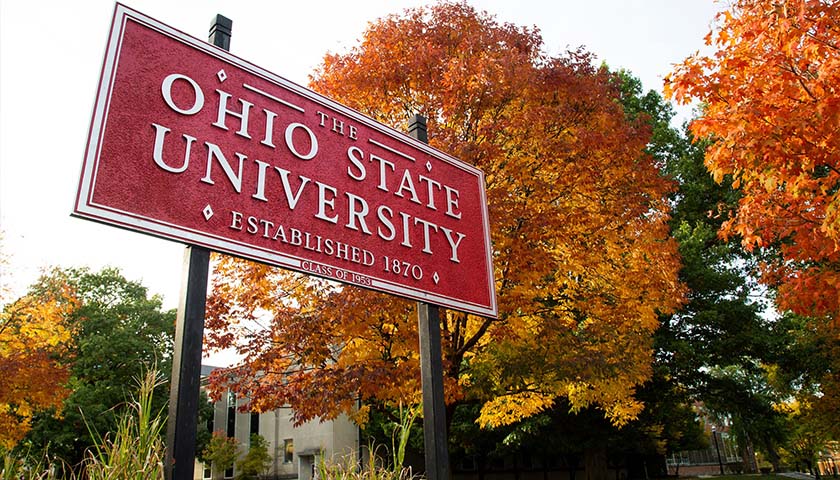
Photo “Ohio State University” by Ohio State University.