by Steven Richards and John Solomon
Ex-prosecutor Jack Smith’s team got permission to monitor the phone of Donald Trump’s top aide from two federal judges openly critical of the president and did not reveal in their written request to those judges it would be secretly tracking contacts with criminal defense lawyers, according to freshly unsealed court records.
The documents made public Monday by the White House Government Transparency Task Force include two applications by the former special counsel to use a pen register and a tap and trace device to monitor the incoming and outgoing calls of current White House chief of staff Susie Wiles’s phone while she led Trump’s fundraising operation at the SAVE America PAC.
Pen register and tap and trace devices are used to gather private data on telephone calls, including when and where the calls were made, from whom to whom, and the length of the calls. While they do not include the actual contents of the calls, they often provide investigators with valuable information.
Both applications came in winter and spring 2023 after Trump announced he was running for president and as Smith investigated allegations that the former president had mishandled classified documents after the conclusion of his first term. The filings are redacted, but an administration official told Just the News that Wiles was the subject of Smith’s requests.
In the first application, which was submitted to the District of Columbia court in February 2023, Smith provides a glimpse into why his team was looking into Wiles’s communications.
“Historical telephone connection records provided by AT&T revealed that beginning at least as early as May 2022, the Subject Phone Number was used to communicate with subjects and witnesses shortly before and/or after they spoke with the Government in connection with this criminal investigation,” Smith wrote.
The following day, U.S. District Judge Beryl Howell, senior judge in the District of Columbia, signed an order approving the application. “The Court finds that an attorney for the government […] has certified that the information likely to be obtained by such an installation and use is relevant to an ongoing criminal investigation,” Howell wrote.
Howell was appointed by President Barack Obama and has ruled against several of Trump’s policy directives in his current term.
For instance, Howell struck down his executive order targeting Perkins Coie, a law firm involved in the genesis of the Trump-Russia collusion allegations. She ruled it violated the First, Fifth and Sixth Amendments by punishing the firm for its work for Hillary Clinton and its election litigation. The Justice Department sought her recusal, citing her remarks in the Jan. 6 cases, but Howell refused.
Howell railed against Trump, saying that “No American President has ever before issued executive orders like the one at issue […] and in purpose and effect, this action draws from a playbook as old as Shakespeare, who penned the phrase: ‘The first thing we do, let’s kill all the lawyers.’”
Howell has been a central figure in Trump-related litigation for nearly a decade. As chief judge of the D.C. federal court from 2016 to 2023, she oversaw grand juries used by Russia collusion Special Counsel Robert Mueller and by investigators probing efforts to overturn the 2020 election.
In March 2023, she pierced the attorney-client privilege between Trump and one of his lawyers, Evan Corcoran. In that case, she relied on the crime-fraud exception, forcing more testimony in the classified documents case. She also enforced Smith’s warrant for Trump’s Twitter account and fined the company $350,000 for slow compliance.
A second application to extend the pen register and tap and trace monitoring of Wiles’s phone came in April and was approved by U.S. District Judge James Boasberg, another Washington DC-based jurist famously critical of Trump, the court records show.
Boasberg was more subtle in his excoriation of the Trump administration. In a case involving the deportation of accused Venezuelan gang members under the 1798 Alien Enemies Act, Boasberg condemned the lawyers for being “intemperate and disrespectful” in court, The Guardian reported. In March 2025, Boasberg ruled against the Trump administration’s use of the Alien Enemies Act of 1798 for deportations. The conflict came to a head when two deportation flights continued to El Salvador despite Boasberg’s verbal order to turn them around. In response, Trump called him a “radical left lunatic” and pressed for his impeachment.
Boasberg also ordered Justice Department officials to explain why he should not find that they violated his previous March 15 order by failing to return two planes carrying the deportees that landed in El Salvador. Boasberg later found probable cause to pursue criminal contempt against administration officials in the case. However, his overreach was reigned in by an appellate court, which called on him to end the criminal contempt inquiry. The majority described it as an improper “judicial intrusion into the autonomy of a coequal department.”
Several lawmakers have called on Boasberg to be impeached for his actions, which have also spurred proposals from Congress to reform the federal judiciary.
Boasberg also played a key and controversial role in the Trump-Russia collusion saga as the leader of the Foreign Intelligence Surveillance Court, Just the News previously reported.
In his role at the head of that court, he made a number of divisive decisions, including a slap on the wrist for a member of the FBI’s Crossfire Hurricane team, the appointment of officials who had defended the FBI’s actions during the Russiagate saga, the renewal of the FBI’s FISA powers, and more.
There is yet no definitive answer as to why Smith’s applications in the classified documents case, which was located in Florida, were submitted instead to two judges in Washington, D.C.
Whether DOJ violated not just the civil rights of the parties, but the law itself
The unsealing of the court documents follows the revelation in recently declassified documents that Smith’s team monitored Wiles’s communications. The pen register and tap and trace devices picked up records of Wiles’s contacts with 21 defense lawyers, journalists and campaign advisors, Just the News previously reported.
The written applications make no mention that Smith’s team would be tracking the calls of defense lawyers. The targeting of lawyers’ communications raised questions about whether the communications dragnet infringed Trump’s attorney-client privilege as he was defending himself during Smith’s investigation.
Harvard University law professor emeritus Alan Dershowitz told Just the News that prosecutors could learn valuable information about a defense strategy from pen register data even without the content of calls and that Smith’s team likely had an ethical obligation to inform the judges it intended to track such calls.
“If they were going after lawyers, lawyers who have a Sixth Amendment obligation to defend their clients, and withholding that information from the courts, that can raise serious not only legal issues but ethical issues as well,” Dershowitz said.
Constitutional considerations and expectation of privacy in the mix
Similar questions were raised last month about Smith’s efforts to obtain long-distance call records and text messages of members of Congress, which are protected by the Constitution’s speech and debate and separation of powers clauses.
The House Judiciary Committee released an interview transcript of a federal agent assigned to Smith stating he did not know that he was gathering phone records on members of Congress and would have needed special permission to do so if he knew.
Sen. Marsha Blackburn, R-Tenn., whose records were targeted by Smith’s team, has sued the prosecutor alleging he violated her constitutional rights as a member of Congress.
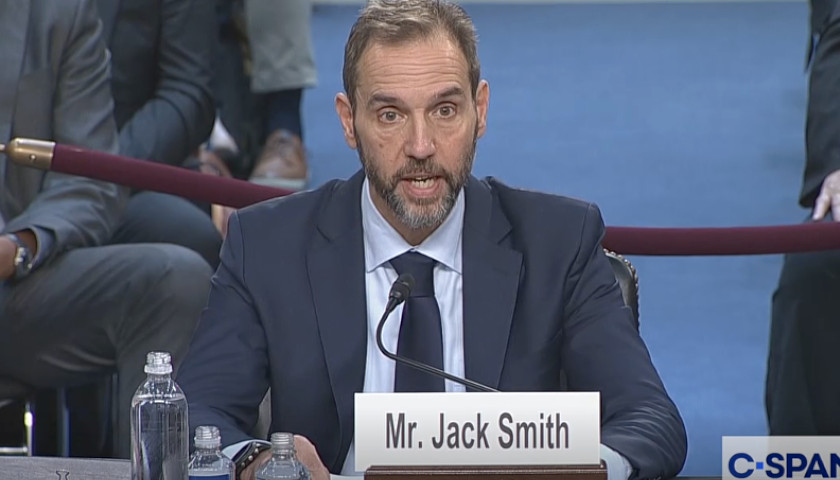
Smith has testified he believes he did nothing wrong and would investigate and prosecute Trump the same way today, insisting no politics were involved in his decision-making.
Nonetheless, Dershowitz said the record of Smith’s tactics, which included tracking the lawmakers’ and defense lawyers’ phone records and the tracking of Trump’s wife and son’s travels, was troubling.
“Here we have a clear violation of expectations of privacy. When you make a phone call and you’re a lawyer, you do not expect the fact that you made that phone call to, say, a wiretap expert or a lie detector expert, or a witness. You don’t expect that the government will get access to that, and yet the government has access to who the defense attorneys called,” Dershowitz said.
“And that would give them a tremendous advantage in any case. It could give them the names of potential witnesses, and you know ultimately that would have to come out, but it wouldn’t have to come out at the time that this investigative tactic was being used,” he added. ” So I think there’s a lot of work to be done to make sure that expectations of privacy and civil liberties beyond the Constitution are adhered to.”
The House Judiciary Committee, whose chairman Jim Jordan had his phone records targeted, concluded in a report last month that Smith’s team “ran roughshod” over separation of powers to obtain the communications logs.
– – –
Steven Richards is a reporter for Just the News. John Solomon is an award-winning investigative journalist, author and digital media entrepreneur who serves as Chief Executive Officer and Editor in Chief of Just the News.