Republicans lost control of the U.S. House and Senate in Tuesday’s midterm elections largely because voters were dissatisfied with the Iran war and the economy, public affairs specialist Clint Brewer said Wednesday during an appearance on The Michael Patrick Leahy Show.
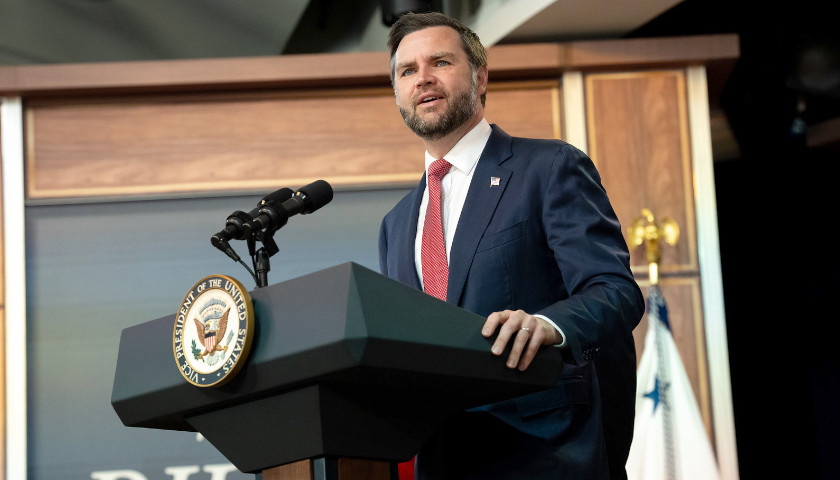
Brewer, a former journalist, said Vice President JD Vance offered what he considered the most “insightful and direct” analysis of the Republican losses in a post on X, in which Vance blamed the Iran war for Democratic victories.
One of the things the data analysts on our side obsessed over was "composition"—whether the electorate looked close enough to 2024 for Republicans to win. And despite polls that showed a Democrat blowout, the data kept on telling us the same story: in some states turnout was…
— JD Vance (@JDVance) November 4, 2026
Vance argued that Republicans experienced strong turnout in key states but that some of President Donald Trump’s 2024 voters crossed party lines and supported Democrats because of frustration with the administration’s policies.
“Our voters showed up…many of them voted for Democrats,” Vance wrote. “The reason we lost is the war.”
Brewer said that trend extended beyond the national election and potentially affected Republican results in Tennessee as well.
“Republicans made their displeasure known,” Brewer said.
He also credited Democrats in Tennessee with running stronger campaigns than in previous election cycles.
“I actually made a point to a journalist yesterday before the polls closed, and I think in Tennessee at least, the through line was on the Democratic side, even though most of them did not win – we saw better organized, better funded, and more professional Democratic campaigns in the state than we’ve seen in 20 years,” Brewer said.
Brewer pointed to Trump’s campaign promise to avoid further foreign conflicts as one of the commitments that contributed to Republican losses.
“Not getting in any more wars,” Brewer said when Leahy asked which campaign promises Republicans had failed to keep.
“The United States of America has been at war in the Middle East pretty consistently since 9/11,” Brewer added, noting that Americans have limited appetite for continued military involvement in the region. “Americans don’t want to be in any more wars. They certainly don’t want to be in them in the Middle East.”
He said the conflict also contributed to higher gasoline prices, compounding inflation that persisted after the COVID-19 pandemic.
“That drove gas prices, which compounded the inflation that’s left over from the pandemic. Inflation was driven up during the pandemic by a rash of government spending, and then we’ve doubled down on that government spending,” Brewer explained. “It puts a lot of money into the economy and it creates inflation. Again, oversimplifying, but that is the basic economic concept.”
“Republicans lost on the war and kitchen table issues, and that’s it,” he added. “It’s not complicated.”
However, Brewer cautioned against interpreting the election results as evidence that Democrats had permanently expanded their political base.
“I think the electorate has been fundamentally changed,” Brewer said. “I don’t think it’s been fundamentally changed for Democrats. I don’t think that all these people that put them over the finish line in all these seats are avowed, dedicated Democrats.”
Instead, he described the emergence of a more flexible electorate willing to cross party lines based on its interests.
“I think what you’re seeing is the rise of a flexible, fluid, independent voter base in this country that is going to vote for their interest above party,” Brewer said.
He added that the voters who made up Trump’s 2024 coalition were not necessarily lifelong Republicans.
“But you’ve gotta speak to their issues, and we didn’t do it,” Brewer said. “In our policies, in our decisions. Just didn’t happen.”
Looking ahead, Brewer said the political consequences of Tuesday’s election will also depend on how Democrats handle their newly strengthened position in Congress.
He suggested divisions within the Democratic Party could become more apparent as its members begin governing, particularly over calls to impeach and indict members of the Trump administration.
“We’re in this sort of, for Democrats, honeymoon phase. We’re in the afterglow of the election, and everybody’s so happy. But before this election cycle, Democrats were very fractured. And a lot of those fractures are represented in the people they elected. You have a wide divergence in worldviews of the people that are being sent to Washington. When does the Democratic civil war start? It’s pretty much now,” he said.
Tune in now to The Michael Patrick Leahy Show – your AMERICA FIRST news talk!
– Watch LIVE here on X
– Listen on Spotify
– Listen on WENO AM760 in Nashville
– Read more at @TheTNStar https://t.co/1c90tbNQlb— Michael Patrick Leahy (@michaelpleahy) November 4, 2026
– – –
Kaitlin Housler is a reporter at The Tennessee Star and The Star News Network.
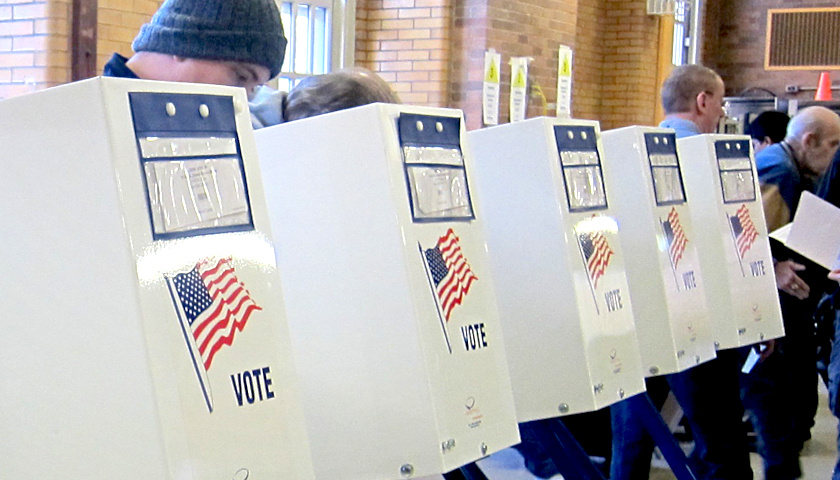
Photo “Election Day Polling Place” by Joe Shlabotnik CCSANC2.0.