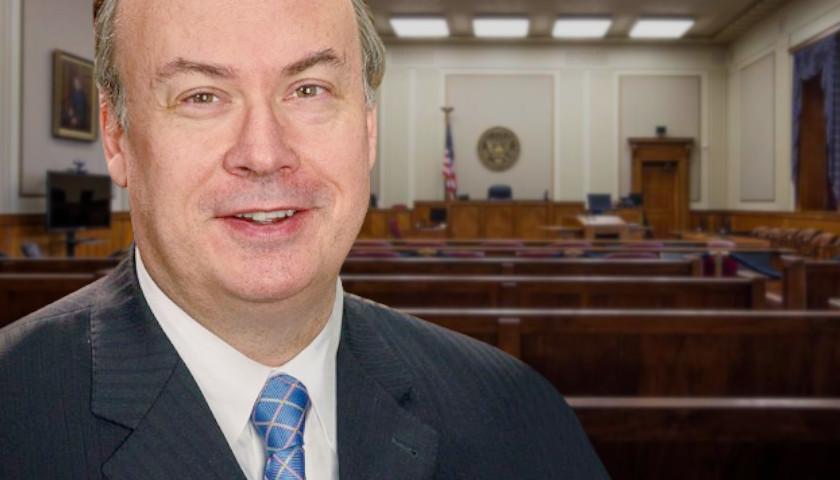
Jeff Clark, head of the Oversight Project Law Firm, said the organization is working to defend conservative attorneys facing disciplinary proceedings he characterizes as politically motivated, as the U.S. Supreme Court considers whether to review California’s disbarment of constitutional attorney John Eastman.
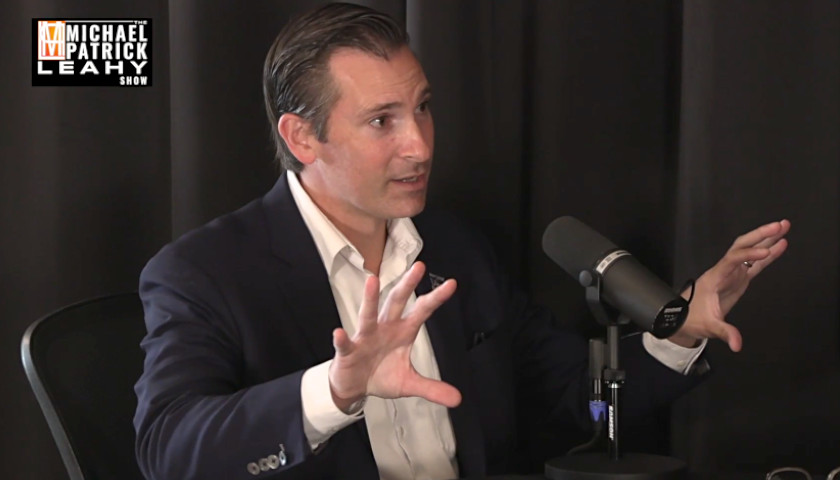
In an exclusive Monday interview with The Tennessee Star’s CEO and Editor-in-Chief Michael Patrick Leahy, Clark discussed the Oversight Project’s recent amicus curiae brief urging the Supreme Court to take up Eastman’s case, the constitutional questions surrounding his disbarment, and the organization’s plans to expand its legal operation.
“We’re obviously trying to defend those who should not be attacked by the lawfare, barfare industry, and it truly is an industry,” Clark said on The Michael Patrick Leahy Show.
“We’ve discovered at least $183 million that they have to play with, and I think that’s a conservative estimate,” he added.
The Oversight Project filed its amicus brief in Eastman v. State Bar of California, No. 26-336, last week. The brief argues that California improperly punished Eastman for his legal advocacy concerning the 2020 presidential election and that a presidential pardon covering the conduct at issue provides an additional reason to set aside his disbarment.
Clark said Eastman’s case has proceeded through a trial, an intermediate review by California’s State Bar Review Department, and a denial of review by the California Supreme Court.
“John’s last stop is trying to convince the US Supreme Court to take the case and reverse that disbarment order from the California Supreme Court,” Clark explained.
The Supreme Court subsequently ordered California to respond to Eastman’s petition, according to Clark, who said he believed the Oversight Project’s brief helped prompt that development.
“We like to think our brief really helped catalyze it because a short time after our brief was filed the Supreme Court ordered California to file a response,” he said. “That’s a good sign.”
Clark said the response was expected around mid-November, with a decision on whether to hear the case potentially coming by early December.
Clark explained four justices must vote to grant review. He acknowledged that securing Supreme Court review of a disbarment case can be difficult but argued that Eastman’s case presents unusual constitutional questions.
“Our view is that this case is unique in several respects,” Clark said.
He pointed to First Amendment concerns and federal jurisdiction, arguing Eastman’s conduct involved advocacy before federal courts and the vice president rather than state courts.
“They also basically found that John had committed a federal crime,” Clark said, referring to California’s disciplinary proceedings.
Leahy questioned whether a state court had jurisdiction to make such a determination. Clark cited the Supreme Court’s 1890 decision in In re Loney, which he said supports the argument that state authorities cannot impose liability for conduct within federal jurisdiction.
Clark also highlighted Eastman’s presidential pardon.
“But if it were in federal court, then John would seem to have an absolute defense that he has a pardon from President Trump,” Clark said. “The California Supreme Court didn’t care a whit about that either.”
The Oversight Project’s brief separately argues the pardon bars California from maintaining a disbarment based on the pardoned conduct, citing the Supreme Court’s decision in Ex parte Garland.
The brief also challenges California’s application of its moral-turpitude standard, claiming the state failed to apply strict scrutiny to Eastman’s political speech.
Clark said his organization is pursuing a broader effort to counter what it views as politically motivated attorney discipline.
“I think they’re just trying to raise the costs of being a conservative lawyer, or as David Brock, when he formed the 65 Project—which is a total barfare operation—said he wanted to make conservative lawyers, Trump-adjacent lawyers toxic in their legal communities,” Clark said. “That’s what their real goal is, and we want to fight back against that.”
The 65 Project has pursued complaints against attorneys who supported legal challenges to the 2020 election. The Oversight Project’s brief cites remarks by the group’s founder, David Brock, about using bar complaints to shame attorneys and make them toxic in their professional communities.
Clark said the Oversight Project Law Firm was established to help people facing such proceedings and to challenge what he described as unequal enforcement of professional standards.
“If they’re filing these things, especially in cases where they don’t have any connection, they’re just reading the newspapers—we want to see the disciplinary authorities look at them,” he said.
The organization is also working on an amicus brief for former Trump adviser Peter Navarro, Clark said, seeking to help him overturn his conviction before the Supreme Court.
The Oversight Project Law Firm currently has about five attorneys, according to Clark, who said the organization hopes to more than double its staff using a grant it has received.
“Our larger ambitions, beyond the one- to two-year mark, are to expand more,” Clark said.
Tune in now to the Tennessee Bonus Hour on The Michael Patrick Leahy Show – your AMERICA FIRST news talk!
– Watch LIVE here on X
– Listen on Spotify
– Listen on WENO AM760 in Nashville
– Read more at @TheTNStarhttps://t.co/NuPBao1bnZ— Michael Patrick Leahy (@michaelpleahy) October 19, 2026
– – –
Kaitlin Housler is a reporter at The Tennessee Star and The Star News Network.