
Michael Patrick Leahy, CEO and Editor-in-Chief of The Tennessee Star, and EJ Haust, official guest host of The Michael Patrick Leahy Show, warned that the U.S. Supreme Court’s decision striking down President Donald Trump’s executive order seeking to end birthright citizenship will encourage additional illegal immigration.
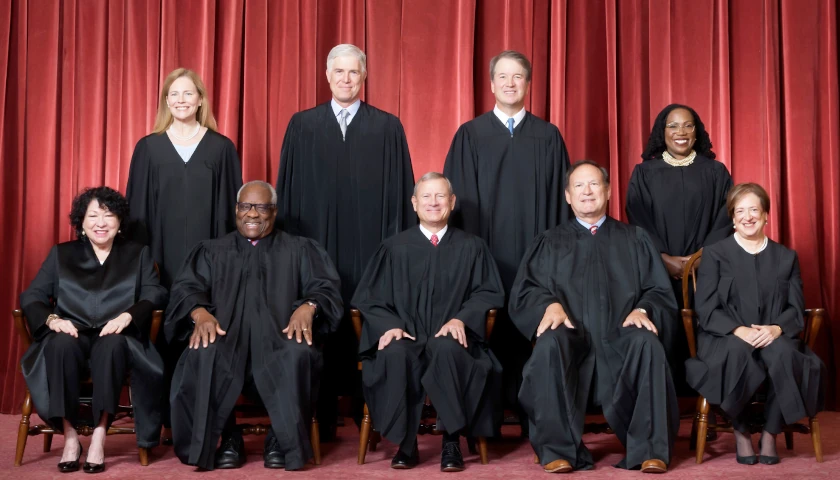
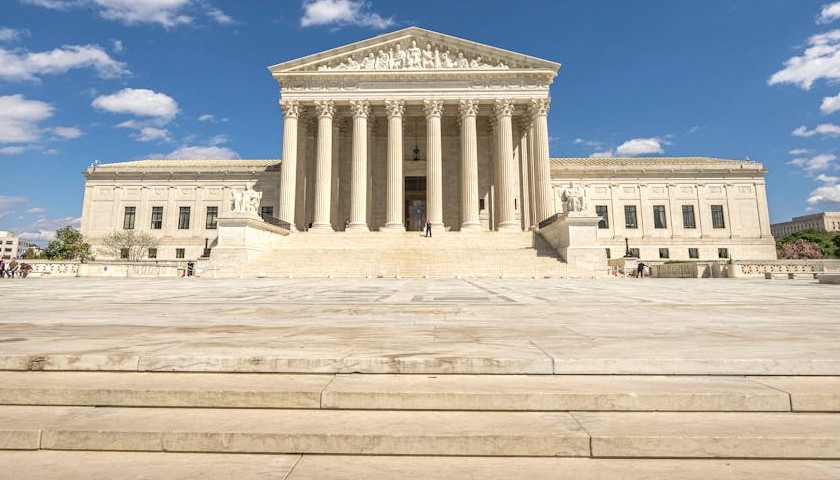
On Tuesday, the Supreme Court ruled in Trump v. Barbara that Trump’s executive order conflicts with the 14th Amendment’s Citizenship Clause, with Chief Justice John Roberts writing that children born in the United States to parents who are unlawfully or temporarily present in the country are citizens at birth under the Constitution.
Opening their discussion on Tuesday’s show, Leahy described the decision as “a significant day in American history.”
“June 30, 2026 is a significant day in American history… because in essence the majority of the United States Supreme Court apparently thinks the Constitution is a suicide pact because they’re opening the doors… to six billion people in the world to just get a plane ticket to the United States of America… have a baby, and then that child becomes an American citizen, and they go on welfare right away, and you and I are gonna be paying for them, and then they’ll bring their parents in,” Leahy said.
Haust argued the ruling has broader cultural implications beyond immigration policy.
“You’re fundamentally changing the culture of the United States,” Haust said. “And that’s the problem.”
“There’s obviously a massive welfare problem as far as immigrants coming to the United States and then drawing on the system at a far higher rate than natural born citizens. But even if they’re not drawing on the system, they are fundamentally different culturally,” she added.
Haust went on to argue that immigrants from several regions do not share what he characterized as traditional American values.
“So if you’ve got someone—we hear a lot about African nations, we hear a lot about the Caribbean and we hear a lot about China. None of those places have cultures that are in any way American. Pick yourself up by your bootstraps, individual responsibility means individual greatness—which ultimately leads to national greatness,” she said.
Haust also questioned why immigrants maintain ties to their countries of origin.
“When they come here and they wave their flags of their original nation and say how great their birth nation or their nation of citizenship or history is is so great, then why do you want to be here then in the United States? I could tell you why. And it’s to fundamentally change it,” she stressed.
Leahy argued another motivation is access to government benefits.
“But also to basically get all of our benefits that they get as citizens,” he said.
The conversation then shifted to what policy options remain following the Supreme Court’s decision.
Leahy argued that a constitutional amendment is unlikely and instead suggested Congress and the administration should pursue statutory and executive actions to reduce birth tourism and illegal immigration.
Discussing proposed legislation, Leahy highlighted U.S. Senator Marsha Blackburn’s (R-TN) Ban Birth Tourism Act.
“That would be a very good law,” he said.
He also referenced U.S. Senator John Cornyn’s (R-TX) Back Off Act targeting organized birth tourism schemes.
“The Supreme Court has said that there’s nothing in this decision that makes it illegal for… a foreign person from China today… to take their pregnant wife, get on a plane from Beijing to LA or Hawaii, have a child, leave after a week. That child today is an American citizen,” Leahy said.
Haust replied, “Which is just outrageous.”
She suggested lawmakers could consider additional policy changes beyond birth tourism legislation.
“I do think there might be some things that we can do to revoke citizenship for persons who fail to return to the United States within 20-some years… They have to spend a certain amount of childhood here or something like that. I think there’s a lot of very creative things that we could do,” she said.
Haust added that reducing incentives to immigrate illegally should remain a priority.
“Ultimately we have to—this is the key to everything—we have to make it less desirable to come here and draw off of our system. We have to not provide the different benefits to people who can’t afford to be here,” she argued.
With regard to executive actions the administration could pursue in wake of Tuesday’s ruling, Leahy suggested temporarily suspending visas and exploring additional regulations.
Haust endorsed pausing temporary visas while broader reforms are considered.
“All temporary visas—stop them right now. And the president can do that. Evaluate and revamp,” she said.
In a logic-defying decision, SCOTUS ruled the Constitution is a suicide pact.
✈️Fly in → 👶have a baby → 🇺🇸instant citizenship + 💵welfare for the whole family.
They’ve opened the doors to six billion people around the world to fly in and create instant American citizens — who… pic.twitter.com/lOkq7vc43X— Michael Patrick Leahy (@michaelpleahy) June 30, 2026
– – –
Kaitlin Housler is a reporter at The Tennessee Star and The Star News Network.