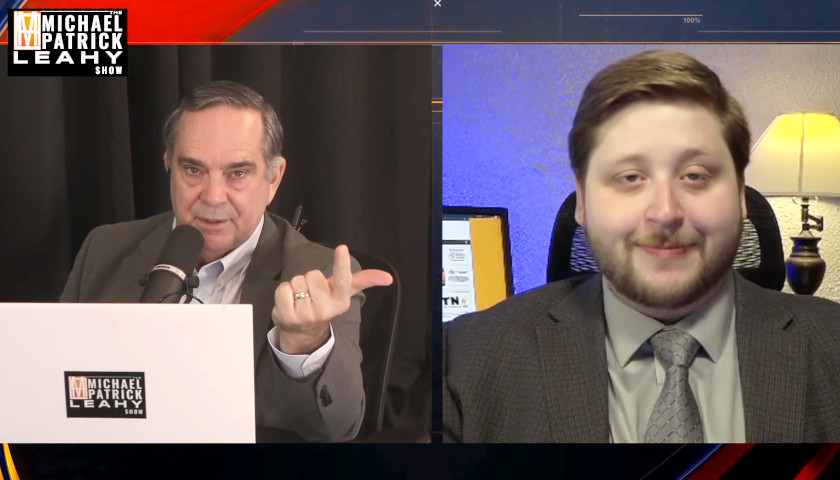
Tom Pappert, lead reporter at The Tennessee Star, said Metro Nashville has yet to determine whether it possesses records required under Tennessee law to justify nearly $1.5 million in grants approved for two immigration nonprofits, prompting The Star’s CEO and Editor-in-Chief Michael Patrick Leahy to predict the city could face another lawsuit if it fails to produce the requested public records.
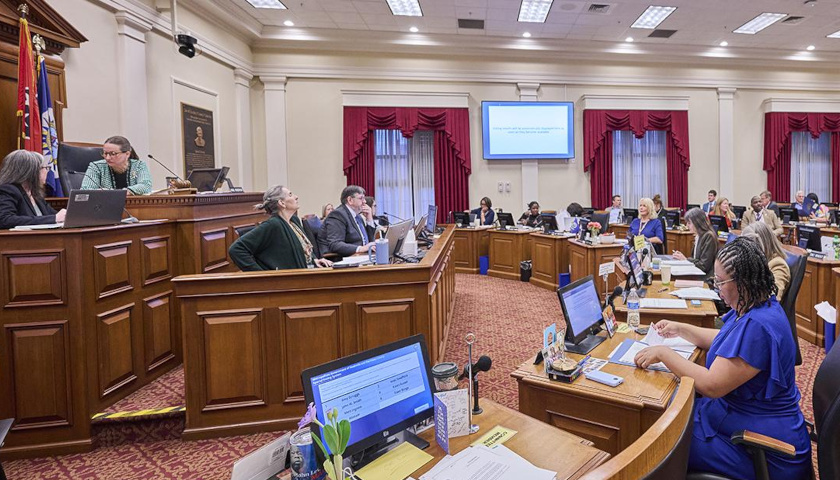
On Friday’s edition of The Michael Patrick Leahy Show, Pappert discussed The Star’s ongoing Tennessee Public Records Act request seeking documents related to the Metro Council’s approval of $735,000 for the Tennessee Immigrant and Refugee Rights Coalition (TIRRC) and $718,000 for Tennessee Justice for Our Neighbors (TNJFON), appropriations included in Metro Nashville’s $3.8 billion Fiscal Year 2027 budget.
Pappert said The Star requested those documents but has yet to receive them.
“We asked Metro Nashville for this proposed $1.5 million in spending. They said they don’t have it. They said that they’ll put up a contract once the appropriation is confirmed by the Metro Council, but they didn’t have any type of report containing the documents submitted by the nonprofit saying how they’re going to spend this money,” he said.
According to Pappert, Metro officials instead directed The Star to contracts executed in 2022 using federal American Rescue Plan funds.
“What’s worse, the clerk referred us to some 2022 information contracts that were signed between Nashville and the two nonprofits using Biden-era money, so not coming directly from Nashville taxpayers, but through the federal government, that specifically authorized hiring lawyers to represent illegal aliens, illegal services including protections from deportation, et cetera,” Pappert said.
He explained that The Star’s records request seeks documentation required by state law, including spending plans and financial reports.
“We have filed a public records request seeking specifically those statute-required documents. We want to know what they say they’re going to use this money for. We want to know what their latest reports are,” Pappert said.
The Metro Council Office recently informed The Star that it has not yet determined whether responsive records exist and said it expects to provide either the requested documents or a definitive response by July 1.
Pappert said that the response could prove significant.
“Metro Council still is not sure whether they have these documents. But there’s some good news, a silver lining, if you will. They say that even though Metro Council, they don’t know whether they have anything that we’ve asked for to explain why they just, the justification for why they just gave $1.5 million to these two pro-illegal immigration nonprofits,” he said.
“They told us that they’ll have an answer by July 1 so they’ll be able to tell us either, 100 percent, they don’t have these documents that statute says somebody in Metro Nashville is supposed to have, or B, they’ll give us the documents by July 1,” he added.
Leahy noted that the Tennessee Public Records Act request was distributed among four Metro entities—the Metro Council Office, the mayor’s office, the department of law, and the department of finance—and said the newspaper has not yet received responses from the latter three offices.
He added that he expects Metro to provide few records and predicted further legal action, stating, “I don’t think they’re gonna give us much, and then we’re gonna have to sue them again.”
Pappert also criticized the lack of detail provided in the adopted budget.
“All we’ve got is a single line item for each nonprofit,” he said. “For the TIRRC item, it says, ‘TN Immigrant Refugee Rights Coalition.’ So it’s not even the official name of the nonprofit. You have to know what you’re looking for in order to find this thing, and then it awards them $735,000.”
Regarding TNJFON, Pappert added, “For the second nonprofit, there’s similarly a one-line item. It says, ‘Tennessee Justice for Our Neighbors,’ and it’s a $718,000 appropriation. These are both in the contributions section of the budget, indicating that this is, again, these are grants. This is voluntary money that Metro Nashville is giving out. I certainly hope the taxpayers of Davidson County approve.”
Pappert also highlighted what he described as conflicting statements by Metro officials about how taxpayer funding will be used.
While Metro Clerk Austin Kyle previously indicated the funding would continue the same work performed under the 2022 contracts, Pappert said Mayor Freddie O’Connell’s office has offered a different explanation.
“His spokesperson told us early on in this process that this funding would have strict controls from the mayor’s office, that the mayor’s going to essentially know how this money is spent. They also told me directly and completely that this money would not be used to provide legal representation, advocacy, or advice to illegal aliens,” Pappert said.
However, Pappert argued those assurances conflict with the existing agreements.
“Again, that is completely the opposite of what they’ve been doing since 2022. That document that they signed, that Metro Nashville signed using Biden-era money in 2022 specifically says that these non-profits are going to not only provide legal services to illegals, but they’re going to expand their fleet of lawyers. They hired more lawyers. They hired more paralegals. They hired legal coordinators. This is overtly a pro-illegal alien funding situation… that now the mayor is trying to retroactively say, ‘Never mind. No, it’s not,'” Pappert said.
Tune in now to The Michael Patrick Leahy Show – your AMERICA FIRST news talk!
– Watch LIVE here on X
– Watch LIVE on YouTube / Rumble / Roku / AppleTV
– Listen on Spotify
– Listen on WENO AM760 in Nashville
– Read more at @TheTNStarhttps://t.co/g2xdhRIlEh— Michael Patrick Leahy (@michaelpleahy) June 26, 2026
– – –
Kaitlin Housler is a reporter at The Tennessee Star and The Star News Network.