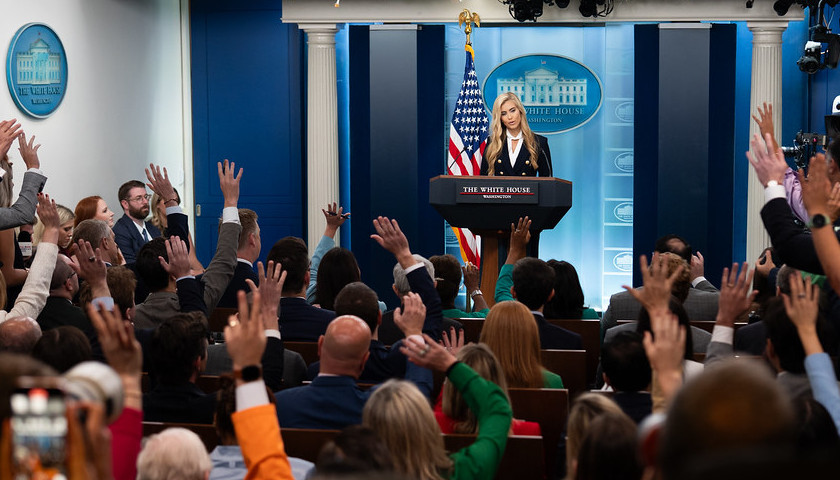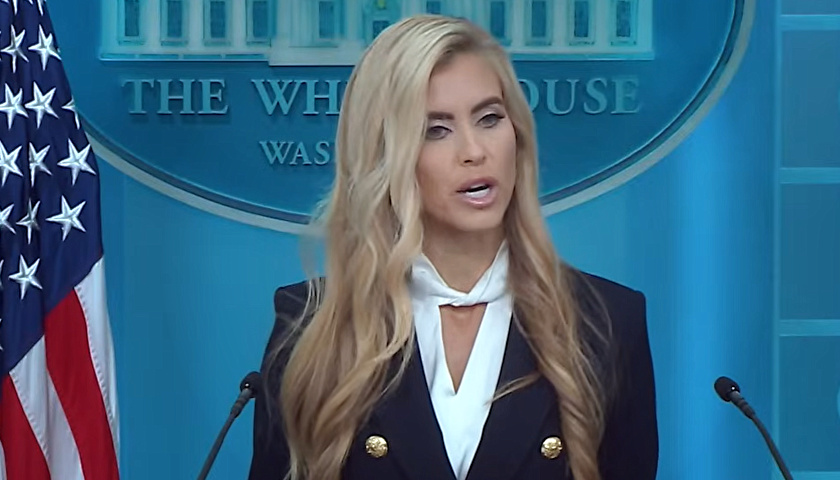
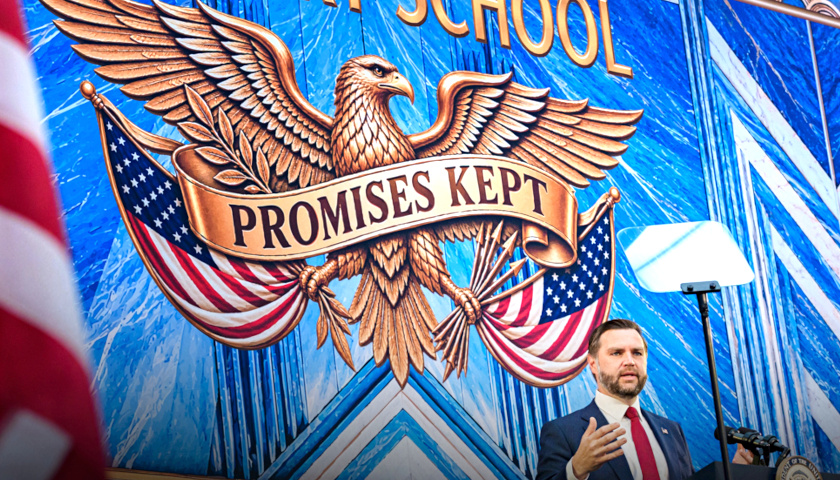
The Trump administration on Thursday launched Foundry School, a new State Department–backed national training program aimed to prepare entrepreneurs, engineers, technicians and industrial leaders for what officials describe as America’s manufacturing comeback. Vice President JD Vance and Secretary of State Marco Rubio headlined the event.
The School is a project of Pax Silica, the department’s multilateral effort to secure trusted supply chains for AI-era technologies, semiconductors, critical minerals, energy and advanced manufacturing. The State Department said President Donald Trump’s reindustrialization agenda has drawn “trillions of dollars in industrial investment to American soil” to date and that Foundry School “will focus on turning that investment into jobs.” Officials said manufacturers will need “an estimated 3.8 million skilled workers by 2033 in semiconductors, defense, energy, and beyond.”
From the launch event held at the Donald J. Trump Institute of Peace, Sec. Rubio characterized the program as a correction to post–Cold War policy.
“We made a terrible mistake in this country,” he said; explaining, “the idea that the ability to make things no longer mattered” and that goods should be produced “in the most efficient place at the lowest possible cost.” That assumption, he said, “ran into reality.”
“The result of it is that it de-industrialized America,” Rubio said. “We lost our ability and our capacity to make things” — not only heavy machinery, “but even some of the most basic components that are necessary that underpin economic life, especially in the 21st century.”
The country, he said, woke up “dangerously dependent on other nations for all sorts of things that we need not simply for our economic vibrancy but in many cases for our national security and our very survival.”
Reindustrialization, “is going to look different than it did in the 20th century.” Workers “may have to be retrained multiple times in their career.” Universities, he argued, should not only generate research that is then manufactured elsewhere.
“Why build a new wheel when we already have a wheel? We just need to repurpose that wheel” so students leave “not just with a paper credential but with the skills that make you immediately employable in a high-paying job,” he said.
Rubio went on to note that the project “is not a two-year project.”
“This is a project that will involve sustainment for the long term. Multiple American administrations are going to have to make this a priority. … It has to go on for a generation.” Vance’s presence, Rubio said, was “evidence of that commitment.”
Vance called industrial security “national security” and said the country “cannot run an economy entirely on services and finance.”
The curriculum is anchored at Stanford, with keystone lectures from seven collaborating universities listed in the department’s launch notice: Arizona State University, the Georgia Institute of Technology, Ohio State University, Pennsylvania State University, the University of Kansas, Vanderbilt University and Washington University in St. Louis.
Across those eight campuses, officials said, the program will run 17 sessions taught by founders and CEOs from U.S. firms and Pax Silica partners including South Korea, Japan, Taiwan and India — “covering everything it takes to build and run a world-class manufacturing enterprise.”
– – –
Christina Botteri is the Executive Editor of The Tennessee Star and The Star News Network. Follow her on X at @christinakb.