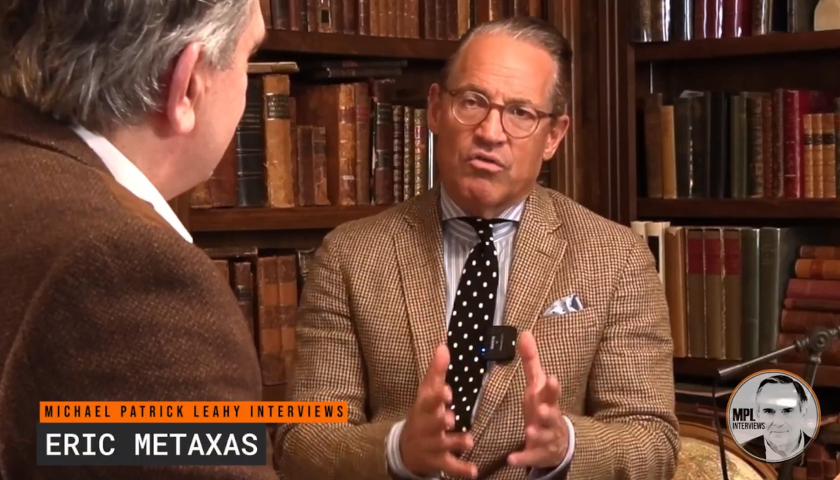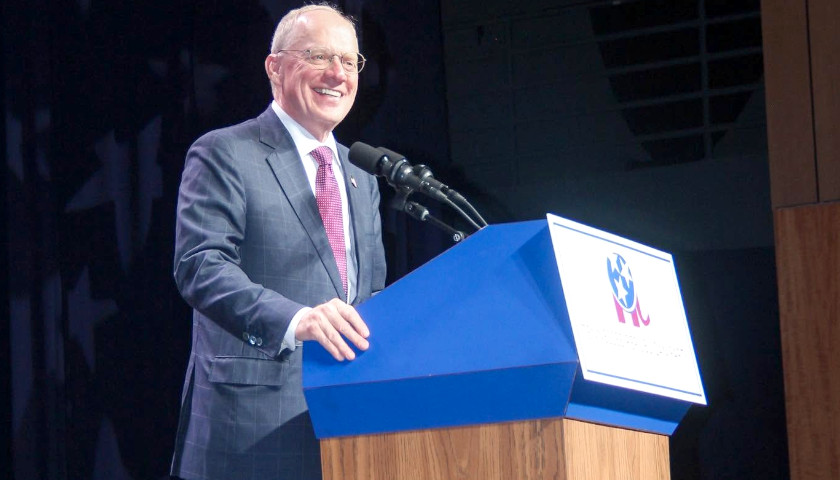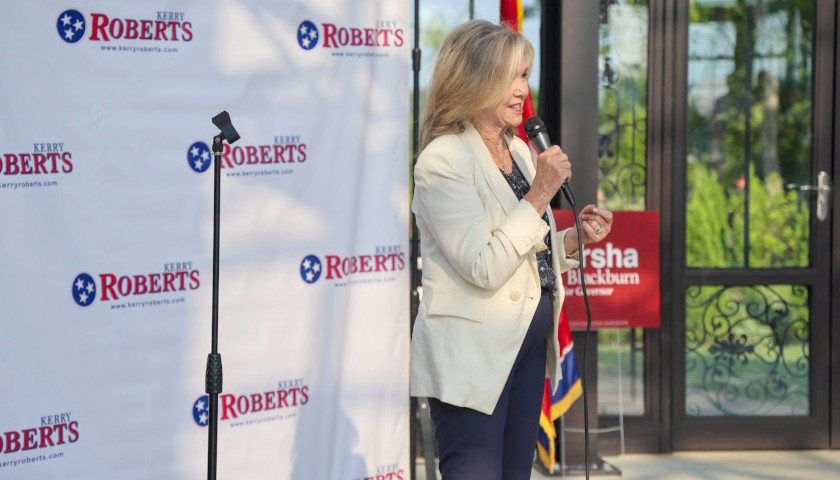

Tom Pappert, lead reporter at The Tennessee Star, said his investigation into U.S. Rep. John Rose’s (R-TN-06) past political activity began after the candidate publicly denied claims that he had donated to Democrats and voted in Democratic primaries, telling listeners that campaign finance and election records ultimately confirmed both.
During Monday’s edition of The Michael Patrick Leahy Show, Pappert discussed his reporting which found that Rose donated at least $19,000 to Tennessee Democrats between 1998 and 2010, including multiple lawmakers who supported efforts to establish a state income tax during the contentious legislative battle from 1998 to 2002.
“It was one heck of a project to research. I actually discovered it after John Rose responded via a campaign ad to another ad put out by some pro-Blackburn folks dismissing the fact that he supported Democrats and voted in Democrat primaries,” Pappert said. “He said that was all fake and didn’t happen. So it turns out it did happen.”
Pappert said records show Rose “was regularly donating to Democrats” during the period when Tennessee lawmakers debated creating what would have been the state’s first tax on earned income.
“From 1998 to about 2010, John Rose was regularly donating to Democrats, and in fact, in that critical period from about ’98 to 2002, when Tennessee was debating very seriously whether to implement a statewide income tax for the first time in the state’s history, by the way during that period, John Rose was… donating to candidates, to various Tennessee Democrats that were highly in favor of establishing a state income tax,” Pappert explained.
Among those Democrats, Pappert highlighted former State Senator Bob Rochelle (D-Lebanon), who later sponsored legislation to create a state income tax.
“For example, probably the most pertinent example is a former state lawmaker named Bob Rochelle. Bob Rochelle was one of the first lawmakers to create income tax legislation and submit it in the general assembly,” Pappert said. “And it was during this period that, for some reason, John Rose decides he’s going to donate, make a small donation, admittedly, of $500.”
Pappert noted that Rochelle later sponsored a legislative resolution honoring Rose for his business achievements.
“Two years after he donated that $500, Rochelle must have appreciated his friendship with John Rose, because it was that Democrat who did the resolution to honor John Rose for his achievements in the private sector through his business, the TransCender Corporation,” he said.
Pappert said Rose also donated to other Democratic lawmakers who supported then-State House Speaker Jimmy Naifeh’s (D-Covington) unsuccessful income tax proposal.
“But that’s just one of the Democrats that received donations from John Rose during this period. There was also Matt Kisber, Bobby Sands, John White, Shelby Aaron Reinhardt,” Pappert said. “All of those names were intimately involved, or at least voted in favor of the proposal by former State House Speaker Jimmy Naifeh that would’ve established a statewide income tax.”
In addition to individual candidates, Pappert said Rose contributed to Democratic legislative caucuses and federal candidates.
“But there are more Democrats that received donations from John Rose. That was State Legislator Charlotte Burks,” he said. “The state senate caucus for the Democrats, a state house caucus for the Democrats, those combined received a total of $9,000 from John Rose. He also donated to candidates at the federal level. Former Congressman Bart Gordon and Lincoln Davis both received donations from John Rose.”
Pappert also addressed the response from Rose campaign chairman Chris Devaney, who characterized The Star’s reporting as politically motivated. Pappert noted the campaign did not dispute any of the underlying facts.
“They didn’t really address our reporting at all. They didn’t address any of our questions, but instead, as you said, suggested these are political attacks,” Pappert said.
“It’s not a political attack to look at somebody’s record and note their previous political donations, and then ask them about it,” he continued. “If that was the case, why didn’t John Rose tell us that? Instead, he called this a political attack.”
Pappert argued that voters deserve an explanation of the candidate’s record.
“It’s not an attack on the campaign chairman of Mr. Rose’s campaign. It’s your candidate’s record,” Pappert said. “And if you don’t like that record, I’m sorry, but you should tell us what it means for the voters.”
The discussion also touched on Rose’s appointment as Tennessee agriculture commissioner under former Governor Don Sundquist after the 2002 legislative battle over an income tax.
“I think that tells you, to some degree at least, they were politically aligned,” Pappert said. “Not only did he accept that position, but I believe it was about six weeks after the income tax proposal had totally failed… it was about six weeks after that, if I remember correctly, that John Rose accepted that position to join the administration.”
Pappert further noted that economists frequently cite Tennessee’s lack of a state income tax as one of the factors behind the state’s economic growth.
“A whole lot of them will point to the fact that Tennessee does not have an income tax, and since 2014, the state’s constitution has prohibited an income tax from being established,” he said.
Tune in now to The Michael Patrick Leahy Show – your AMERICA FIRST news talk!
– Watch LIVE here on X
– Watch LIVE on YouTube / Rumble / Roku / AppleTV
– Listen on Spotify
– Listen on WENO AM760 in Nashville
– Read more at @TheTNStarhttps://t.co/64oMLoLej3— Michael Patrick Leahy (@michaelpleahy) July 27, 2026
– – –
Kaitlin Housler is a reporter at The Tennessee Star and The Star News Network.