
Parents across Tennessee sent a clear message in this election: they want leaders who will stand up to Big Tech and keep our state the best place in America to live, work and raise a family.
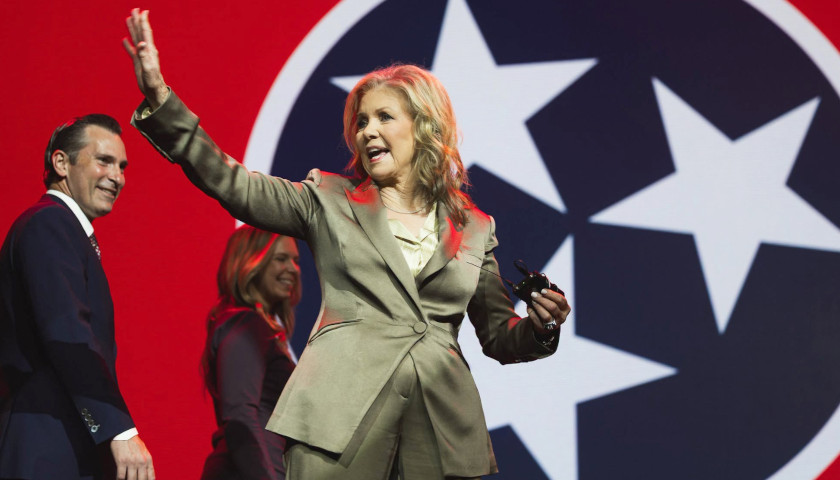
Governor-elect Marsha Blackburn has led on keeping Big Tech accountable in Congress and she will do the same as Governor of Tennessee. She spent years in Washington taking on the most powerful companies in the world, often when it was unpopular – putting parents who lost children to online predators and sextortion front and center. Senator Blackburn’s Kids Online Safety Act, co-authored with Senator Richard Blumenthal, would require platforms to build in safety by design, enable the strongest protections for minors by default, and give parents real tools to manage what their kids see. Tech companies resisted tooth and nail, but her bill passed the Senate Commerce, Science, and Transportation Committee with an overwhelming bipartisan majority. Blackburn extended the same protective instinct to Tennessee’s artists and creators through the NO FAKES Act.
Senator Blackburn also fought to keep states in the game. When a proposed moratorium on state technology laws threatened to tie their hands, she led the effort to strip it from the 2025 budget bill. Her argument was simple: until Congress acts, states must be free to stand in the gap.
Tennesseans saw a candidate who fought for their kids and their way of life, and they returned the favor. That record has a partner here at home in Attorney General Jonathan Skrmetti.
Since taking office, General Skrmetti has rightfully approached Big Tech’s treatment of kids as a consumer protection problem. He has gone after companies that profit from young users’ attention while telling parents their children are safe. His office pressed its investigation of TikTok when the company was slow to hand over evidence. It defended Tennessee’s law requiring parental consent for minors on social media when industry groups sued to block it. And it led a bipartisan, multistate investigation into Meta, alongside Colorado Attorney General Phil Weiser, that ended in a historic settlement this summer.
Meta agreed to daily time limits, overnight restrictions, and stronger parental controls for minors on Instagram and Facebook. Tennessee’s share, roughly $752 million, goes to a Children’s Digital Protection Fund dedicated to the safety and mental health of our kids. But one settlement does not solve an industry-wide problem, and General Skrmetti has said so himself. The rest of Big Tech needs to catch up to Meta, and families shouldn’t have to wait for another trial to see it happen.
Other platforms should read Tennessee’s recent history as a warning. Tennessee has sued Roblox, alleging the platform promises parents a safe place to play while exposing children to predators. TikTok’s years of resisting Tennessee’s investigative demands drew the attention of dozens of other states. Meanwhile, Snapchat YouTube and other apps that millions of Tennessee teenagers use every day have yet to make the kind of commitments Meta has.
Parents in every corner of the state tell the same story: they can’t see what their children are seeing, and they don’t trust the companies to tell them the truth. The tools Meta has now agreed to are not exotic. Any platform serious about kids could adopt them tomorrow.
What these efforts share is a conviction that parents, not tech companies and not bureaucrats, should be the primary decision-makers in a child’s life. Tennessee’s approach has never been about heavy-handed bans. It’s about giving parents the tools and the truth they need to raise their kids by their own values. Parental consent laws, school-hours protections, and an internet safety curriculum in our classrooms all point the same way.
Tennessee has never lacked the courage to lead. General Skrmetti has shown it in the courtroom, and Governor-elect Blackburn has shown it in Washington. Every company that wants to do business with Tennessee families should act now to build in age-appropriate protections, give parents real controls, be honest about the risks, and stop designing products to hook children. Those that do not will find a state with a proven record of taking on Big Tech and winning.
– – –
Walter Blanks Jr. is the Co-Founder and Executive Director of the nonprofit Legacy Society.