
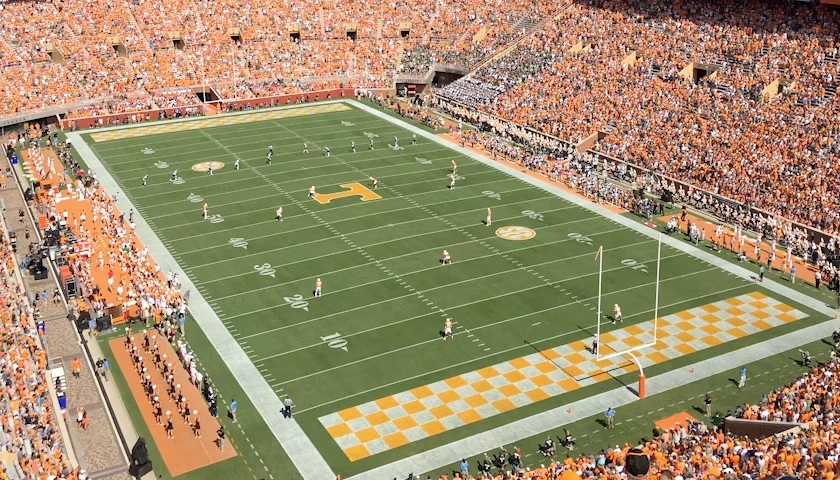
Congress is expected to vote this week on the Protect College Sports Act of 2026, which seeks to regulate the ever-changing world of college sports.
With the college football season in full swing, fans are reminded that college football players earn large sums of money, ranging from hundreds of thousands of dollars to millions.
College athletes began being paid in 2021, after the NCAA changed its name, image, and likeness (NIL) policy following the Supreme Court’s ruling in NCAA v. Alston that the NCAA violated American antitrust law by limiting specific education-related benefits.
College athletes are now allowed to receive NIL compensation from third-party deals, athletic scholarships, direct revenue-sharing payments from Division I schools, and employers not related to their NIL.
Nowadays, to compete for national championships, college football teams have needed to spend tens of millions of dollars.
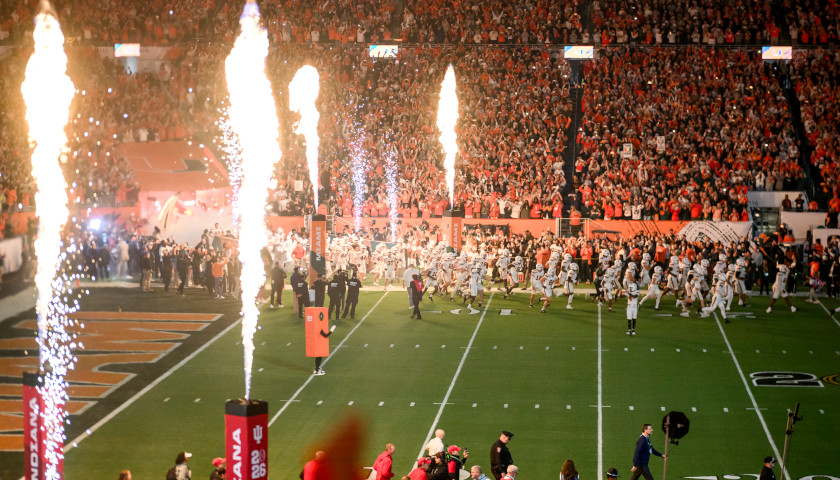
In the latest Associated Press Top 25 rankings, the top five teams are the University of Texas, the University of Georgia, the University of Notre Dame, and Indiana University
The NIL Standard estimated these teams have spent more than $185 million on their rosters this football season.
Since the NCAA allowed college players to be paid, the organization has provided little NIL oversight and continues to see its enforcement power weaken as new court decisions and state laws are implemented.
The Protect College Sports Act of 2026 attempts to re-implement a single rulebook for college sports.
Under the bill, it would create national rules around college athletes’ eligibility, NIL, and revenue sharing, which started in 2025. The bill would allow college athletes to transfer once, create transfer windows, and include anti-tampering measures.
The NCAA would gain a restricted antitrust protection that would allow it to enforce revenue-sharing rules.
According to the bill, college athletes’ agent fees would be capped at 5%, and an agent registry would be established.
The bill would implement the NCAA’s new eligibility rule, which limits college athletes’ eligibility to five seasons within a five-year eligibility period. In addition, the bill would implement revenue-sharing rules and protect women’s and Olympic sports from being cut.
Regarding a super league, the bill would also prevent its creation and stop schools from canceling traditional rivalry games.
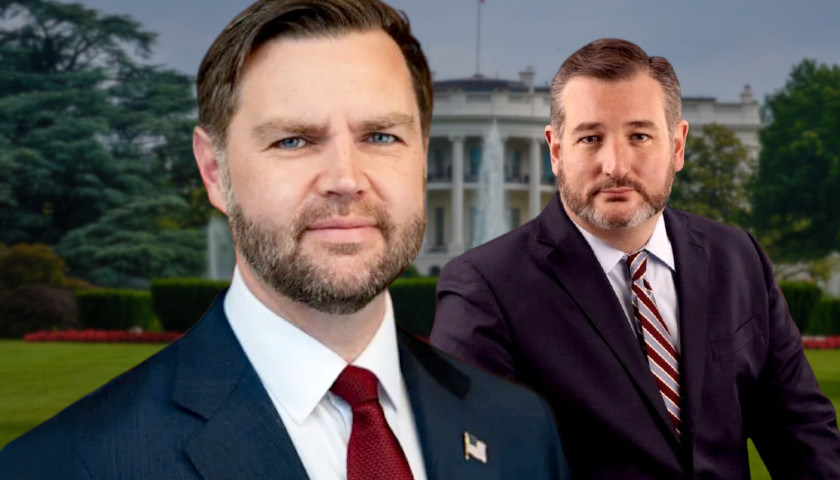
Senators Ted Cruz (R-TX) and Maria Cantwell (D-WA) sponsor the bill. Over the weekend, Cruz appeared on ESPN to promote the bill, saying, “College sports is an amazing institution,” citing the opportunities it has given “millions of young men and women” the ability to “get a future.”
However, he noted college sports are currently in “chaos.”
“The current situation is nuts,” he explained, adding that college sports do not have any rules.
Regarding transfer rules, Cruz noted college athletes being able to transfer numerous times is “terrible” for the game, players, schools, and fans.
Cruz said his bill would bring “order to chaos,” safeguarding students and their ability to be compensated.
The senator said the majority of college athletic departments are losing “tens of millions of dollars.” As a result, Cruz noted they are having to cancel women’s sports, non-revenue sports, and Olympic sports.
“If [Congress doesn’t] act, within three to five years, we’re going to see 40 to 50 schools that have competitive football programs, and everyone else goes under. That would be a tragedy,” Cruz explained.
Congress needs to ensure college sports “remains an avenue for opportunity for millions of kids,” according to the senator.
He said he is confident the bill will become law.
Supporters of the bill include the NFL, NBA, MLB, ACC, SEC, Big Ten, Big 12, PAC 12, Notre Dame, the United States Olympic & Paralympic Committee, and the President’s Roundtable on Fixing College Sports.
“We continue to support a strong college basketball ecosystem, one that is based on clear and reliable standards and that prioritizes both player development and fair competition. The Protect College Sports Act is a positive step and we look forward to continued engagement as the bill advances through the legislative process in the coming months,” the NBA said.
On the other side, numerous organizations such as the National Association for the Advancement of Colored People (NAACP), AFL-CIO, National College Players Association, and Congressional Black Caucus said they will not support the bill.
In an op-ed, the NAACP said lawmakers “should not reward colleges and athletic conferences with new federal protections while many remain silent as Black voting rights come under attack in the states where they operate.”
Jody Calemine, the director of government affairs for AFL-CIO, said in a letter to senators that the bill is “ not a compromise between competing interests, but a legislative effort that preserves institutional control at a time when courts, lawmakers, and the public are increasingly questioning the fairness of the existing model.”
“The bill only gained its current momentum not when athletes’ interests were satisfied but when the richest intercollegiate conferences in the country voted to endorse the bill. That should tell you everything you need to know about who this bill protects,” she added.
– – –
Zachery Schmidt is the digital editor of The Star News Network. Email tips to Zachery at [email protected].
The whole industry behind college sports teams is not a positive force, imho. If colleges would stop paying head coaches so much money, and using sports to boost their image and their coffers, this could settle down. But I don’t think government regulation is the answer.
NIL is a disaster. It has to be one of the dumbest ideas of the past 150 years.