by Steven Richards
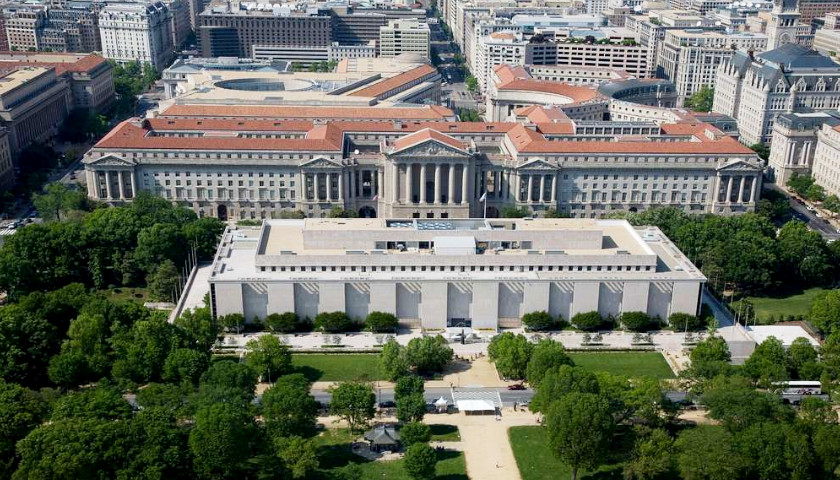
While President Donald Trump marked the 250th anniversary of American independence with great fanfare in the nation’s capital city, his White House quietly released a report from the Domestic Policy Council detailing the “ideological capture” and “activism” infecting the Smithsonian’s National Museum of American History.
The museum was first approved by Congress in 1955 to tell the national story of the United States, to “place before” visitors “a stimulating permanent exposition that commemorates our heritage of freedom and highlights the basic elements of our way of life.”
But, the museum’s current leadership has instead sought to use the institution as “a political instrument” to accomplish its own ideological goals at the expense of its original mission, the Trump administration argues in the report titled: “Saving America’s Story: How Ideological Capture at the Smithsonian Institution’s National Museum of American History Erases Our Heritage.”
The council’s review of the Smithsonian museum was in response to Trump’s March 27, 2025, executive order aimed at purging “revisionist” and ideological materials from U.S. history references and exhibits at federally funded museums and sites.
“Our central finding is not that the Museum has simply added overlooked stories, corrected perceived errors, or broadened its historical scope,” the council wrote. “Rather, it is that Museum leadership has explicitly adopted an ideological framework that no longer treats the American story as a shared national inheritance to be taught or celebrated, but as a political instrument to divide, dispirit, and discourage our citizens.”
The council specifically singled out the museum’s director, Anthea Hartig, and delivered blazing criticism of her leadership, arguing she has recast the museum as an instrument of her own “social justice” agenda. The DPC provided citations of evidence from the museum itself and Hartig’s public statements in recent years.
In the wake of the George Floyd and Black Lives Matter protests in 2020, Hartig said, “We work to reframe the traditional, celebratory narrative of U.S. history for visitors … .”
The following year, she spoke to the University of California Riverside and described how she believes the museum profession has “to figure out” how “we’re going to” “problematize” the “250th Anniversary of the signing of the Declaration of Independence in 2026,” that “loving America is very complicated,” according to the report.
“These are not the words of an objective historian, but rather those of an activist advancing an ideological agenda contradictory to the Museum’s founding purpose of fostering patriotism,” the DPC concluded.
The National Museum of American History did not respond to a request for comment from Just the News.
“For more than 180 years, the Smithsonian has served the American public with nonpartisan and independent scholarship, and we remain committed to doing so,” Smithsonian spokeswoman Julissa Marenco told The New York Times.
Hartig was appointed by the secretary of the Smithsonian to be the new director of the museum in 2018. Shortly after, Hartig charted a new course for the institution and outlined a new goal: to “the most accessible, inclusive, relevant, and sustainable public history museum in the nation.” To this end, Hartig asked the museum’s staff to craft a new mission statement.
“Through incomparable collections, rigorous research, and dynamic public outreach, we explore the infinite richness and complexity of American history. We help people understand the past in order to make sense of the present and shape a more humane future,” read the museum’s previous mission statement.
Under Hartig’s leadership, it changed to: “Empowering people to create a more just and compassionate future by exploring, preserving, and sharing the complexity of our past.”
The DPC raised concerns that the organization’s new directive removed references to the “infinite richness” of American history and instead solely emphasizes the “complexity” of “our past.”
“‘American history’ was replaced by ‘our past,’ the new objective became empowerment for the sake of social and political activism, not learning for the sake of understanding,” DPC wrote in the report.
Hartig said explicitly that the change in the mission statement was to help “get out of the ‘America First’ mentality” at the museum dedicated to American history.
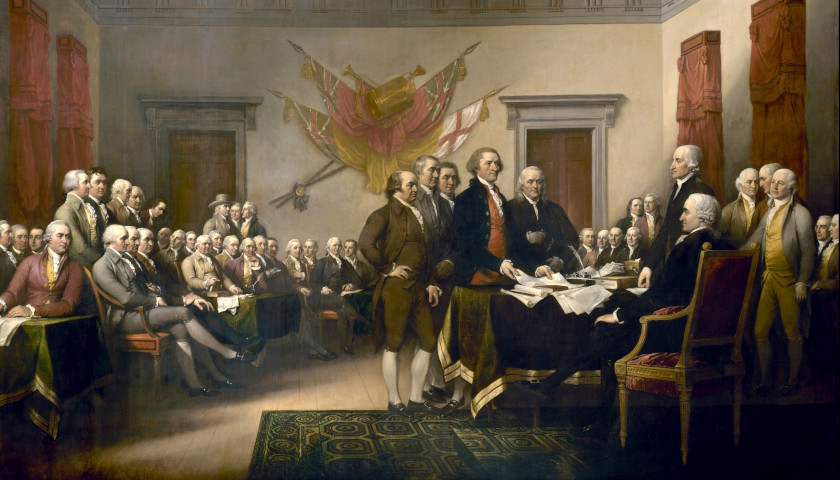
One of the report’s main concerns is that there is no major exhibit dedicated to the American founding era, including the Founding Fathers, the Continental Congress or major moments of the American Revolution.
Instead, the panel notes that when the museum references the American founders, it often invokes their flawed characters and participation in slavery, while downplaying contributions to the ideas that later led to the end of slavery in the United States.
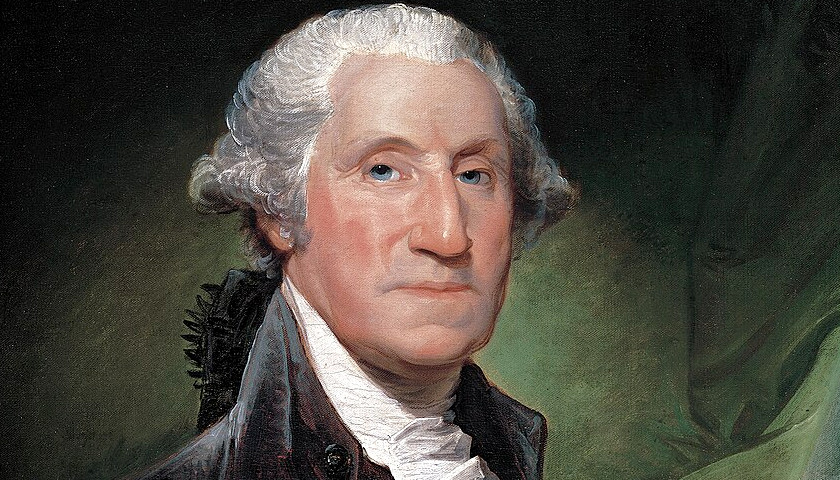
Visitors “will find no major exhibit dedicated to America’s founding era, George Washington, Thomas Jefferson, other founding fathers, the Continental Congress, the pilgrims, the Puritans or major moments of the American Revolution,” the DPC wrote.
The DPC also noted that the museum failed to schedule or hold any special events to celebrate Independence Day in 2025 or to mark the 250th Anniversary of the country in 2026. An events list for July 2025 shows that the museum hosted a “Wish For U.S. Wall” from June 19 to July 3 where visitors could “share their wish for the nation.” However, no events were scheduled on Independence Day to celebrate the holiday.
In 2026, as the nation’s capital marked the historic semiquincentennial anniversary of the United States, the museum did not offer any “July 4th-only programming for Independence Day,” the DPC wrote.
The report compared the lack of programming for July 4th to the museum’s extensive catalogue of events for Pride Month in 2025, such as performances from the Gay Men’s Chorus of Washington, D.C., book signings, and showcasing special objects from museum storage.
The DPC also criticized the museum for advocating for explicit political causes, like anti-racism efforts surrounding the 2020 riots, as well as boosting the stories of illegal-alien activism. Some of the evidence for those programs and exhibits has been removed from the museum’s website, the report claims.
The report shows how “undocumented organizing” materials were integrated into various exhibits throughout the museum, including a monarch butterfly labeled “DACA wings” with the written phrases “#Here to Fight” and “Undocumented & UNAFRAID.” Surrounding the object were panels labeled “Raising Citizens,” “Claiming Citizenship,” and “Making Citizens.
The museum participated in the Smithsonian’s “Our Shared Future: Reckoning with Our Racial Past” initiative in 2021. The initiative’s director, Deborah Lynn Mack, described how the initiative encouraged museums to take an “activist stance” and help staff “engage in this work in ways that actually reinforces their activism, their sense of equity, their sense of social justice … .”
The DPC concludes that the evidence shows the National Museum of American History has “become subject to institutional capture by a radical, activist ideology that is fundamentally opposed to telling the noble, honest story of the great country we know and love.”
“Rather than part of a national trust for the diffusion of knowledge, dedicated to explaining the ‘infinite richness and complexity of American history,’the National Museum of American History has become an instrument – a ‘prime tool,’ as Director Hartig has put it – for a radical, activist cohort dedicated to reframing the American story to serve its ideological ends,” the panel wrote.
– – –
Steven Richards is a reporter for Just the News.