
by State Rep. Jeremy Faison
For the most part, I’ve been open about supporting Marsha Blackburn and have intentionally avoided criticizing the other candidates. But after this week, I can’t stay silent any longer.
Let’s be clear about who Monty Fritts is.
I’ve seen many of my friends post that they’re planning to vote for Monty. Before you do, I want to offer a word of caution.
I’ve known Monty for about four years, and I genuinely like him. I believe he’s a good and decent man. But there are some things you should know before casting your vote.
Monty is an ideologue. During his time in the General Assembly, he has never demonstrated the ability to build consensus or effectively bring about substantial legislative change. More than anyone else in our Republican caucus, Monty has consistently voted with Tennessee Democrats. I’m not talking about the occasional disagreement with fellow Republicans that happens from time to time. I’m talking about a consistent pattern, in committee and on the House floor, where he has voted with Democrats against the Republican caucus hundreds of times.
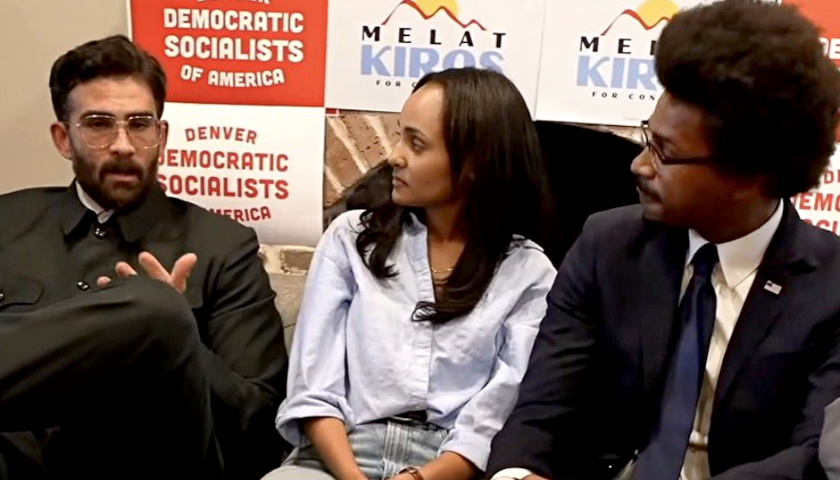
On numerous occasions, he has sided with Justin Jones, Justin Pearson, and Gloria Johnson, (Socialist Three) even when other Democrats did not. Time and again, I watched Monty align himself with that bloc rather than with his own party.
Even putting all of that aside, his comments this week crossed a line that I won’t ignore.
Monty said he would “ban pagan religions.”
That statement reflects a view of government that is fundamentally at odds with our constitutional system. It suggests a belief that government should be guided by a particular religious doctrine rather than by the Constitution. While that idea may appeal to some Christians at first glance, history shows that mixing civil government with religious authority is beyond dangerous.
The Founders understood this well. Many came from places where government and religion were intertwined, and they deliberately established a constitutional republic that protects both religious liberty and individual conscience. The First Amendment guarantees every American the freedom to worship God according to the dictates of their own conscience; or not to worship at all. Government has no authority to compel religious belief, nor does it have the authority to prohibit peaceful religious practice.
Think about the precedent that would be set if government were allowed to ban one religion because those in power disapproved of it. What happens when someone with very different beliefs holds office? What if an atheist becomes governor? A Muslim? A Mormon? Or a Christian whose interpretation of Scripture differs from yours? The principle cuts both ways. Once government claims the power to decide which religions are acceptable, everyone’s liberty is at risk.
I’m supporting Marsha, and I understand why some people may choose to support John. But I hope you’ll carefully consider the implications of supporting a candidate who appears willing to ignore constitutional protections to his own religious convictions.
We may strongly disagree on matters of faith, theology, or philosophy. That’s part of living in a free society. But I will always fight to protect your right to self governance, to follow your own conscience, and to enjoy the religious liberty guaranteed by the Constitution.
– – –
State Rep. Jeremy Faison represents the people of District 11, in Cosby, Tennessee.
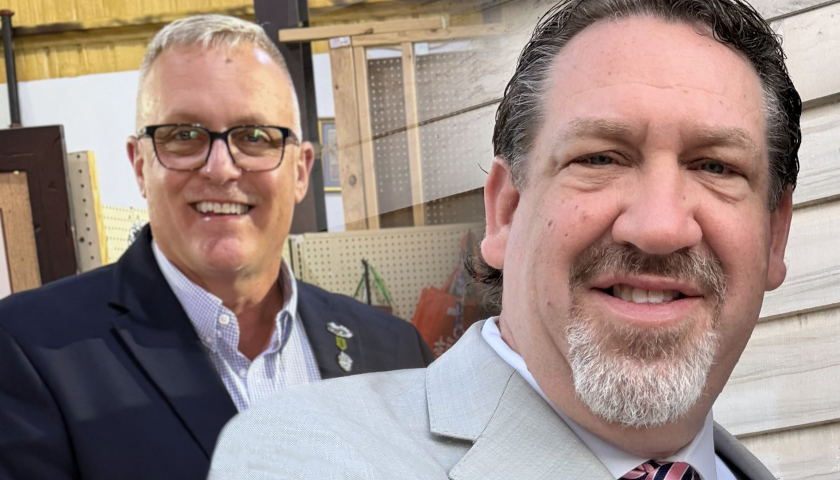
Photo “Jeremy Faison” by Jeremy Faison, and “Monty Fritts” by Monty Fritts.



“It suggests a belief that government should be guided by a particular religious doctrine rather than by the Constitution. ”
Perhaps we should apply the same thought to all the other violations of the Constitution by government. Income taxes, which the Constitution prohibits (even the “Supremes” said, shortly after the 16th became “law”, that the Amendment was not lawfully signed, but that “it is too late”. Repeated violations of the 2A prohibition of any government control of the Right to bear arms. Property taxes, debtors prisons, etc., etc. The list is long.
You and your colleagues, Rep. Faison, are the ones who maintain this corrupted system.
End the usual grandstanding and fix the base issues. All the other dominoes will fall if you just do that.
Ditto, Cathy Hinners…
Monty Fritts is clearly our best choice for Governor… The Marsha, bought and paid for supporters, are showing how scared they are of Monty .
Jeremy your not endorsing Fritts is the best thing that happen to his campaign, you and the rest of the repukelcans mean nothing to the conservative Christian base here in Tn. LOL you have no pull and you clearly have no game so move to the back of the room dipstick. Dan
I do not consider Islam a religion, it’s more of a cult than anything in a political movement and if our government doesn’t wake up, especially those in the west. West one day women will become property of men because that’s what that culture believes in. Just look at history
Jeremy Faison do you think we the people care who you’re endorsing? Most of you spineless men have to vote hope Marsha, we know who wears the pants in the state legislature. Grow a pair.