by Tyler O’Neil
The Democratic Socialists of America emerged from the 2026 midterms significantly stronger, but in a strange twist, the Democratic Party’s overwhelming success may deprive the DSA’s seven House members of the leverage they expected to wield.
The DSA expanded its congressional footprint, helped elect allies at the state and local levels, and can point to Abdul El-Sayed’s victory in the Michigan Senate race as evidence that a candidate closely associated with its agenda can win statewide in a presidential battleground. That said, the sheer scale of the Democrats’ House victory could make it easier for the rest of the party to ignore socialists’ demands.
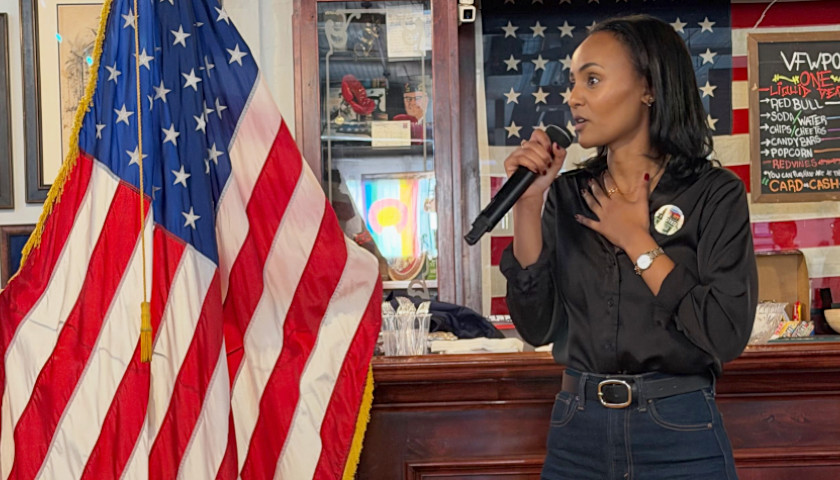
Before the election, DSA-endorsed candidates Darializa Avila Chevalier and Melat Kiros openly spoke about leveraging their votes in the upcoming election for House speaker. They refused to pledge support for House Minority Leader Hakeem Jeffries, D-N.Y., saying they want to ensure whoever wins the race would prioritize DSA agenda items such as Medicare for All and “universal childcare.”
Perhaps ironically, the Democrats’ large House majority will dramatically reduce that leverage from the DSA House members, even as their numbers expand from two to seven. Democrats are projected to win 249 seats and counting, according to Decision Desk, far above the necessary 218 for a majority.
If that figure holds or increases, Democrats could afford to lose 31 votes and still elect a speaker with 218, making a potential seven-vote bloc far less powerful.
Kiros spoke about “laying the groundwork” for a Democrat trifecta—controlling the White House and both the House and the Senate—in 2028, where “we can actually start delivering massive transformational changes.” If Democrats still work toward that trifecta, they may need the DSA candidates less than they had expected.
The larger majority means the DSA-endorsed representatives will have a harder time banding together to force concessions from Democratic leadership. Nor is there any guarantee that the seven will behave as a cohesive voting bloc. Kiros and Chevalier have not committed themselves to Ocasio-Cortez’s “Squad,” and a comfortable majority may give each member more latitude to emphasize differences rather than voting as a unit.
A seven-member bloc could have made or broken a narrow Democratic majority. With a large one, its leverage becomes considerably more situational.
Democratic wins in traditionally red states may also weaken DSA clout to some extent. Newly ascendant Democrats may take these victories as a sign that they should moderate their political messages to appeal to more conservative voters, and so the party may become more hesitant to take up DSA initiatives. Some of the Democrats responsible for the party’s massive majority won precisely the kind of competitive territory where the DSA brand appears least attractive. A strategist told Axios that Ocasio-Cortez’s polling is “atrocious” in a swing district.
That said, the DSA will still gain influence and build infrastructure as a result of the midterms.
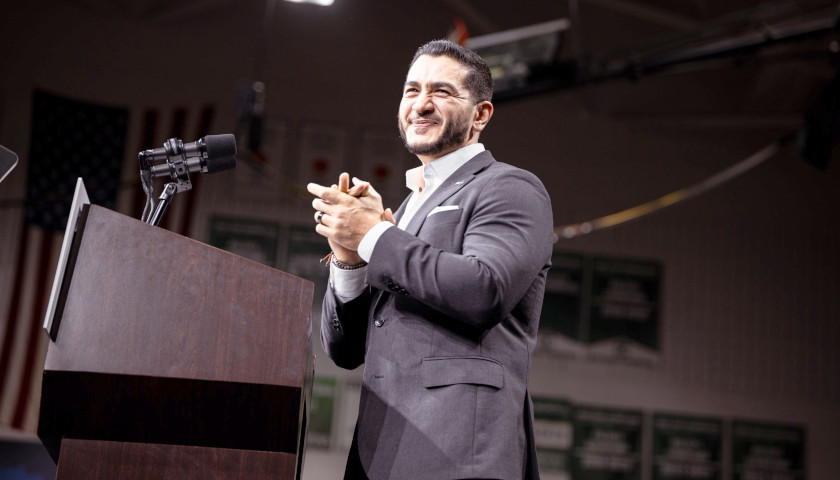
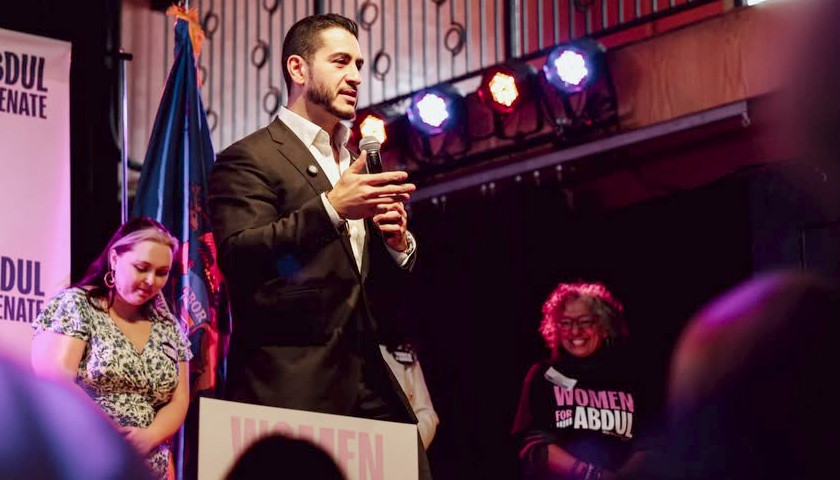
The most consequential socialist-orbit victory came outside the formal DSA. While the DSA did not endorse Abdul El-Sayed in Michigan and he is not an official DSA member, the senator-elect campaigned on key DSA priorities and has spoken at DSA rallies in the past. While he calls himself a capitalist, he touted endorsements from Sen. Bernie Sanders, I-Vt., and Ocasio-Cortez, and won while backing Medicare for All, changes to the Supreme Court, eliminating the filibuster, and abolishing Immigration and Customs Enforcement.
The DSA has claimed 116 wins in the midterm elections, and the number appears to be growing. Over the past decade, the DSA built a massive infrastructure across the country, and about 90% of its victories have been at the state and local levels, where today’s winners can become tomorrow’s federal candidates.
The organization also seeks to put socialists inside labor unions and build “mass organization” through nontraditional groups like tenant unions.
Finally, some DSA chapters have already called on Ocasio-Cortez to run for president in 2028, not just because they think she can win the election but because the campaign itself will energize their base.
Socialism had a great night on Tuesday, but the Democratic majority may actually work against its influence in the near term. If Democrats think they have enough leeway to kick the DSA members to the curb, they may do so.
Democrats now have enough breathing room to tell the socialists no.
Whether they actually do so will reveal far more about the Democratic Party than Tuesday night’s election results.
– – –
Tyler O’Neil is senior investigative reporter at the Daily Signal and the author of two books, “Making Hate Pay: The Corruption of the Southern Poverty Law Center” and “The Woketopus: The Dark Money Cabal Manipulating the Federal Government.”
Photo “Melat Kiros” by Melat Kiros.