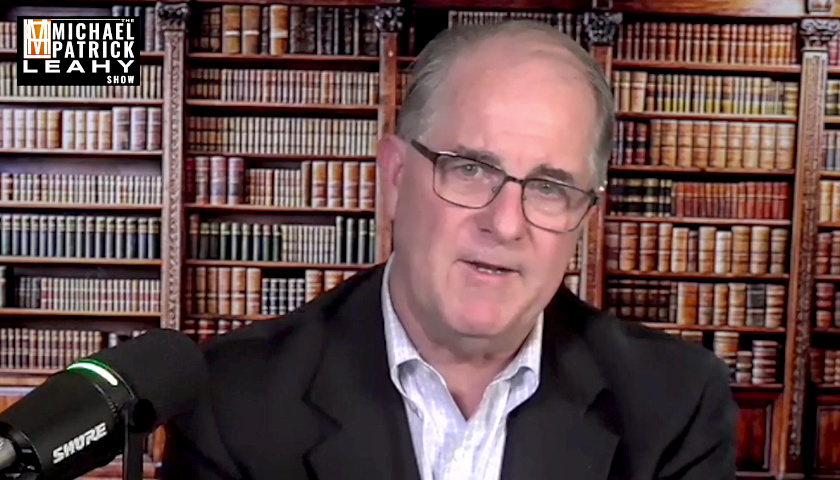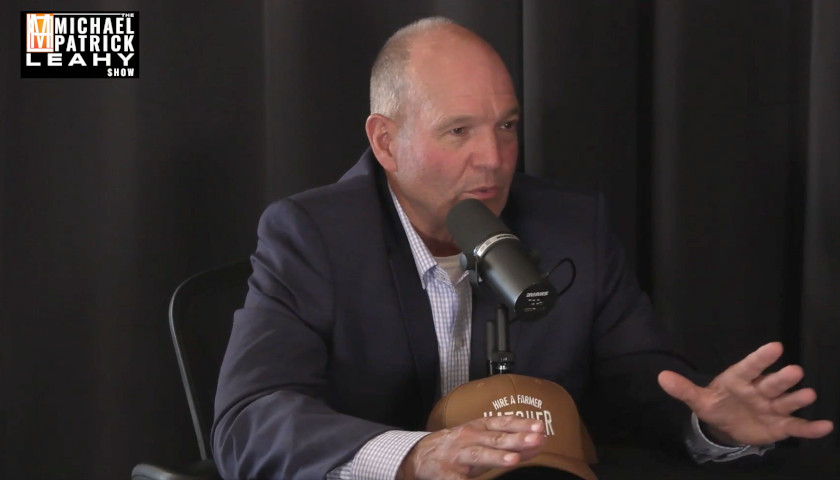
Lisa Daftari, editor-in-chief of The Foreign Desk, said the U.S. must approach ongoing negotiations with Tehran cautiously, arguing that the Iranian regime has spent decades mastering the art of using diplomacy to advance its own interests while avoiding meaningful concessions.
During an appearance Tuesday on The Michael Patrick Leahy Show, Daftari said the current phase of engagement with Iran should be viewed through the lens of the regime’s long history.
“We’re definitely in full diplomacy phase,” Daftari said. “This is something that I just caution anybody who is trying to negotiate diplomatically with a regime that doesn’t necessarily understand the language of diplomacy, understands the language of manipulation and force and terrorism and making threats against the United States since 1979.”
Daftari, whose family emigrated from Iran, said military pressure created an opportunity that had not existed in decades.
“We have to understand why Donald Trump made the decision in February and before that in June of last year, in the 12-day war to handle this militarily because he did see, number one, an opening and a weakness, a vulnerability that we haven’t seen in forty-seven years in this regime,” she said. “And also because it was necessary to use that coercion to bring them to the table as he has them now.”
According to Daftari, the challenge facing negotiators is how to leverage that military success into a lasting agreement without sacrificing the advantages already gained.
“Now becomes the most important part of this whole equation to use the leverage we’ve gained in the kinetic war to now bring them to a deal that works for both sides,” she said.
Daftari questioned whether economic incentives alone can fundamentally change the behavior of Iran’s ruling clerics.
“Donald Trump believes that throwing money at a situation, meaning any normal functioning nation that starts to prosper, will do away with terrorism and deadly ideologies,” she said. “I’m not so sure that’s the case with this regime because of what we’ve seen for forty-seven years.”
She argued that Iran’s leadership has historically used economic resources to strengthen its grip on power and expand its regional influence.
“This deadly ideology is actually what keeps them in power and actually helps them rake in billions and billions of dollars,” Daftari said.
She added that previous financial windfalls did little to improve the lives of ordinary Iranians.
“We’ve seen them put that money into proxies, into drones, into missiles, into killing mechanisms for silencing and murdering thousands and thousands of freedom protesters in Iran,” she said. “But we haven’t seen them put that money towards pharmaceuticals and basic supplies and the Main Street economy in Iran.”
Daftari also voiced concern that the regime may be receiving a lifeline at a moment of historic weakness, asking, “If they are at the weakest point as they ever have been, why would we now throw them a lifeline?”
She also pointed to what she sees as a pattern of Iranian negotiators using talks to delay pressure while shifting attention to secondary issues.
“They have always preferred, and of course, in this case more than ever, the negotiation table as their number one weapon of choice because that’s where they are masterful,” Daftari said. “They have been masterful not just at the negotiation table, but at narrative warfare.”
According to Daftari, Iranian officials consistently attempt to redirect international attention away from their nuclear ambitions and toward other regional issues.
“My point being, they are masterful at shifting the narrative, talking about or putting the spotlight on aspects of this war that we did not necessarily want to focus on,” she said.
For that reason, Daftari argued that any future agreement must be built around strict verification requirements rather than trust.
“We say trust, trust but verify. In this case, the verification has to come first, before the sanctions, before the billions, and all of this has to be under the same umbrella,” she said. “Nuclear enrichment, missiles and drones, funding of their proxies, their treatment of Israel and their positioning towards Israel.”
She added that human rights concerns should also be included in any comprehensive agreement.
“If I had it my way, of course, it would be human rights and the mass murder of thousands and thousands of Iranians should be part of that deal as well,” Daftari said. “We have our foot on their neck, not the other way around, and while we have this moment, I think we should either go further in terms of degrading them, whether it is diplomatically or kinetically and not let up until we get what we want.”
Daftari also discussed the condition of Iran’s internal opposition movement, saying many activists feel abandoned after initially believing they would play a larger role in determining the country’s future.
“They feel depressed. They feel as though they were left out,” she said. “They feel as though the regime will now become even more hard-line, and they have.”
While she said she believes many Iranians remain eager for political change, she said they face enormous practical obstacles.
“Do they have the will? Do they have the motivation to bring about regime change? Absolutely, but how?” Daftari asked. “They have no weapons. They don’t have a way of doing that.”
She argued that additional pressure on key regime institutions could have triggered larger defections among security forces.
“We were hoping to see defection at scale, where we would see men in uniform come join the Iranian people with weapons, with organizational capabilities, with military know-how, and then we would see a real shift in the equation here,” she said.
Despite her concerns, Daftari praised the decision to confront the Iranian regime directly and described it as a historic moment.
“Donald Trump was the only one who had the courage to handle this and to do away with it,” she said. “If we don’t deal with this now, this is the war to end all forever wars, unless we want to kick the can down the road and deal with this regime again, and again.”
🌍🇺🇸Foreign policy expert @LisaDaftari told me today we have reason to be skeptical of what the Iranian regime would do with any unfrozen funds after "they murdered thousands and thousands of Iranian freedom protesters" in January. 📺 pic.twitter.com/ZRgo7cWvVZ
— Michael Patrick Leahy (@michaelpleahy) June 23, 2026
– – –
Kaitlin Housler is a reporter at The Tennessee Star and The Star News Network.