
New details reveal how the U.S. Department of Justice responded to the civil lawsuit brought against the Trump administration by Kilmar Abrego Garcia, revealing that prosecutors with decades of experience considered an unfavorable ruling inevitable because the case was assigned to an “activist” judge.
First reported by The Federalist, the claims were made in a letter to the U.S. Department of Justice (DOJ) Human Resources Division that was written on April 8 by August Flentje, who has worked as an attorney for the DOJ for 26 years.
He was suspended in April due to his role as supervisor over Erez Reuveni, the attorney who conceded in court that the Trump administration wrongfully deported Kilmar Abrego Garcia to El Salvador.
When preparing to defend the U.S. Department of Homeland Security (DHS) in the lawsuit brought by Kilmar Abrego Garcia over his March deportation, Flentje claimed in his letter that multiple DOJ attorneys, including one appointed by President Donald Trump, agreed the Trump administration would admit the citizen of El Salvador was deported in error by U.S. Immigration and Customs Enforcement (ICE).
He explained that the decision to concede the validity of Abrego Garcia’s removal, despite the final deportation order stating that he was withheld from deportation to Guatemala, not El Salvador, was developed as a legal strategy that would be led in court by Reuveni.
While Flentje said the strategy for the April 4 court appearance before U.S. District Court Judge Paula Xinis was for Reuveni to “avoid saying anything damaging, perhaps buy DHS some time, and sit down,” but Reuveni was suspended the next day, and ultimately fired on April 11, after the DOJ accused him of failing to forcefully defend the DHS by claiming Abrego Garcia was wrongfully deported.
Flentje was similarly suspended on April 5, but appears to remain employed at the DOJ.
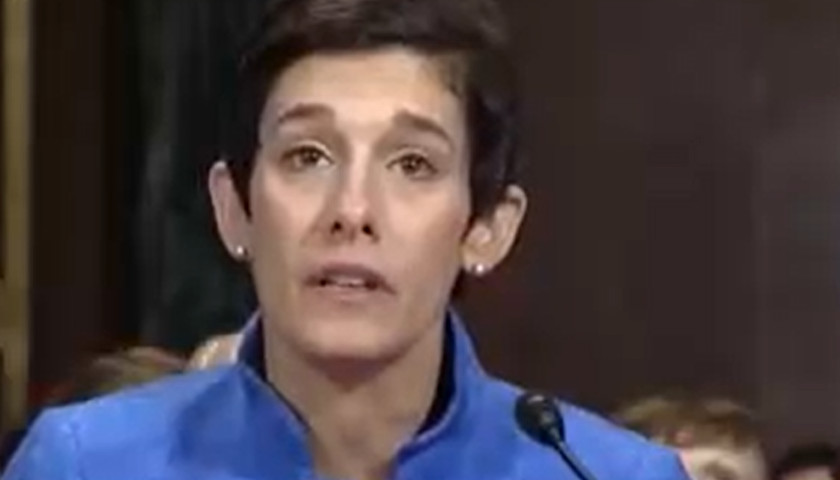
Shining light on the process that led Reuveni to concede the fact, Flentje wrote in his letter that the attorneys considered the case an uphill battle after it was assigned to Xinis (pictured above).
Calling the judge a “terrible draw” for the DOJ, the attorney described Xinis as “an activist who would give little regard to the President’s foreign policy authority,” and said that when appointing Reuveni to the case, he was “cognizant of the fact that the judge assigned was guaranteed to rule against the Trump Administration.”
The attorney later wrote that while he agreed with Reuveni’s decision to tell Xinis that the Trump administration deported Abrego Garcia in error, he would have presented the information during a later portion of the court appearance if he had handled it personally.
“I would not have made this the first point in my presentation were I appearing in court, but respect Mr. Reuveni’s judgment on how to best approach a hostile court with respect to that ordering given the need to make split second judgments on the oral presentation,” wrote Flentje.
Reuveni has since asserted whistleblower status, claiming he witnessed Trump administration officials plan to defy government orders. He recently provided text messages, which he said serve as evidence of his claims, to Democrats in Congress.
The letter by Flentje was written before Reuveni claimed to be a whistleblower. It revealed other points of disagreement between the supervisor and the employee. Despite agreeing with Reuveni’s decision to concede a key fact of the case, the attorney admonished Reuveni for his other statements to Xinis.
“I believe it was not appropriate for Mr. Reuveni to make statements that expressed ‘frustration’ with our policy client (here DHS),” wrote Flentje.
Reuveni also told Xinis that DHS failed to provide a satisfactory answer about when Abrego Garcia might be returned prior to the hearing, which he said generated “significant concerns.”
“This is the statement with which I have the most significant concern,” wrote the attorney, adding Reuveni’s statement “reflects a criticism in court of the information provided by the client.”
Flentje noted, “We represent the client, so a statement like this that reflects dissatisfaction is not appropriate in court.”
Later in the letter, after describing another statement by Reuveni as “confusing,” Flentje is accused of giving privileged information to the court by informing Xinis of his recommendations to the DHS about how to handle the case.
“I do not think it was appropriate for Mr. Reuveni to describe his recommendation for resolving the case to his client,” wrote Flentje. “That likely reveals information regarding a privileged discussion, and should not be discussed in court.”
Asked to supply an explanation for Reuveni’s actions, Flentje suggested the junior attorney succumbed to the pressure of his position.
Flentje wrote, “I do not think Mr. Reuveni made these statements with an intent to undermine the government’s litigation. I know he was under a huge amount of pressure,” before noting that it was only Reuveni’s second week in a new position at the DOJ.
Despite Reuveni only recently receiving a promotion, Flentje referred to him as “quite literally my most experienced immigration litigator” in an earlier portion of the letter.
These revelations come as the attorneys for Abrego Garcia admitted on Friday that they do not have the A-File for their client, which contains the comprehensive list of their client’s interactions with immigration authorities and courts, including the 2019 filing used to secure a U.S. Supreme Court ruling which mandated the Trump administration facilitate his return.
Abrego Garcia was returned to the United States on June 6, when the DOJ unsealed an indictment accusing him of participating in a human smuggling conspiracy for nearly a decade. He has pleaded not guilty.
Xinis is currently considering whether to issue a ruling, requested by Abrego Garcia’s attorneys, that would force ICE to detain the citizen of El Salvador in Maryland if he is released from DOJ custody.
The Tennessee Star was the first outlet to report that Abrego Garcia was pulled over by the Tennessee Highway Patrol (THP) in November 2022. The agency told The Star that troopers were instructed to release Abrego Garcia by the “Biden-era FBI” despite their suspicion he was engaged in human trafficking.
– – –
Tom Pappert is the lead reporter for The Tennessee Star, and also reports for The Pennsylvania Daily Star and The Arizona Sun Times. Follow Tom on X/Twitter. Email tips to [email protected].




The Supreme Court needs to step in now to curtail these lower-level judges, almost always appointed by democrats, in interfering with the Executive Branch. If they don’t do so the only solution is for Congress to defund that court. Cases will progress faster through that court once they stop their spending time and resources on cases beyond their purview.