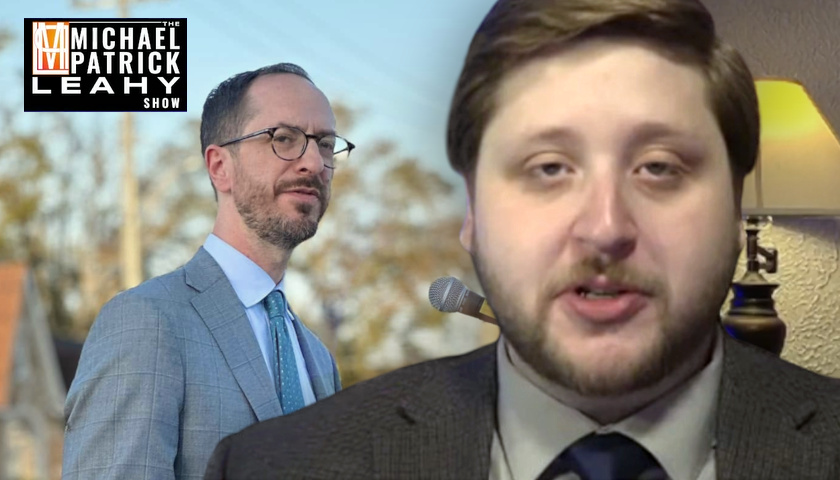
Don Palmer, a senior legal fellow for election integrity with the Heritage Foundation Institute for Constitutional Government, sat down for an exclusive interview Friday with The Tennessee Star’s CEO and Editor-in-Chief Michael Patrick Leahy, where he detailed how a pending U.S. Supreme Court decision could compel several states to overhaul their election laws by requiring mail-in ballots to be received by Election Day.
During an appearance on The Michael Patrick Leahy Show, Palmer discussed election administration, voter confidence, citizenship verification, civic education, and concerns about the federal judiciary.
Addressing delayed vote counting in California elections, including the ongoing ballot counting from the state’s June 2 election, Palmer said lengthy ballot tabulation periods undermine public confidence in election outcomes.
“Failure to do that really negatively impacts voter confidence,” Palmer said, referring to states that do not produce timely election results.
He noted that more than 30 states have adopted policies requiring ballots to be received by Election Day and have implemented procedures that allow officials to process ballots before Election Day.
Palmer said states that wait until after Election Day to begin processing large numbers of ballots often face significant delays.
“A state like Arizona, a state like California, when you do most of your processing after election night, it’s a recipe for disaster because it’s going to take weeks to count your ballots,” he said.
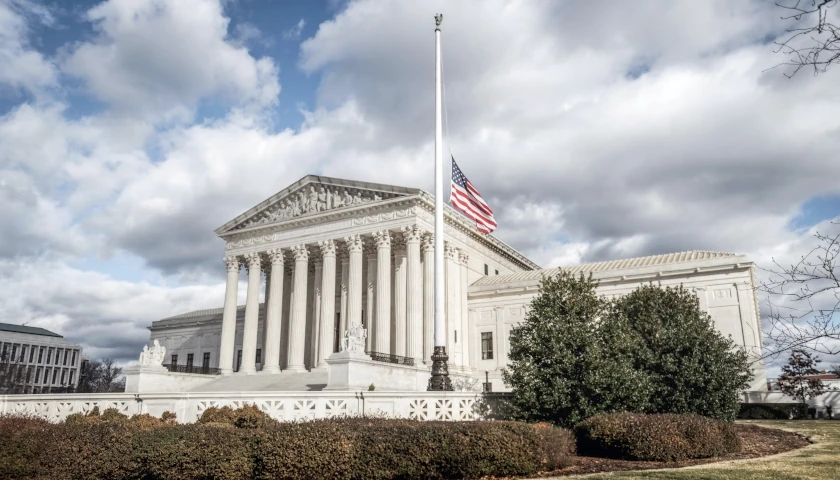
Palmer pointed to a pending Supreme Court case, Watson v. Republican National Committee, which he said could clarify whether federal law requires all ballots, including mail-in ballots, to be received by Election Day.
“That could literally tell the United States, the states, and the territories that Election Day is Election Day. Mail ballots included have to be in on Election Day,” Palmer said.
If the Court rules in that manner, Palmer predicted that states with laws permitting ballots to arrive after Election Day would be required to revise their election procedures.
“I have a sneaking suspicion that the Trump administration, the Department of Justice, will try to enforce that law prior to the general election,” he said.
Palmer also discussed ballot collection practices commonly referred to as ballot harvesting.
“The U.S. attorney out in California is investigating what we call ballot harvesting and ballot trafficking,” Palmer said. “That’s when you basically can collect ballots from every registered voter in California.”
Turning to his role at the Heritage Foundation, Palmer said citizenship verification is a major focus of the organization’s election-integrity efforts.
“The verification of citizenship, documentary proof of citizenship and registration, it’s become such a high issue that it just segues basically into some of the major initiatives that we’re trying to accomplish here at The Heritage Foundation,” he said.
Palmer said Heritage works with state legislators, publishes model election policies, and maintains an election integrity scorecard identifying what the organization considers best practices.
“We work with legislators. We actually put out model policies on our election integrity scorecard,” Palmer said.
Asked whether Heritage’s citizenship efforts would involve litigation, Palmer indicated that legal action could become part of the organization’s strategy.
“There will be a litigation aspect to it,” Palmer said. “Heritage wants to make sure that legislators know what both policies are, and then once they’re enacted, we can help defend them.”
Palmer also expressed concern about declining civic knowledge among younger Americans after Leahy cited statistics showing only 22 percent of eighth-grade students demonstrate civic proficiency.
“I think it starts with the family,” Palmer said. “We need to talk about government, we need to talk about civics and how that works, and the importance of registration, importance of voting, and the importance of understanding how our federal and state government is.”
Reflecting on the future of the American legal system, Palmer said he is pessimistic about the direction of the federal judiciary, and argued that some federal judges have exceeded their proper role in reviewing actions taken by the Trump administration.
“I’m actually concerned that it’s actually rogue judges at this point,” Palmer said. “Sometimes there’s been silly decisions that are essentially trying to stop the administration.”
He further stated that he is concerned about judicial impartiality.
“I want there to be unbiased judges,” Palmer said. “I think many of the actions of the federal judiciary, the way they react to the Trump administration, is really childish.”
When asked whether a remedy exists for “rogue” judges, Palmer expressed skepticism.
“The reality of it is that they’re extremely powerful,” Palmer said. “If certain judges go rogue, there’s really no way to stop that.”
Palmer concluded by noting that while Congress possesses impeachment authority over federal judges, partisan divisions make such action unlikely, leaving limited mechanisms for accountability.
“You have a federal judge who’s been appointed for life, and yet is basically acting in a somewhat rogue manner,” he said.
Tune in now to The Michael Patrick Leahy Show – your AMERICA FIRST news talk!
– Watch LIVE here on X
– Watch LIVE on YouTube / Rumble / Roku / AppleTV
– Listen on Spotify
– Listen on WENO AM760 in Nashville
– Read more at @TheTNStar https://t.co/KkR4DPWlxr— Michael Patrick Leahy (@michaelpleahy) June 12, 2026
– – –
Kaitlin Housler is a reporter at The Tennessee Star and The Star News Network.