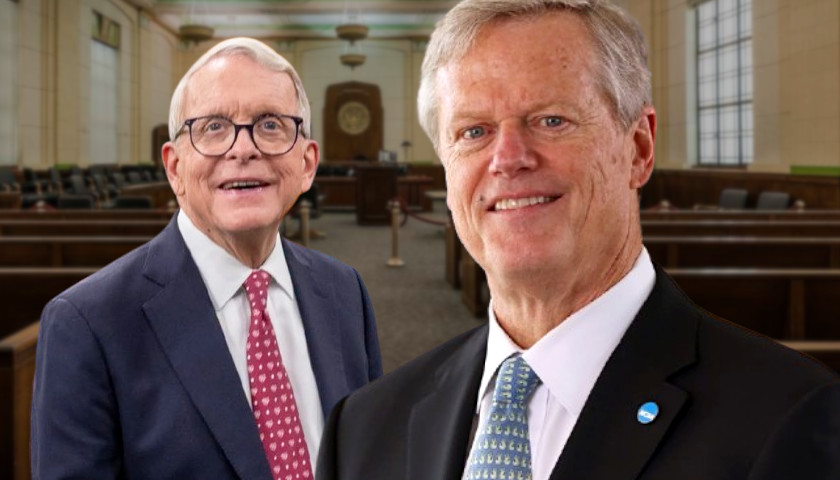
The NCAA sued Ohio Governor Mike DeWine on Friday over an executive order he signed that ignored newly established eligibility rules.
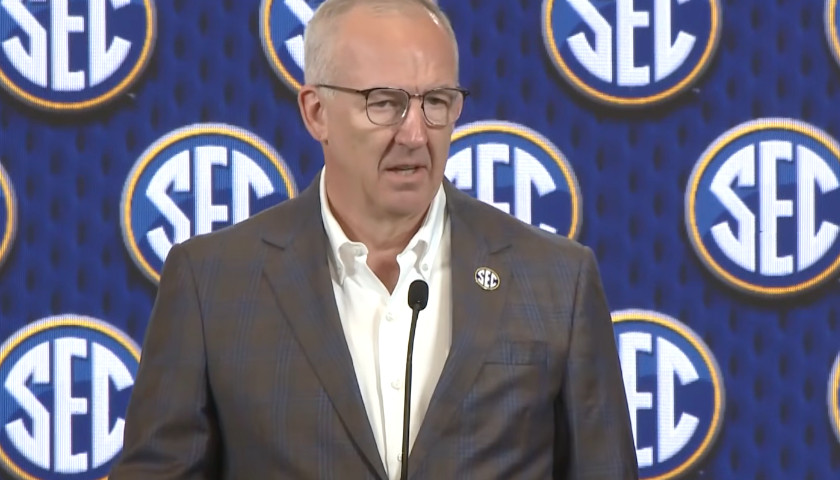
NCAA President Charlie Baker said DeWine lacks the authority to “permit Ohio colleges and universities to disregard the rules they have agreed to follow by rostering ineligible student-athletes.”
“If state courts – or governors – can unilaterally change the rules to give certain schools competitive advantages, it will become impossible for all schools to compete on a level playing field,” he explained.
DeWine signed an executive order this week allowing the state’s public and private colleges to let student-athletes in the graduating high school class of 2022 be eligible for an extra year.
In June, the NCAA adopted new eligibility rules that allowed student-athletes to have five years of eligibility within a five-year window. However, the change did not pertain to student-athletes who used up all their eligibility in the 2025-2026 academic year, including student-athletes who graduated from high school in 2022.
This means these student-athletes could not use an additional year of eligibility.
According to DeWine, “fairness” needs to “remain part of the equation” when rules change.
“We want Ohio’s student-athletes to have the same opportunity as student-athletes in other states,” he explained.
Lt. Governor Jim Tressel, who coached Ohio State University’s football team from 2001 to 2010, said, “It’s important we do not deprive our current student-athletes of the same opportunities enjoyed by their peers.”
In recent months, student-athletes from the 2022 high school class have challenged the NCAA’s new eligibility rules in court, securing temporary orders allowing them to compete for an additional year. Some of these orders have been stayed and overturned.
In the lawsuit, the NCAA says the executive order violates the Commerce Clause and the First Amendment.
The NCAA notes the Commerce Clause “prohibits state action that burdens interstate commerce or regulates conduct beyond the state’s borders.”
“A State may not enact laws that seek to reshape competition nationwide by conferring
advantages on in-state institutions at the expense of out-of-state competitors,” the lawsuit says. “The Executive Order was intended to confer an advantage on in-state institutions, and
in so doing, distort competition nationwide.”
The lawsuit says the NCAA has the right, as an organization, to “adopt and enforce its bylaws” and eligibility rules.
“Member institutions have decided which student-athletes should be eligible for competition, and declared, through the NCAA Bylaws, that they want to associate with member institutions—and with student-athletes—who share those values so that college sports take place on a level playing field,” the lawsuit notes.
DeWine’s executive order violates the First Amendment because it “undermines those values by purporting to provide Ohio institutions with legal cover to maintain their NCAA membership while simultaneously flouting the association’s rules,” according to the lawsuit.
“Executive Order purports to allow universities in Ohio to roster athletes that the NCAA’s membership does not want to have on the field, infringing the NCAA membership’s associational rights with no valid justification,” it says.
On top of this, the lawsuit argues the executive order breaks state law because a state official lacks the authority to take these actions.
“Governor DeWine lacks any authority to order Ohio colleges and universities to roster ineligible student-athletes. Indeed, the Executive Order itself cites no statutory or constitutional source of authority, beyond a general appeal to the ‘public interest,’” the lawsuit says.
The NCAA is asking an Ohio federal judge to declare the executive order illegal under state and federal law and to prevent its enforcement.
The legal case was filed in the U.S. District Court for the Southern District of Ohio.
According to Baker, the NCAA is “confident” its lawsuit will prevail, but he said the “answer to this state-by-state and court-by-court race to the bottom is the bipartisan Protect College Sports Act [PCSA].”
The U.S. Senate-passed PCSA adopts the NCAA’s new eligibility rules. It currently awaits U.S. House deliberation.
– – –
Zachery Schmidt is the digital editor of The Star News Network. Email tips to Zachery at [email protected].
Photo “Charlie Baker” by Charlie Baker. Photo “Mike DeWine” by Mike DeWine.