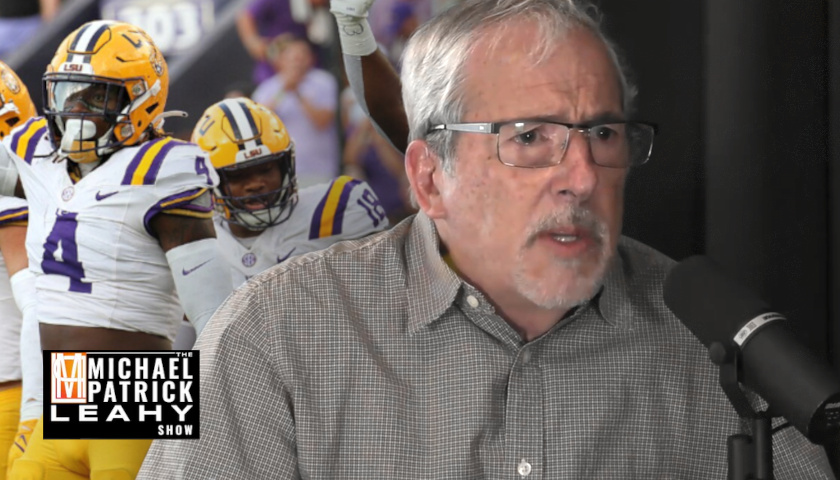
Legal analyst and retired attorney Mark Pulliam criticized the Southeastern Conference’s (SEC) legal strategy in its escalating dispute with Louisiana State University (LSU), arguing the conference is relying on a weak First Amendment theory to prevent LSU from challenging its possible expulsion.
During an appearance Monday on The Michael Patrick Leahy Show, Pulliam discussed the SEC’s lawsuit as the conference prepares to consider whether to remove LSU from the conference during a meeting planned for Thursday between the conference’s presidents and chancellors.
Pulliam compared the SEC’s lawsuit to a case he had discussed earlier on the program involving an attorney seeking a presidential pardon for a state crime.
“This lawsuit I think is in the Kevin Reddington category,” Pulliam said.
He said the SEC’s argument essentially claims a First Amendment right not to associate with LSU while simultaneously asking a court to prevent LSU from going to court to defend itself.
“So what the SEC is saying is, ‘We have a First Amendment right to not associate with people we don’t like or that we disagree with, and we don’t like and we don’t agree with LSU. So in order to protect our First Amendment right of association, we intend to kick them out of the SEC, but we want you to issue an injunction at the beginning of the week because we’re not gonna kick them out until the end of the week. And we want you to issue an injunction preventing LSU from going into court to assert its legal rights that could interfere with our ejection of them from the SEC,’” Pulliam explained.
He described the SEC’s request for an injunction preventing LSU from pursuing legal action as a “prior restraint,” adding, “we all learned in law school that the one thing the First Amendment does not tolerate is prior restraints.”
The SEC has argued in its amended filing that being forced to associate with LSU violates its First Amendment rights and that an injunction is necessary to prevent harm to the conference’s brand and mission.
With regard to the broader legal foundation of the dispute, Pulliam argued that court challenges to NCAA restrictions have helped produce the current environment in college athletics.
“So we’re in this situation because the NCAA has been messing up the rules, and Lane Kiffin is just taking advantage of that,” Pulliam said.
He said the SEC’s lawsuit appeared unlikely to succeed.
“I think this lawsuit, this request for injunctive relief, is gonna be laughed out of court,” Pulliam said. “It kinda shows that you guys are an evil empire restricting competition, trying to crush people who won’t go along with the program.”
Pulliam argued that the SEC’s concerns stem in part from the changing economics of college athletics, including name, image, and likeness (NIL) compensation.
“Blame the NCAA for creating this mess,” Pulliam said.
The dispute centers on former Ole Miss players Dae’Quan Wright and Zxavian Harris, who signed NFL contracts before being released and then sought to return to college football under a new eligibility framework. A Louisiana judge issued a preliminary injunction preventing the NCAA and SEC from penalizing schools for using athletes covered by the case.
Pulliam ultimately said the SEC’s attempt to prevent LSU from seeking judicial relief could undermine its own position.
“This idea that you’re so afraid that LSU has a winning legal argument that would prevent you from doing what you’re intending to do, that the only way to solve that is to get a court to tell them you can’t file any lawsuits,” Pulliam said. “That almost admits that what you’re doing is wrong.”
Tune in now to The Michael Patrick Leahy Show – your AMERICA FIRST news talk!
– Watch LIVE here on X
– Watch LIVE on YouTube / Rumble / Roku / AppleTV
– Listen on Spotify
– Listen on WENO AM760 in Nashville
– Read more at @TheTNStarhttps://t.co/DyfocIX4GH— Michael Patrick Leahy (@michaelpleahy) September 8, 2026
– – –
Kaitlin Housler is a reporter at The Tennessee Star and The Star News Network.
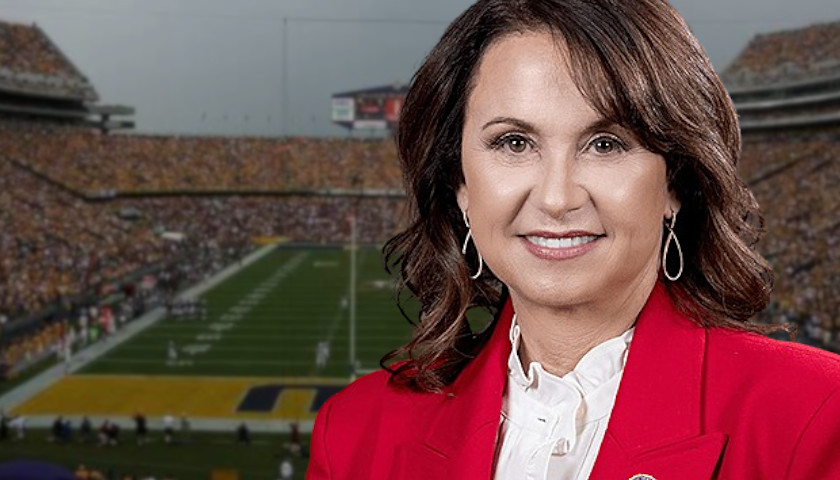
Photo “LSU Football” by Tammy Anthony Baker CC2.0.