Tom Pappert, lead reporter at The Tennessee Star, said Metro Nashville’s response to a public records request seeking documents related to nearly $1.5 million in grants to two pro-illegal immigration nonprofits failed to produce any records justifying the appropriations and instead generated new questions about the city’s handling of the request.
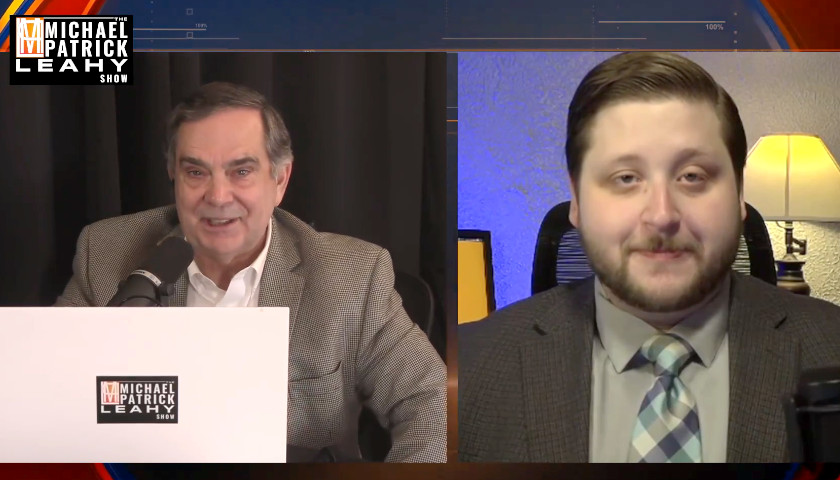
During an appearance Wednesday on The Michael Patrick Leahy Show, Pappert discussed Metro Nashville’s “non-response” to a Tennessee Public Records Act request seeking documents required under state law for nonprofit appropriations.
Pappert said the request was straightforward.
“Tennessee statute specifically states that when a metropolitan government like Nashville is going to grant money to a nonprofit entity, that nonprofit is supposed to file certain documents. They’re supposed to provide an audit, a statement of proposed use, et cetera, like seven or eight different pieces, and the statute implies that this is going to happen every time they’re granted money,” he explained.
The request sought records explaining the nearly $1.5 million appropriated in Metro Nashville’s Fiscal Year 2027 budget for the Tennessee Immigrant and Refugee Rights Coalition (TIRRC) and Tennessee Justice for Our Neighbors (TNJFON).
Pappert said Metro responded with 51 files but none contained the documentation requested.
“We simply asked Nashville, Metro Nashville Clerk Austin Kyle, we asked the mayor’s office, we asked about everyone we could think of, and then we filed a public records request seeking to obtain these documents to explain the nearly $1.5 million going to two pro-illegal immigrant nonprofits, the infamous TIRRC and Tennessee Justice For Our Neighbors.”
Pappert described Metro’s production as unlike any public records response he has previously received.
“We got a 51-document response yesterday. It’s the most absurd and strange response I’ve ever gotten in all the public records acts, FOIA, state or federal, that I’ve ever filed in my life,” he said, noting how the records were delivered as Microsoft Outlook message files rather than standard PDFs. “They sent it to us using Microsoft Outlook files, which of course are cumbersome and difficult to view one at a time.”
According to Pappert, many of the documents were unrelated to the actual records requested.
“The majority, I would say, of these 51 documents don’t actually respond to our request at all,” he said, detailing how the production largely consisted of internal Metro communications generated after The Star submitted its records request.
“In fact, they did a very interesting thing that’s going to actually inform a lot of our reporting. They gave us about 20 different emails that show the internal process at Metro Nashville, what happened, in other words, after we filed our public records request, and I think that there’s going to be some big surprises about exactly who is informing their theory,” he added.
Pappert said none of the documents justified either the original 2022 appropriation, the amended 2024 contracts, or the new FY 2027 funding.
“But most importantly, none of these 51 documents had anything to do with the justification to give $1.5 million to two pro-illegal immigrant nonprofits. Not a single one. They didn’t justify or provide a justification for the original spending from 2022, the amended contract from 2024. Those were both when it was Biden-era [American Rescue Plan] funds paying for it,” he said.
“But they also didn’t provide any justification for the fiscal year 2027 funding, the $1.5 million that’s going to come directly from the Nashville budget, in other words, from the Nashville taxpayers,” he added.
Pappert called the response “a rather stunning non-response,” adding, “[I]f they think that this was going to make us go away or that these difficult-to-read files would slow us down, they were sorely mistaken.”
Following Leahy’s assertion that Metro Nashville’s response amounted to a “blatant violation” of the Tennessee Public Records Act and his suggestion that litigation may be necessary to obtain the requested records, Pappert said he believes the investigation could have implications beyond any potential lawsuit.
“I see no other option with Metro Nashville, but I think this is even bigger than the likely to be forthcoming litigation,” he said.
Pappert added that, in his view, the investigation could ultimately lead to broader changes in how metropolitan governments award direct appropriations to nonprofit organizations.
“I think this, if everything goes perfectly, is going to change how metropolitan governments in Nashville, and hopefully across the nation, are allowed to do these direct appropriation grants to nonprofits,” he added.
Pappert also suggested the investigation could inform future legislative reforms.
“I think that not only are they failing to follow the existing law, I think they are providing an outline to the Tennessee General Assembly and future governor, Marsha Blackburn, of exactly what to do to make sure that TIRRC and Tennessee Justice For Our Neighbors, and all the other ones, because it’s not just these two, we’ve just been focusing on them, are no longer benefiting from the taxpayer dollars,” he explained.
Finally, Pappert said he believes the issue extends beyond Nashville.
“I have no doubt that as we expand this investigation, we’re going to likely find out it happened in the other big cities in Tennessee,” he said. “We’re gonna find out it happened in every big city in the region, and likely every big city that had a Democrat governor and city council in the critical period of 2021, 2022, 2023.”
Tune in now to The Michael Patrick Leahy Show – your AMERICA FIRST news talk!
– Watch LIVE here on X
– Watch LIVE on YouTube / Rumble / Roku / AppleTV
– Listen on Spotify
– Listen on WENO AM760 in Nashville
– Read more at @TheTNStar
https://t.co/rAedCIHkmi— Michael Patrick Leahy (@michaelpleahy) July 8, 2026
– – –
Kaitlin Housler is a reporter at The Tennessee Star and The Star News Network.