
Tom Pappert, lead reporter at The Tennessee Star, said a historic $9.25 million defamation verdict against The New York Times could have broader implications for how the newspaper and other outlets use anonymous sources.
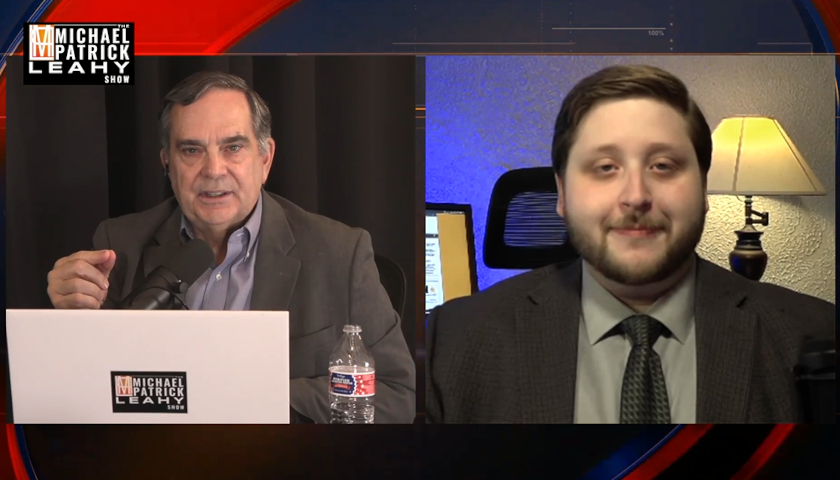
During an appearance Friday on The Michael Patrick Leahy Show, Pappert discussed the Alabama jury’s decision in favor of former University of Alabama basketball player Kai Spears, who sued the Times after a 2023 article incorrectly reported that he was in a vehicle involved in a fatal shooting.
Pappert said the case revealed problems with the newspaper’s reporting process.
“I certainly don’t think you would’ve been happy at all if I tried to pull a fast one like that in your newsroom,” Pappert told host Michael Patrick Leahy, CEO and Editor-in-Chief of The Star.
The Times article relied on an anonymous “person familiar with the case” to report that Spears was a passenger in the vehicle at the time of the shooting. Spears was actually in the vehicle earlier that day but was not present when the shooting occurred.
According to Pappert, court filings showed that another source provided information about the vehicle but did not make the same claim about Spears.
“The second source did not make the same claim about Kai, did not say that at all,” Pappert said. “So they had, it seems from the public reporting at least, some contradictory information and decided to choose source A over source B when it comes to what to report.”
The Times later corrected the article, but Pappert questioned why the correction did not happen sooner.
“It does seem very bad form,” Pappert said. He argued that the newspaper could have quickly clarified that Spears had been in the vehicle earlier in the day rather than continuing to publish the inaccurate claim.
With regard to the newspaper’s defense that the reporter followed its procedures for using anonymous sources, Pappert said the case exposed a larger problem with those procedures.
“The national media has moved toward anonymous sourcing and publishing, then trust and verify later, and as a result, their standards are no longer worth reading,” Pappert said.
He added that the significance of the case extends beyond sports reporting because the same sourcing practices could be used in other areas of coverage.
“This is a sports article, but just keep in mind, he said that these are The New York Times’ standards,” Pappert said. “So that are, that, these are the standards on articles about politics, about the economy, about international relations.”
“I think everything The New York Times… think back to everything they published during the 2024 election or during the COVID-19 pandemic, and most of the time, at least in my memory, my recollection, most of the time when The New York Times says they have a big bombshell exclusive, it relies heavily, if not entirely, on anonymous quotes,” he added.
The Times has said it believes the verdict and damages award are “contrary to law and not supported by evidence” and that it is reviewing its legal options.
Pappert predicted the newspaper would continue fighting the judgment through the appeals process.
“I think that’s actually a very accurate and realistic timeline and predictions as to what will happen,” Pappert said when Leahy suggested the Times could appeal.
When it comes to the potential impact on the newspaper’s reputation, Pappert argued that the case could make readers more skeptical of its reporting.
“Now forever, people will associate this with The New York Times on its reporting of anonymous sources,” Pappert said.
Live August 21 https://t.co/fA5rkFlFGv
— Michael Patrick Leahy (@michaelpleahy) August 21, 2026
– – –
Kaitlin Housler is a reporter at The Tennessee Star and The Star News Network.
Photo “New York Times” by Haxorjoe CC3.0.