by Kevin Kreutz
When it comes to putting the Ten Commandments in Tennessee schools, a records request from the American Civil Liberties Union has made one thing clear: local school officials, not Tennessee lawmakers, will decide whether those displays stay or go.
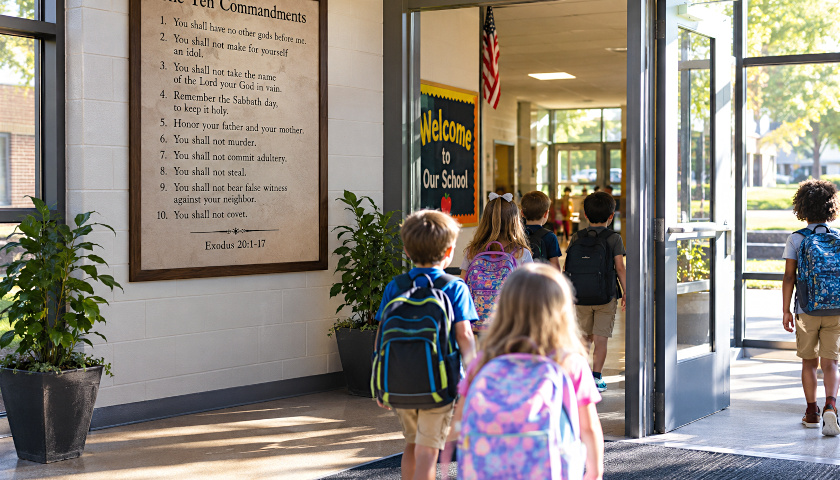
Earlier this year, the Tennessee General Assembly passed House Bill 47, authorizing Tennessee public schools to post the Ten Commandments alongside the Declaration of Independence and the U.S. Constitution. Other states, including Texas and Arkansas, require the displays. Tennessee took a different route by making them voluntary.
Five districts — Blount, Rutherford, Washington, White and Wilson — have voted to move forward. Soon after, the ACLU and other similar groups sent public records requests to each district. The ACLU wants board minutes, emails, plans, proposed displays and messages with people outside the district. These requests are often the first step before a lawsuit. They also show why school boards must be careful. A message written today could be a court record later, with uncertain consequences.
Tennessee’s law comes amid a shift in the courtroom. For many years, courts blocked religious activity in schools and other government spaces if the activity lacked a non-religious purpose, helped religion, or blurred the line between government and religious action. The Supreme Court used this test in 1980 to strike down a Kentucky law that required the Ten Commandments be posted in public school classrooms.
In 2022, the Supreme Court changed course, holding that judges should focus more on the nation’s history and traditions with respect to religious activity in schools and similar places. Court rulings since reveal broad disagreement. This year, a federal appeals court upheld Texas’ law, finding that Ten Commandments displays are not the type of religious activity our Founders would have understood to impermissibly mix government and religion. The law’s challengers have asked the Supreme Court for review. Meanwhile, in Arkansas, a federal trial court rejected that state’s mandatory display law. The Arkansas court ruled that the Ten Commandments did not belong in schools, applying the principles from the 1980 Supreme Court case enjoining Kentucky’s Ten Commandments law, principles that likely don’t apply after the High Court’s 2022 decision.
Tennessee’s law isn’t like the ones in Texas or Arkansas because it isn’t mandatory. That may make it harder to challenge the law itself. But it also puts more attention on school boards. What board members say at meetings, write in emails and how they justify the displays all become critical facts, explaining why the ACLU is scrutinizing these local decisions.
History reveals the ACLU’s strategic playbook: a little over 20 years ago, the Supreme Court said no to a Ten Commandments display because the evidence showed that religion, not history, was the main reason for the display. And in a 2025 case, the Supreme Court said a school can impermissibly infringe upon religious freedom when its rules pressure families to accept certain viewpoints.
The ACLU played a role in both of those cases. For the five Tennessee districts that voted to post the Ten Commandments — and for any district still considering it — the lesson is simple: act as if the record will be read in court. Keep the reasons for the decision clear and consistent. If the board relies on history, civics and the law, say so in public meetings and written records. Make sure the displays follow state law.
Records that fit the law may help defend the board’s choice. Records that show a mainly religious goal, or steps taken outside the law, may give challengers a stronger case.
In this fight, an email is not just an email. It may become Exhibit A to a lawsuit with implications well beyond Tennessee’s borders.
– – –
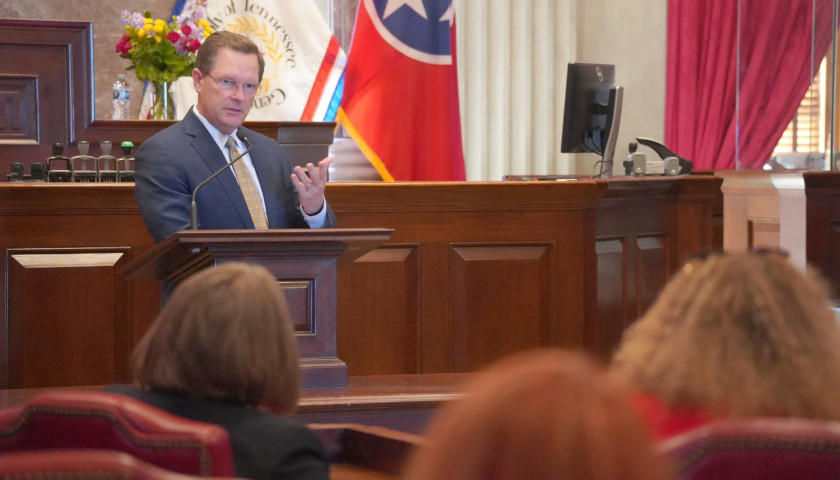
Kevin Kreutz is a partner in the Nashville office of the law firm Holtzman Vogel. He specializes in health care, financial services and constitutional challenges. He previously served as a Deputy Attorney General in the Tennessee Attorney General’s Office, where he advised and represented state education agencies. He can be reached at [email protected]. The views expressed are his own.