by Eva Romero
I was fourteen years old when I was forced into marriage. Fourteen.
I did not choose it, and I could not understand it. At an age when I should have been focused on starting high school, the walls closed in fast. I learned a brutal lesson early: when you are a child trapped in abuse, you become invisible to the systems meant to protect you, and all too visible to those who mean you harm.
I survived. I got out. I went on to earn my high school diploma and a college degree, becoming the first in my family to do either. I built a business, raised five beautiful children, and had the honor of being appointed by Governor Bill Lee to serve as a Housing Commissioner.
My life is full, and I am grateful. But I have never forgotten what it felt like to be the child no one could find in time.
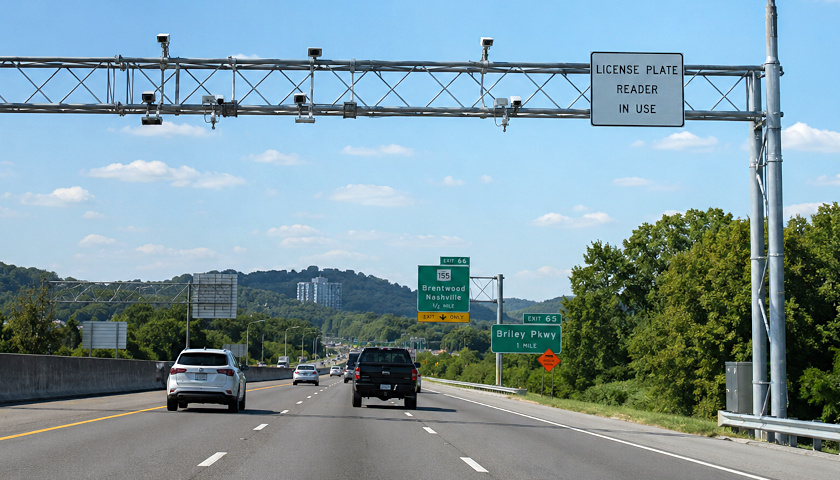
That is exactly why I cannot stay quiet about a vital public safety tool Nashville has approved in principle but refuses to fully fund and deploy: License Plate Reader (LPR) technology.
When a predator or an abuser takes a child, the clock starts ticking. LPR cameras scan public roadways and cross-reference law enforcement databases in real time. If a vehicle matches an AMBER Alert, a stolen car report, or an active warrant, officers are notified instantly.
Not after a report sits on a desk. Not after hours have passed. Instantly. In the exact moments that determine whether a child comes home alive.
Many surrounding communities in Middle Tennessee have already made this investment. The results are not abstract. In Mt. Juliet, after LPRs were deployed near schools and major roadways, burglaries dropped by 56 percent and vehicle thefts dropped by 27 percent.
But Nashville remains behind. And criminals look for gaps.
When every surrounding jurisdiction uses technology that makes suspect vehicles traceable, Nashville cannot afford to be the weak spot. We are a city of nearly 700,000 people. We should never be less equipped than our neighbors when it comes to finding stolen vehicles, locating wanted suspects, and rescuing a missing child or vulnerable senior.
Critics raise valid privacy concerns, and those concerns must be taken seriously. Any LPR program needs ironclad guardrails: short data-retention periods, restricted access, strict audit trails, and automatic deletion unless data is tied to an active criminal investigation.
But modern LPR systems do not identify who is inside a vehicle; they read license plates visible on public roads. Predators use information to hunt. Law enforcement uses evidence to protect.
I think about the girl I was at fourteen. I think about the women and children in Hermitage, Donelson, and Old Hickory who are being tracked by abusers, traffickers, or predators right now. LPR technology will not solve every problem, but it gives a dispatcher a lead when a child has been missing for an hour and no one knows which way the car turned. It gives police a fighting chance before the window of survival closes.
Public polling shows overwhelming support for LPRs when used for serious public safety. The Metro Council has already approved moving forward. What Nashville still lacks is the political will to fund and implement it responsibly.
Inaction is still a choice. And right now, our leadership’s inaction is making Nashville, including District 60, less safe.
We cannot accept rising crime as the new normal for our neighborhoods. Nashville’s families, its women, its seniors, and its most vulnerable children deserve every responsible tool available to ensure they are never left invisible.
– – –
Eva Romero is an entrepreneur, mother of five, and the Republican candidate for Tennessee State House District 60, covering Old Hickory, Donelson, and Hermitage. She was appointed by Governor Bill Lee as a Commissioner on the Tennessee Housing Development Agency.