In January 2025, I was honored with a second Presidential appointment to serve at the United States Agency for International Development (USAID). When offered this appointment I was under the impression that we would “reform” the agency and bring it in line with the newly elected Trump-Vance administration.
The first several days were chaotic and confusing. Our small team of political appointees began reviewing programs and organizations around the globe funded by American taxpayers—initiatives that were meant to support the impoverished and suffering in less developed regions. But the deeper we dug, we discovered that many were engaged in activities that required far more scrutiny. It quickly became obvious that our team couldn’t tackle this alone. What followed is documented online with varying degrees of accuracy, but the short version is that reform wasn’t enough; a complete overhaul was unavoidable. In the process, I had effectively worked myself out of a job. Or so I thought.
Eight months after my appointment to USAID I was reassigned and appointed to serve at AmeriCorps, the federal agency for national service and volunteerism, an organization I had never encountered in my entire career. I didn’t know what to expect. More career bureaucrats chasing portfolios and politics to pad their resumes instead of ensuring programs actually fulfilled their intended purpose? I wondered how an agency I had never heard of could be different and make real impact and truly serve the American people effectively.
Shortly after stepping into my new role, I began to visit ongoing AmeriCorps projects. One of the individuals I met was an older AmeriCorps Volunteer affectionately known as “Grandpa Bruce” serving Medford, Oregon.
He shared the experience of children running up to him for the first time as if he were a member of their family. And in a very real sense, he was. What moved me about his story was that he was over seventy, his wife of many decades had died, and although they wanted children, he had never had the opportunity to be a father and had no other close family. A friend introduced him to AmeriCorps, and he began his service as an AmeriCorps Seniors Foster Grandparent. The program didn’t just give him a purpose; it gave those children someone steady, present, and invested in their futures.
After witnessing the connection, he and many other have built through service, I realized AmeriCorps is not just delivering programs; it was rebuilding something deeper: trust, belonging, community, and hope.
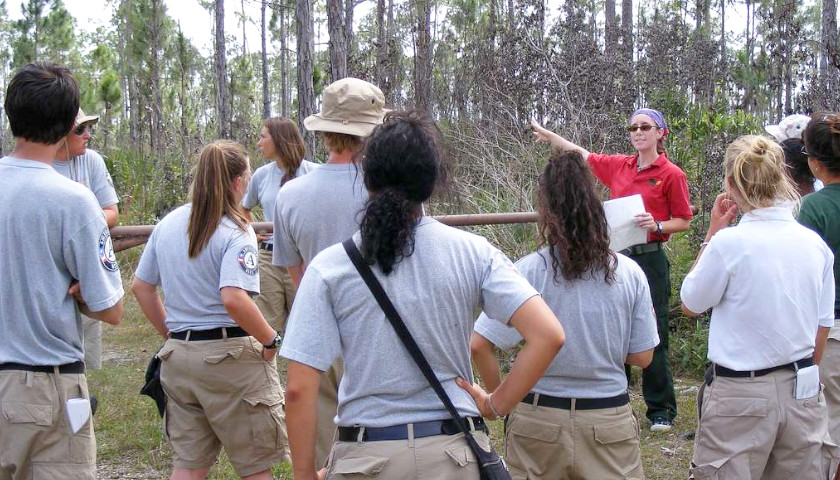
I have spent my career in and out of public service and must admit my faith in humanity has been sorely tested. I have spent this past year cautiously curious about AmeriCorps, and whether it was fulfilling its mission. Somewhere across the sixteen states I visited, between kitchen tables, trailheads, and classrooms, I saw something very real. AmeriCorps has shored up my belief in people and their willingness to serve others, not as a slogan, but as a lived, everyday practice that binds Americans and their communities together. Experiencing firsthand the service has, in many ways, restored hope for the country I love.
What I found at AmeriCorps is different: staff, partners, and Volunteers dedicated to a purpose, whose commitment to a shared mission never wavered, despite disruption, fewer people, and tighter timelines. This conviction convinced me we can renovate this agency and keep it focused on what works for the American people.
Over the last year, we’ve been doing the hard, necessary work of renovation: streamlining processes; reducing administrative complexity; and focusing on service outcomes. That means updating grantmaking, simplifying reporting, and centering our work on real community-rooted impact. This isn’t about dismantling service. It’s about strengthening it.
It is impossible to put a dollar figure on reducing loneliness, restoring dignity, or a child finally finding a steady adult who says, “You do matter.” The impact of this service is immeasurable. I met an AmeriCorps Seniors Companion in Florida, who shows up week after week to help a 98‑year‑old neighbor get to appointments and stay connected. Another AmeriCorps Volunteer in rural
Oregon who helps a neighbor navigate Medicare to save nearly $30,000 a year on prescription drug costs. These are simple acts with lifechanging consequences that ripple into entire communities across this nation.
AmeriCorps is a launchpad. Volunteers of all ages show up, solve problems, and lead. They gain skills, certifications, and real-world experience across industries that prepare them for the workforce and beyond. AmeriCorps and its partners consistently report that AmeriCorps alums are more employable because service taught them teamwork, resilience, and responsibility.
AmeriCorps is much more than an agency; it is a network of neighbors helping neighbors—mentoring students, supporting veterans, expanding access to healthcare, and empowering local institutions that make communities work. The best way to evaluate AmeriCorps is by the lives touched and the institutions strengthened long after the service ends. The most powerful part of this network isn’t its national reach—it’s local trust.
Renovation requires candor. We’ve confronted painful audits and compliance findings, and we’re tightening systems, and raising expectations. AmeriCorps is being reshaped to deliver results that
American communities can see and depend on.
AmeriCorps is truly America’s hidden jewel—Americans serving Americans—and we’re renovating it to its core mission: service that works for all Americans.
– – –
Mark Lloyd is Chief of Staff, AmeriCorps