by Bret Manley
In 2021, Governor Bill Lee and state officials celebrated Microvast’s announcement of a $220 million battery manufacturing facility in Clarksville, promising nearly 300 jobs and positioning the state as a leader in the electric vehicle and energy storage supply chain. The project, which received significant economic development incentives and was sold as a win for American manufacturing and clean energy jobs, has become a troubling example of how Chinese-linked companies continue to benefit from U.S. taxpayer incentives despite serious national security and human rights concerns.
Microvast Holdings, Inc. has long derived most of its revenue and assets from operations in China, previously raising $400 million in funding from state-run CITIC Securities and Chinese private equity firm CDH Investments, which holds roughly 11% through affiliated entities, with board representation. While Microvast maintains a U.S. headquarters and public listing, its supply chains and core production remain heavily dependent on China, with almost all its manufacturing capacity, a 75,000 square foot R&D center and four subsidiaries in China. These connections raise legitimate questions under evolving U.S. policy aimed at strengthening national security by reducing reliance on adversarial supply chains.
The company’s board further entangles Microvast in alleged human rights abuses in China. Independent director Arthur (Lap Tat) Wong has long served on the board of Daqo New Energy, including as audit committee chair. A Daqo subsidiary, Xinjiang Daqo New Energy Co., Ltd., appears on the Uyghur Forced Labor Prevention Act Entity List due to its location and operations in the Xinjiang Uyghur Autonomous Region. A Sheffield Hallam University report documented how Daqo is among companies that have participated in or benefited from state-sponsored forced labor programs involving Uyghurs and other persecuted groups.
Other major Chinese battery manufacturers have faced similar U.S. government restrictions. In June, EVE Energy was added to the Pentagon’s roster of Chinese military companies under Section 1260H for its contributions to China’s military-civil fusion efforts through state-supported programs. BYD and CATL, which both have deep ties to the Chinese state, have also encountered heightened scrutiny and restrictions from U.S. defense authorities due to national security concerns. These designations underscore that Chinese battery firms operating in or seeking benefits from the United States are increasingly viewed through the lens of strategic competition and supply chain security. Given Microvast’s substantial Chinese ownership, board connections to entities with documented forced labor ties, and history of heavy reliance on Chinese operations, it is likely only a matter of time before the company is added to U.S. government blacklists.
So why has Tennessee continued to support this project with incentives while federal authorities have already acted? Ironically, the Biden Administration’s Department of Energy scrapped a proposed $200 million grant to Microvast for its Tennessee facility in 2023. Governor Lee should follow suit. The issue is not merely the presence of a board member with troubling affiliations. Microvast remains deeply entangled with Chinese ownership, operations, and supply chains. As long as those relationships remain intact, Tennessee taxpayers are subsidizing a company whose interests are not fully aligned with America’s economic or national security priorities.
If Microvast wishes to continue operating in Tennessee and benefiting from state economic support, it should be required to transition its Clarksville operations into independent American ownership and divest its Chinese assets. Anything short of this would amount to cosmetic reform. Tennessee should not be subsidizing companies like Microvast while claiming to strengthen American manufacturing.
As Senate Majority Whip John Barasso said, “Microvast’s close relationship with China is not secret.” The time for half-measures is over. Governor Lee needs to pull the plug.
– – –
Bret Manley is the executive director of the Energy Fair Trade Coalition. He is a former Naval Intelligence Officer and previously worked on Capitol Hill as chief of staff to a senior member of the Congressional Climate Solutions Caucus.
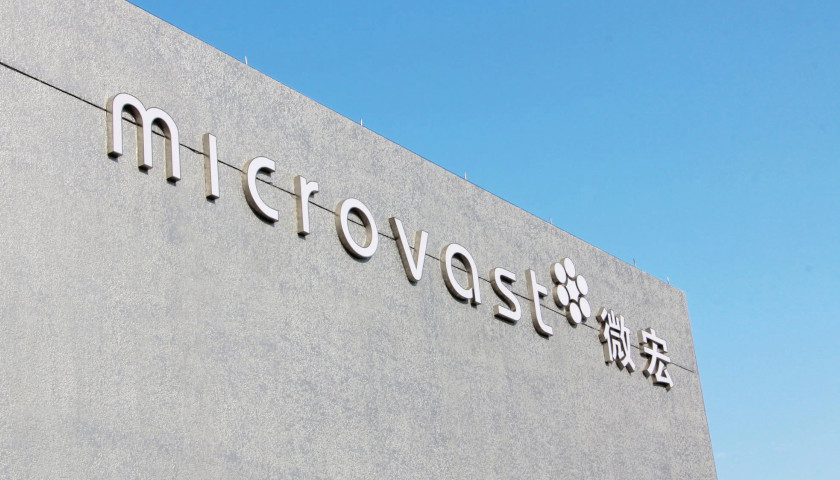
Photo “Microvast, Inc.” by Microvast, Inc.