Tea Party Nation Founder Judson Phillips warned major American school systems are “dumbing down kids” following the resignation of an award-winning Metro Nashville Public Schools (MNPS) teacher who publicly criticized the district’s academic standards, discipline policies, and treatment of teachers.
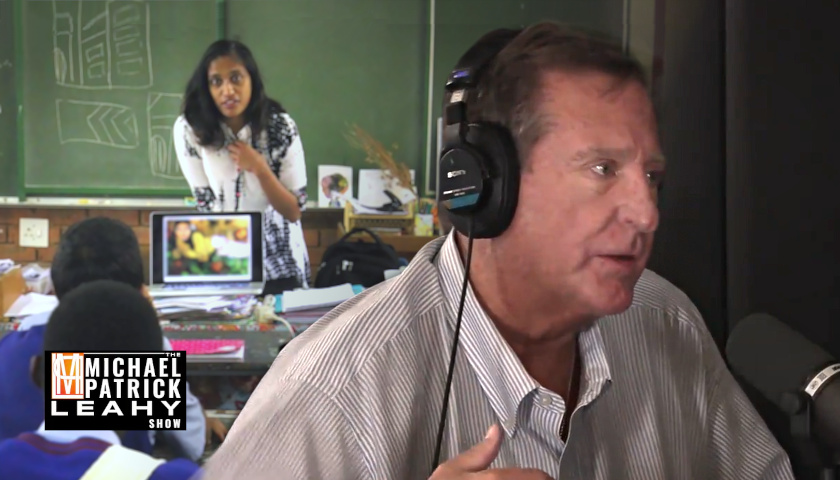
Phillips made the comments during Friday’s edition of The Michael Patrick Leahy Show while discussing former MNPS teacher Samira Hardcastle, who resigned in May and appeared before the MNPS Board of Education earlier this week to explain why she left the district.
Hardcastle, who was named an MNPS Teacher of the Year earlier this year and received the district’s Blue Ribbon Teacher Award in 2025, told the board that district leaders asked her to fabricate grades for a student whose parent pressured school officials to change failing grades.
“District leaders asked me to fabricate grades for a parent who sat in the office for hours until her daughter’s failing grades were changed,” Hardcastle said. “It creates false entitlement.”
Hardcastle also alleged that teachers were being prevented from reporting behavioral problems and warned that students were struggling with basic academic skills.
“Statistics are being skewed to protect the district, not our children,” Hardcastle said. “Our children cannot read and write. They cannot do basic math.”
She also alleged that many teacher vacancies were being filled by uncertified teachers and that the district withheld $500 from her paycheck, which she said caused her to fall behind on her mortgage.
Hardcastle’s comments came days after a Texas teacher received national attention after describing students who struggled to read and write.
Discussing the reports with The Tennessee Star’s lead reporter Tom Pappert, Phillips said the problems were part of a broader trend in large urban school systems.
“It is,” Phillips said when Pappert described the situation as a growing national problem. “And if you look at the blue cities in particular, you will see a lot of this.”
“You go to cities like Baltimore, where students who can read at their grade level or write or do math, et cetera, they’re in the single digits,” Phillips said.
Phillips argued that public schools have become increasingly focused on political and social issues rather than basic academics.
“Our schools have become politicized,” Phillips said. “I’m talking about primarily the big city schools, but even some of our suburban schools are going this way as well.”
“They’re more concerned about, oh, let’s make sure we get the correct gender pronouns, or let’s help somebody transition without telling their parents,” he added.
Phillips also criticized schools for allowing students to participate in political demonstrations.
“Oh, let’s get the kids out to do an ICE protest instead of [teaching] them the basics of how to read and write,” Phillips said.
Phillips said literacy and education have played an important role in America’s economic prosperity and political freedom.
“One of the things that has made America such a great nation, and when I say great nation, I’m talking about an economically prosperous nation, but also a free nation, is the fact that the average member of the populace can read, can write, is educated, and can obtain good-paying jobs,” Phillips said.
He then criticized schools for passing students who have not met academic standards.
“But here you have our big city schools that are dumbing down kids, just because mama’s coming in to complain and complain, we’re passing kids along,” Phillips said.
Phillips also argued that removing disruptive students from classrooms can improve the learning environment for other students.
He cited an example of a teacher who wrote about a particularly disruptive student who was removed from the classroom, after which the other students’ academic performance improved.
“That student was out, then other students could learn,” Phillips said.
Phillips argued that disruptive parents should also face consequences and that students who fail to meet academic standards should not automatically be advanced.
“Disruptive parents need to be thrown out,” Phillips said. “If your kid is not passing, your kid needs to be failed.”
Phillips contrasted that approach with his own experience growing up in the 1960s and 1970s.
“While I never failed a class, I had friends that did,” Phillips said. “I had friends that failed grades, that had to go back a grade. But guess what? They learned.”
He said parents in previous generations were more likely to work with teachers to determine why their children were struggling rather than pressure schools to change grades.
“Back then, if you failed a class or you failed a grade, your parents might have been down at the school to talk about it, but…they weren’t down there haranguing teachers and haranguing administrators to pass Johnny anyway,” Phillips said.
“It was, ‘What did Johnny do wrong? How do we fix this problem? And how much can I tan his backside when I get home…without getting into trouble?’” he added.
Tune in now to The Michael Patrick Leahy Show – your AMERICA FIRST news talk!
– Watch LIVE here on X
– Watch LIVE on YouTube / Rumble / Roku / AppleTV
– Listen on Spotify
– Listen on WENO AM760 in Nashville
– Read more at @TheTNStar— Michael Patrick Leahy (@michaelpleahy) August 14, 2026
– – –
Kaitlin Housler is a reporter at The Tennessee Star and The Star News Network.