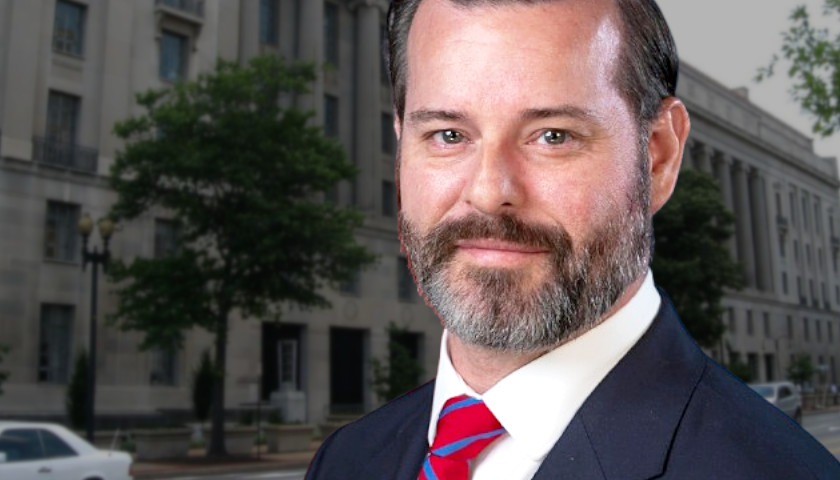

Erez Reuveni, the former U.S. Department of Justice (DOJ) attorney who was fired for failing to vigorously represent his client, and has since claimed to be a whistleblower by asserting that Trump administration officials planned to defy court orders, including related to the civil lawsuit brought against the Trump administration by Kilmar Abrego Garcia, told the New York Times in a new podcast appearance on Wednesday that he viewed it as his job to “make sure justice is done,” even if that means losing a court case.
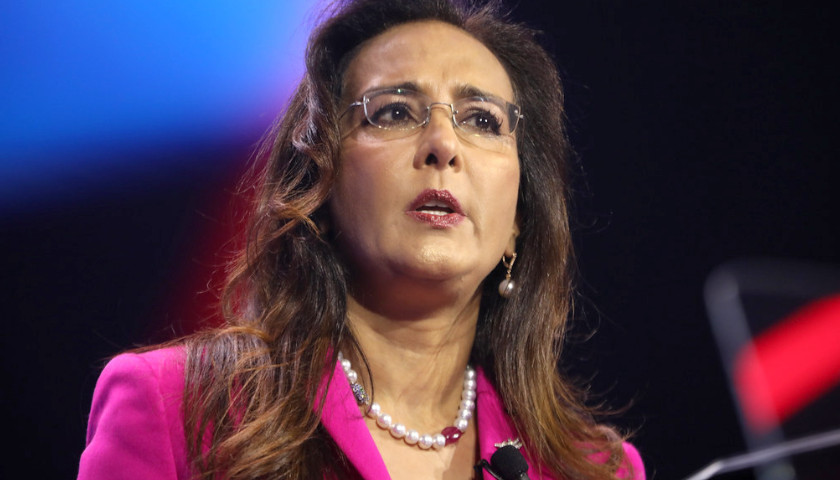
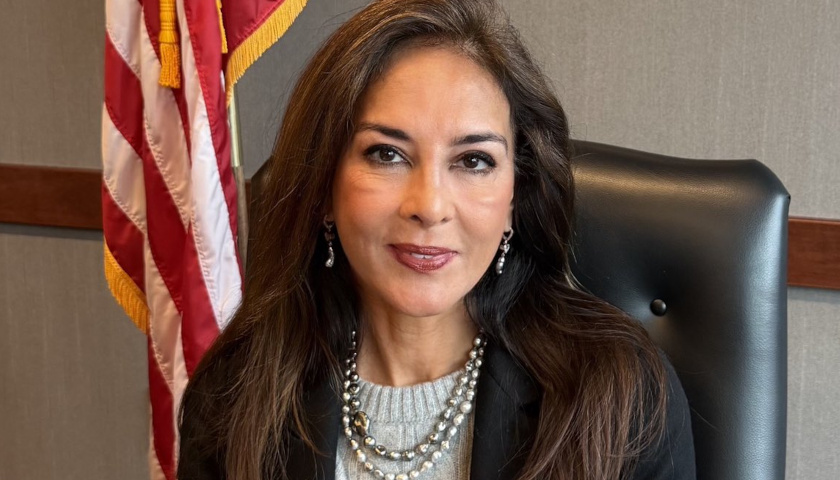
Speaking to Rachel Abrams (pictured above, left) for The Times‘ podcast, “The Daily,” Reuveni explained that he considers the role for DOJ lawyers to be defined from a 1935 court case.
“You’re standing up in court, you’re saying, ‘Reuveni on behalf of the United States,'” said the former DOJ attorney. “You’re here really representing the people of the United States, and the thing that I’ve always thought about when trying to explain, this is there’s this Supreme Court case from 1935, in which the Supreme Court tells you what it is to be a government lawyer.”
He told the corporate podcaster, “the role of the government attorney, the Supreme Court writes, is not simply to win. It’s to make sure justice is done. And that’s the thrill of standing up in court and saying your name on behalf of the United States.”
Though Reuveni (illustrated above, right) did not name the court case he said informed his view of what a government attorney is meant to do, he appeared to reference Berger v. United States, which was decided by the U.S. Supreme Court in 1935, after a criminal conviction was appealed based on a prosecutor’s actions at trial.
The high court found that in 1935 that a federal prosecutor, assigned to a criminal case, had acted improperly by misrepresenting information to the court, which included misstating evidence to the jury, aggressively questioning witnesses, and making unfounded claims, in a bid to secure a criminal conviction through “highly prejudicial” tactics.
Reuveni was notably not a criminal prosecutor prior to being fired. Rather, he most recently worked as the Acting Deputy Director for the Office of Immigration Litigation, part of the Civil Division, where he defended branches and individual members of the Trump administration against civil lawsuits.
With these differences, it is unclear how the former DOJ attorney applied the 1935 decision to his work as a civil litigator prior to being fired.
A potentially more relevant case, which Reuveni did not cite, is the similarly aged United States v. San Jacinto Tin Company, an 1888 decision by the Supreme Court that determined government attorneys, specifically the Attorney General of the United States, can institute civil lawsuits on behalf of the United States under the same principles as a private citizen, so long as the government has an interest in the outcome.
“But we are of opinion that since the right of the government of the United States to institute such a suit depends upon the same general principles which would authorize a private citizen to apply to a court of justice,” the court determined, adding that “the government must show that, like the private individual, it has such an interest in the relief sought as entitles it to move in the matter.”
The 19th century justices later further confirmed civil litigators representing the government have the same standing to sue as those representing private interests, writing in their majority opinion, “In short, if there does not appear any obligation on the part of the United States to the public, or to any individual, or any interest of its own, it can no more sustain such an action than any private person could under similar circumstances.”
Reuveni made other questionable statements during the roughly half-hour interview, including about Abrego Garcia. He was fired shortly after telling U.S. District Court Judge Paula Xinis that Abrego Garcia was wrongfully deported.
“This is a single individual who everyone agrees was wrongly removed to El Salvador when you had an order saying you cannot remove him to El Salvador because he faces persecution or torture there,” claimed Reuveni. “People get removed by mistake, and have throughout my time at DOJ, regardless of who the administration is, we always bring them back.”
As Reuveni indicated, Abrego Garcia is subject to a final deportation order with a withholding of removal that was issued in 2019.
However, Reuveni claimed the order applied to El Salvador, despite U.S. Immigration Court Judge David M. Jones repeatedly stating throughout his 2019 ruling that Abrego Garcia was specifically forbidden from being deported to Guatemala, not El Salvador, with the judge claiming his family relocated to the neighboring nation in an unsuccessful bid to avoid persecution by a Central American gang, Barrio 18.
The former DOJ attorney similarly brushed over allegations that Abrego Garcia is a member of the competing Central American gang, Mara Salvatrucha (MS-13), suggesting that the first time MS-13 was referenced in relation to the Abrego Garcia case was through an email from a DOJ employee who was appointed by President Donald Trump, which sought to ascertain whether the DOJ could refer to Abrego Garcia as “some sort of MS-13 leader.”
Reuveni claimed, “None of us had seen any evidence of that to day, even though we’d asked for it.”
While few have claimed Abrego Garcia held a leadership role within MS-13, which was named a terrorist organization earlier this year by the Trump administration, Abrego Garcia was arrested in 2019 while in the presence of alleged members of the gang, and his the father of his wife’s children claimed he was a member of the gang in a local court filing.
He also allegedly was wearing a hat associated with a specific branch of MS-13 when arrested in 2019, and more recently, Trump accused Abrego Garcia of having knuckle tattoos that represent the gang.
Additionally, Abrego Garcia denied any association with MS-13 as far back as 2019, when he was at one point denied bail over the allegation.
Reuveni additionally restated the key claim of his whistleblower complaint, in which he alleged that he witnessed DOJ officials plan to defy orders from three separate judges.
The former DOJ lawyer claimed he witnessed such plans be formed when the Trump administration used the Alien Enemies Act of 1798 to deport illegal immigrants accused of associating with criminal gangs, and when a ruling briefly prevented the Trump administration from deporting illegal immigrants to a third-party nation.
Reuveni’s third instance came when the court allegedly planned to defy the U.S. Supreme Court after it ruled the Trump administration must facilitate Abrego Garcia’s return to the United States.
An examination of all three examples actually reveals the Trump administration complied with the court orders, as the federal government ceased using the Alien Enemies Act after it was ordered to by the Supreme Court, while it won permission from the high court to continue deporting illegal immigrants to third-party nations.
In the case of Abrego Garcia, U.S. Attorney General Pam Bondi said that President Nayib Bukele of El Salvador agreed to help the Trump administration facilitate his return after she unsealed a federal human smuggling indictment which accuses him of spending nearly a decade as part of a criminal conspiracy.
The Tennessee Star was the first outlet to report that Abrego Garcia was stopped by Tennessee Highway Patrol (THP) in November 2022, and a THP spokesman later told The Star that Abrego Garcia was released by troopers at the instruction of the “Biden-era FBI,” while federal authorities have confirmed THP suspected him of human trafficking.
Abrego Garcia has pleaded not guilty to the federal charges. His trial is scheduled for January 27, 2026, though U.S. District Court Judge Waverly Crenshaw on Wednesday may have made it possible for Abrego Garcia to be deported instead.
Listen to Reuveni’s full appearance on “The Daily”:
– – –
Tom Pappert is the lead reporter for The Tennessee Star, and also reports for The Pennsylvania Daily Star and The Arizona Sun Times. Follow Tom on X/Twitter. Email tips to [email protected].
Photo “Rachel Adams” by Rachel Adams / NY Times and “Erez Reuveni” is by Erez Reuveni.