Retired attorney and legal commentator Mark Pulliam characterized the U.S. Supreme Court’s decision striking down President Trump’s use of the International Emergency Economic Powers Act (IEEPA) as a setback, but not a major one, pushing back on claims in some conservative circles that the ruling amounted to a betrayal or a catastrophic error.
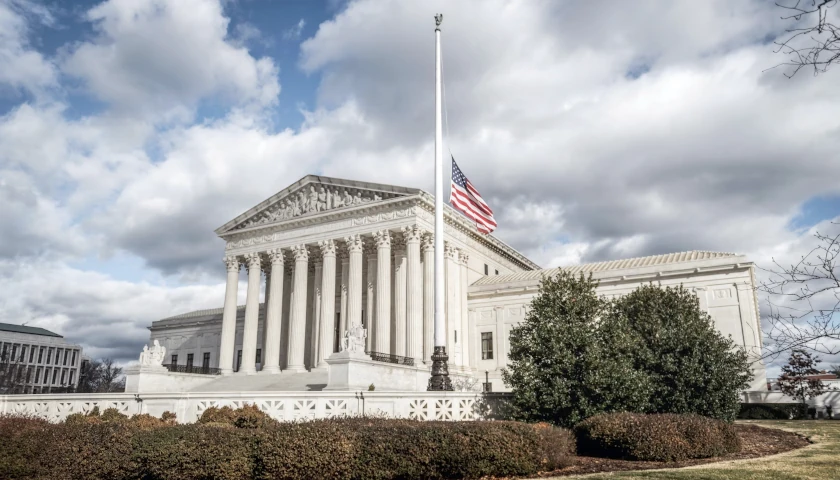
Last week, the Supreme Court held in Learning Resources Inc. v. Trump that the president exceeded his authority under the IEEPA, concluding the 1977 statute does not authorize broad, unilateral tariffs of “unlimited amount, duration, or scope.”
Chief Justice John Roberts authored the majority opinion, joined by Justices Sonia Sotomayor, Elena Kagan, Ketanji Brown Jackson, Neil Gorsuch, and Amy Coney Barrett. Justices Clarence Thomas, Samuel Alito, and Brett Kavanaugh dissented.
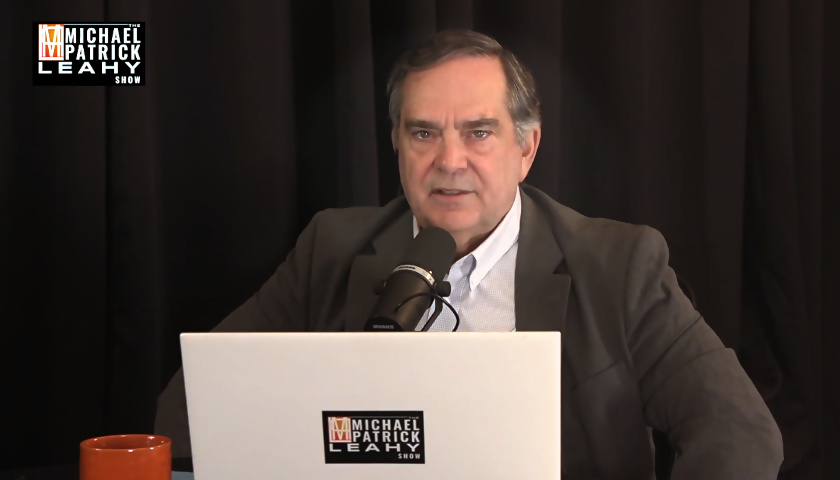
While he disagreed with the majority, Pulliam emphasized on Monday’s edition of The Michael Patrick Leahy Show, “I do not passionately disagree with it.”
“It was not as big a mistake, it was not as plainly wrong as let’s say Chief Justice Roberts’ Obamacare decision,” referencing the Court’s 2012 ruling in National Federation of Independent Business v. Sebelius.
Pulliam stressed that the ruling by the Supreme Court was not constitutional in nature but instead turned on statutory interpretation.
“It’s not a constitutional ruling. It doesn’t take any presidential powers away from President Trump. It’s simply a case of statutory interpretation,” he said, explaining that the IEEPA, “is not the statute that President Trump relied upon for the tariffs in his first term.”
He noted that Trump’s team made “a strategic decision to put all of his tariff eggs in one basket” in his second term because the emergency law allowed action “unfettered by requirements” and potentially “indefinitely.”
At the heart of the dispute, Pulliam said, was Congress’ authority under Article I of the U.S. Constitution.
“Taxation under Article I of the Constitution is a function that’s entrusted to Congress, not the president,” he explained. “If you read the law, it does not give him the ability to impose taxes, duties, tariffs. Those words are never even mentioned in the statute.”
Trump, he said, argued that the power to “regulate imports” implicitly included the power to impose tariffs, but “the court said no.”
Pulliam pushed back on claims that the three Republican-appointed justices in the majority acted in bad faith.
“Conservative judges can and do disagree about things in good faith,” he said.
He suggested the majority may have believed “the president had gone too far in asserting executive authority in an area that the Congress had not clearly authorized him to do,” and sought “to maintain the balance of power under the Constitution.”
Pulliam, however, argued that the practical consequences may be limited because Trump retains authority under other trade statutes.
“The president does have tariff authority under other statutes and has already asserted it,” he said, describing the ruling as “not the huge setback that many people were claiming it was.”
He cited Justice Kavanaugh’s dissent as making “a very powerful point” that the majority conceded the president could completely ban imports from certain countries under IEEPA, but “lacks the power to impose even a $1 tariff on those same imports.”
“That’s an anomaly,” he stressed,
If Congress disagrees with the Court’s reading, Pulliam said, the fix is simple as lawmakers “can and should fix [it] easily by sticking in there and saying, in addition to regulate, impose tariffs or tax or whatever.”
The fact that lawmakers are unlikely to act, he argued, “shows more the lack of will on the part of Congress than on some miscalculation on the part of President Trump.”
On the issue of potential refunds of previously collected tariffs, Pulliam echoed Treasury Secretary Scott Bessent’s position that the matter is far from settled.
“That’s not what the Supreme Court said,” Pulliam noted, adding that importers might be reluctant to seek repayment. “Many of these people that are importing products in the United States are going to be very reluctant to make President Trump mad. Because there will be consequences.”
Tune in now to The Michael Patrick Leahy Show – your AMERICA FIRST news talk!
– Watch LIVE here on X
– Watch LIVE on Roku
– Listen on Spotify
– Listen on WENO AM760 in Nashville
– Read more at @TheTNStarhttps://t.co/nUAaMPVn6f— Michael Patrick Leahy (@michaelpleahy) February 23, 2026
– – –
Kaitlin Housler is a reporter at The Tennessee Star and The Star News Network. Follow Kaitlin on X / Twitter.