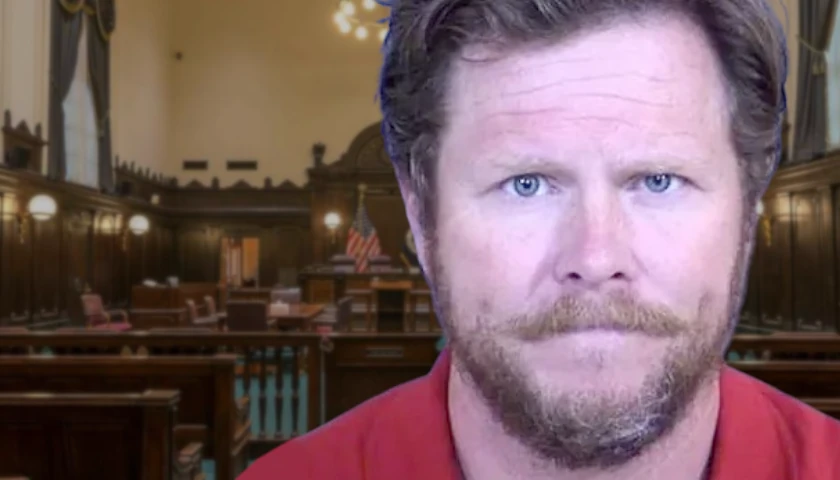
Conservative former Maricopa County Assessor Paul Petersen has developed kidney disease in prison. It was first diagnosed as stage 2 a few months ago, but has now progressed to stage 3b, which is generally irreversible. His family told The Arizona Sun Times that the 49-year-old lawyer, who previously chaired the Arizona Chapter of the International Association of Assessing Officers, where he was beloved, is on a catheter and has a painful blockage in his intestines, but despite serving five years in prison already, where he qualified for a halfway house, has not been released.
Petersen is serving time in prison related to his work helping mothers from the Marshallese Islands adopt their children out to American parents.
Tom Freestone, a longtime respected politician in Arizona who served as a judge, in the Arizona Legislature, and 10 years on the Pardon and Parole Board (later known as the Board of Executive Clemency), told The Sun Times that Petersen, who has no prior criminal history, is a “safe release” so should not remain imprisoned but released to home arrest.
“This reality is where he ought to be is with family. He is intelligent, and has a lot of degrees, and he lost a lot in this,” Freestone said. “And there comes a time when we need to let him become a good citizen, begin and help him for that, in that end. I think they should have probably put him on probation. He has a good family, a good safety net.”
Freestone noted the higher the education of a defendant, the more likely they are not to re-offend. Only 2 percent of college-educated people ever re-offend, he found as a judge, and that’s because they are addicted to drugs. Petersen has never had an addiction.
Petersen’s family told The Sun Times that he became a target of lawfare after the government of the Marshallese Islands complained to U.S. prosecutors in three states about his business, which was competing with their own adoption service. The government was charging more and providing less than Petersen for the service. Petersen had served on a mission to the Marshallese Islands when he was younger, so he’d gotten to know the culture and the language.
Although another adoption attorney in Hawaii was performing the same service, and nothing happened to her, prosecutors went after Petersen, including former Attorney General Tom Horne. They claimed it was “human trafficking,” even though the Marshallese Islands have a free association compact with the U.S., allowing their citizens to come and go freely to the U.S. without even a passport. Many of the mothers chose to remain in the U.S. after giving birth. Prosecutors only went after the adoptions involving a handful of mothers who returned to the Marshallese Islands — as if it made a difference whether they returned or not.
Due to the “human trafficking” scare words, prosecutors rushed to charge Petersen. However, they couldn’t agree on what charges to bring, because it was tricky getting charges to fit his adoptions. State prosecutors in Utah charged him with the sale of a child — even though that is also technically what adoption is. Federal prosecutors in Arkansas charged him with aiding and abetting the entry of an illegal alien for a commercial purpose — despite the free association compact.
State prosecutors in Arizona charged him with Medicaid fraud, since the hospitals routinely submitted the costs of the births to Medicaid for reimbursement. The law requires Medicaid to pay the costs of childbirth for low-income mothers. Petersen paid their other medical costs leading up to the births, and the insurance for the adoptive parents usually picked up the cost of the births. However, one baby suffered complications, costing $300,000, and since the baby eventually died, the parents were unable to adopt the child, and so their insurance did not cover the medical costs.
Arizona prosecutors claimed the $769,000 in Medicaid reimbursements was fraud. However, other Arizona defendants sentenced for Medicaid fraud received much lighter sentences. Johnwick Nathan, whose company made nearly $21 million from Medicaid fraud — far more than alleged against Petersen, and unlike Petersen, he received the money — was sentenced to only probation. No hospital was charged with fraud, even though they had processed the paperwork as a common routine practice and had pocketed the reimbursements.
Since Arizona prosecutors immediately seized all of his assets after he was arrested, Petersen had no way to defend himself against three different prosecutions in three states, so he accepted plea deals. Arizona prosecutors told him his sentence would be concurrent, but failed to follow through with the deal. As a result, even though his five-year sentences from Arkansas and Utah have been fully served concurrently, he is only now beginning his four-year Arizona prison sentence.
Despite the fact Petersen has been a model prisoner, Petersen’s family said that prison officials refused to allow him credits to allow him release to a halfway house as the First Step Act requires. He tutored other inmates so they could obtain their GEDs. He helped many penniless inmates with paperwork and programs to help reduce their sentences. He was chosen to be on a suicide watch team for prisoners who need to be carefully monitored. At least three January 6th fellow prisoners reached out to the family with their praise of his good deeds and positive influence. He paid off the $769,000 immediately. Violent and dangerous inmates serving time with him were released while his requests were denied.
Due to COVID, Petersen was forced to get the vaccine and the booster, his family said, and spent many days in isolation each time he was moved. He experienced over 300 days in either isolation or lockdowns. On one occasion, in Big Springs, Texas, he was placed in solitary confinement for 72 straight days, even though that was in non-compliance with prison rules.
For four years at that prison, there was no working kitchen, his family said, as it had been condemned due to mold. Soon after Petersen left, his whole 3-story unit was condemned, and all prisoners were moved to other prisons. He found out later that the water in the prison was bad, it could lead to kidney disease. His family members said they believe the poor diet contributed to kidney disease, since Petersen was healthy entering prison.
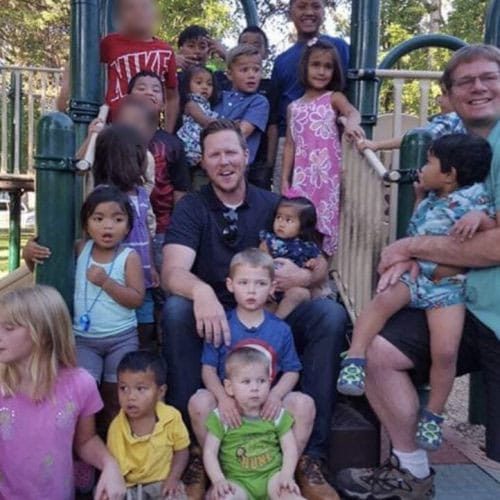
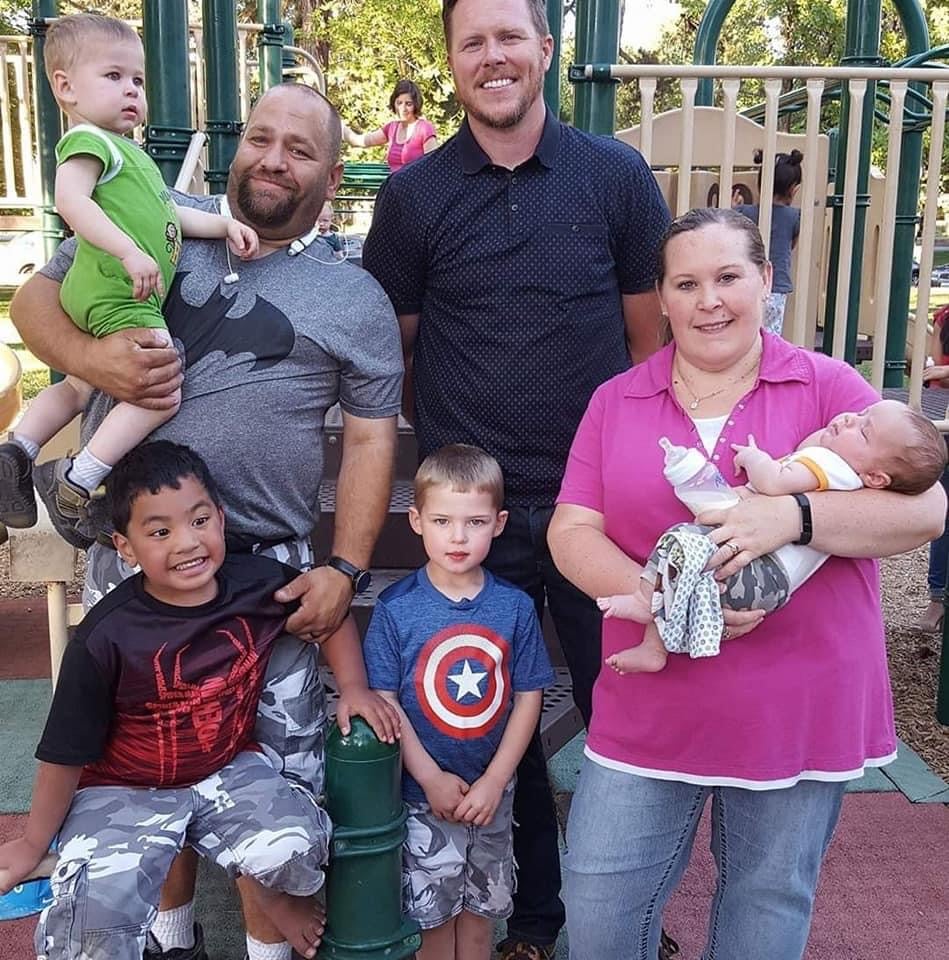
The adoptive parents posed with their new children in videos and spoke lovingly of Petersen’s adoption services. One mother said, “Paul cared about the birth families very much. He took a lot of pride in his relationship with them, and he loved them, and he wanted only the best for them. We love our birth parents. We have a good relationship with them. We do video calls with them and pictures, it was very apparent how much they loved their children, and they were doing this fully aware of what it was. They were choosing what they felt was best for their child.”
Another parent said, “Paul made it so that we could worry about very little, and he just made it so that we could focus at home on bringing the baby in. He did take care to make sure that the adoptive family knew the culture of the Marshallese people very well. He wanted us to be well educated. For Paul, you could tell that adoption was all about family. It was not about money, it wasn’t about greed. It was about bringing families together, and you could tell that that was something he genuinely loved.”
A third parent said, “We got a phone call that there was a little boy who was in the hospital, and he had Down syndrome and he was in heart failure, and the woman who called us, who was our case worker, said, you know, there’s nobody willing to take him, and you guys came to mind. So we called agencies, we called other lawyers, and the name that just kept being told to us was Paul Petersen. … His competency was exactly what we needed for this case.”
Utah prosecutors declined to call the Quiroz family to testify against Petersen once they realized they were going to refute their arguments against Paul, his family told The Sun Times. In a lengthy email, the parents described their good experience with the adoption process.
“The media has painted a much different picture of these adoptions than what I know them to be,” they said. “I do not feel a victim of Paul Petersen I feel a victim of the media. I feel victim of exaggerated words and manipulated stories. I was not impressed with how Attorney General Sean Reyes handled this case. Not long before this investigation, an article about Paul and the Marshallese adoptions. It was not flattering, and completely misunderstood. It basically said the women living in sub-par conditions, which I knew to be false.”
Tellingly, there were no victims named by any of the prosecutors in the three states.
Stage 3b is a moderate to severe stage of chronic kidney disease (CKD) where the kidneys function at a significantly reduced capacity. Without intervention, stage 3b CKD can progress to stage 4 or 5 (kidney failure), potentially requiring dialysis or transplant. It is generally not reversible, as the damage to the kidneys at this stage is severe and permanent.
Petersen’s family has started a petition for people to sign requesting that Arizona Governor Katie Hobbs pardon him, and a website at helppaulpetersen.com. The family is also attempting to get a pardon from President Trump, but since he has already served his time in federal prison, that would merely eliminate the probation and a $100,000 fine.
– – –
Rachel Alexander is a reporter at The Arizona Sun Times and The Star News Network. Follow Rachel on X/Twitter. Email tips to [email protected].