
by Emily Kopp
Families concerned about color additives in school lunches, at grocery stores and at fast-food counters can now reference a new Food and Drug Administration (FDA) website that tracks the actions of companies that have pledged to phase them out, the Daily Caller News Foundation has learned.
The Department of Health and Human Services (HHS) announced in April its push to eliminate six petroleum-based food dyes, or certified color additives, from the food supply, by the end of 2026.
A new “Natural Dye Pledge” website tracks progress by food manufacturers, retailers and trade associations to eliminate the six color additives: FD&C Green No. 3; FD&C Red No. 40; FD&C Yellow No. 5; FD&C Yellow No. 6; FD&C Blue No. 1; and FD&C Blue No. 2
 Nominated by President Donald Trump in March and officially sworn into the position in July, Edlow took the reins of an agency put to the brink amid following 8.5 million migrant encounters along the southern border during the Biden era. Although largely unfazed by what he uncovered, the immigration chief says he was still taken aback by his predecessors’ sheer apathy for weeding out fraud.
Prior to leading the agency, Edlow had served as chief counsel and deputy director of USCIS during President Donald Trump’s first term in office. In July, he returned to a backlog of asylum cases that dwarfed the numbers he previously dealt with.
“We had about 450,000 cases that were pending on the asylum active docket,” Edlow said of the end of Trump’s first term. “When I got back, there were over 1.5 million cases.”
“Does anything surprise on me what they were doing? Yeah, what surprised me is they weren’t doing much,” he continued. “We already knew that there was a misalignment of priorities and resources, but that became painfully obvious that really USCIS was acting as kind of the the arm of the administration to help maneuver the parole programs, to do what they could on credible fear and to ultimately try to address the growing border crisis that the Bidens have created.”
Americans are painfully aware of the illegal immigration crisis that raged during most of President Joe Biden’s tenure.
Fiscal years 2023 and 2024 were the worst and second worst years, respectively, for inadmissible border encounters in history, according to Customs and Border Protection data, leading to an incredible strain of resources at border communities and major U.S. cities. Altogether, the Biden administration oversaw more than eight million migrant encounters along the U.S.-Mexico border during its four fiscal years in office.
Record-level immigration into the U.S. inevitably correlated to a monumental uptick in asylum claims, which are largely processed by USCIS.
There were roughly 311,000 pending affirmative asylum claims in January 2018, according to a Department of Homeland Security Inspector General report. By the end of fiscal year 2022 — well into Biden’s tenure — this number nearly doubled to 625,000. By 2024, the backlog of affirmative asylum cases surpassed one million for the first time in history.
Affirmative asylum claims are distinct from defensive asylum claims in that they are lodged by foreign nationals already in the U.S. and not in deportation proceedings, according to USCIS. Defensive asylum claims are made by those already undergoing removal.
As illegal immigration skyrocketed, leaving federal immigration agents and local officials scrambling to keep up, the Biden administration implemented a slate of programs that GOP critics characterized as amnesty run-arounds to alleviate the terrible optics taking place at the Mexico border.
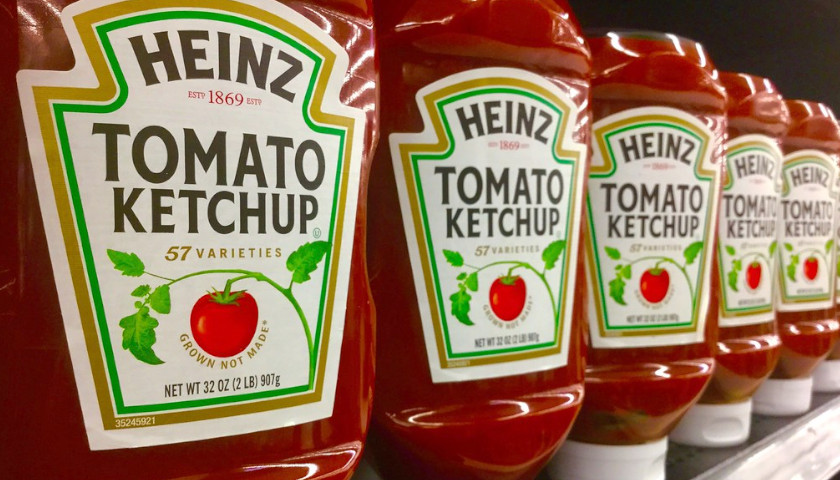
Companies with pledges to substitute petrochemical dyes with natural ingredients include the manufacturers of some of the most recognizable brands in American grocery stores, including Mars, Inc.; McCormick & Company, Inc.; Nestlé S. A; Pepsi Co. Inc.; The Hershey Company; and The Kraft Heinz Company.
The tracker describes In-N-Out Burger’s goal to eliminate food dyes from strawberry shakes and lemonade as “complete.” It also describes other pledges — such as a pledge by Mars, Inc. to offer non-color additive versions of M&M’s and Skittles by 2026 — as “in progress.”
“Parents and doctors have concerns about petroleum-based food dyes, which have no nutritional benefit,” said FDA Commissioner Marty Makary in a statement. “Given the epidemic we face of childhood diabetes, obesity, depression and ADHD, it’s common sense to work together to remove these chemicals as part of our broader effort to work to improve children’s healthy eating patterns.”
We’ve not been talking about root causes in healthcare…why do a third of our nation’s children now have pre-diabetes or diabetes? We’ve got to talk about school lunch programs, not just putting every 6-year-old on Ozempic. pic.twitter.com/3B1La2UEjf
— Dr. Marty Makary (@DrMakaryFDA) July 11, 2025
Had a chance to talk with @MajorCBS on The Takeout about the problems with petroleum-based food dyes. The FDA is responding to the science and to public demand and have asked food companies to remove these from the U.S. food supply. They are moving quickly to do so. pic.twitter.com/t99cUMqg6I
— Dr. Marty Makary (@DrMakaryFDA) June 20, 2025
Synthetic food dyes derived from petroleum are used in food products to make them more visually appealing, especially in products marketed to children.
Their consumption is widespread. A 2016 study found that approximately 94% of people over two years of age in the U.S. consumed Red Dye 40.
But they have also been associated with a number of health risks, including neurobehavioral impacts in children, carcinogenic potential, genotoxicity and gastrointestinal effects, according to a scientific review provided to reporters by HHS in April.
– – –
Emily Kopp is a reporter at Daily Caller News Foundation.