
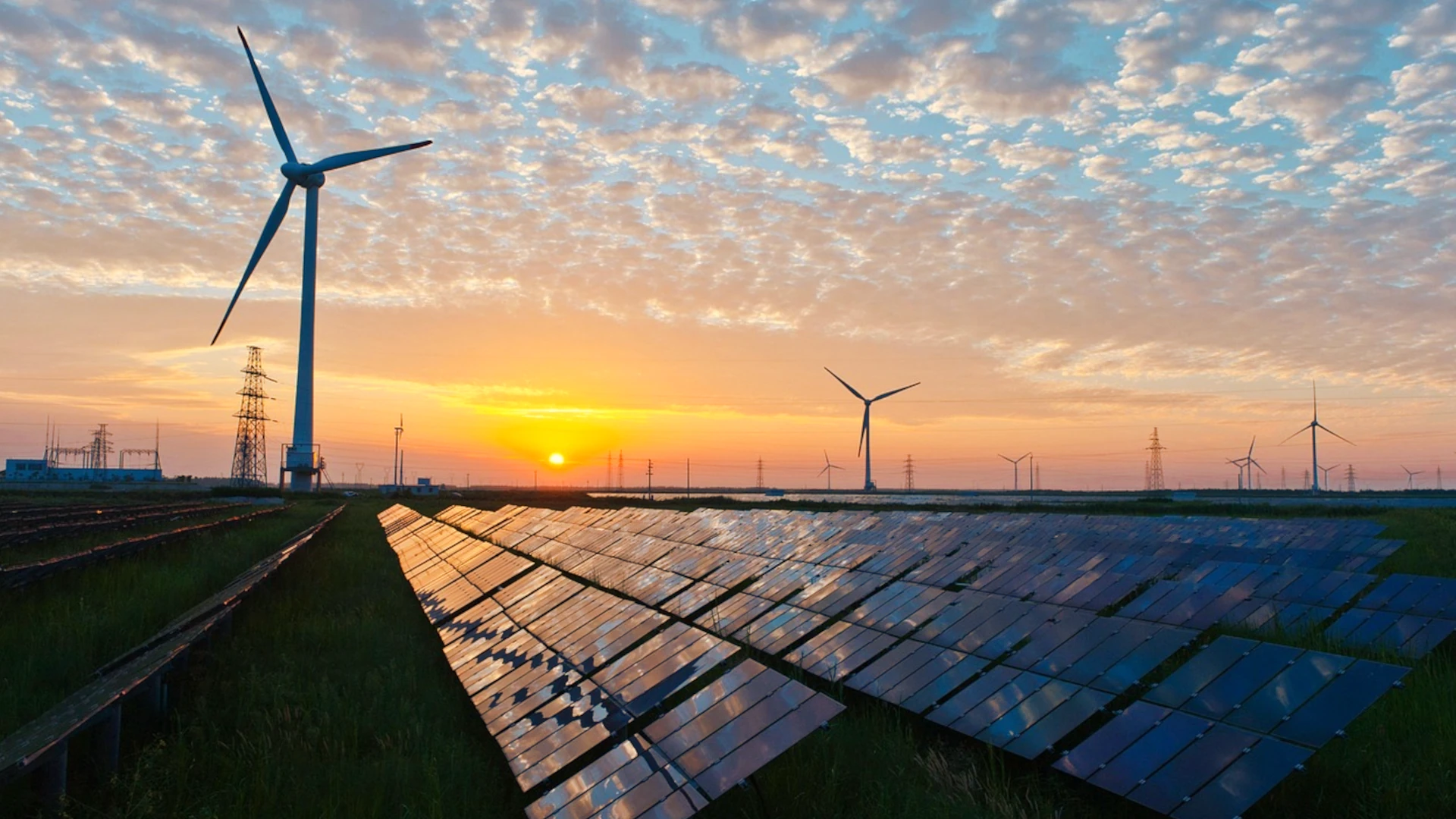
A new report analyzing electric utility Arizona Public Service’s “Net Zero” Preferred Plan, which was approved by the Arizona Corporation Commission (ACC) last year, found that the plan to eliminate carbon dioxide emissions caused by fossil fuels by 2038 will increase prices for ratepayers by at least 45 percent and cause blackouts. The Arizona Free Enterprise Club and AZ Liberty Network issued their findings last week about the aggressive plan to switch to solar and wind power.
The report, authored by Isaac Orr and Mitch Rolling, co-founders of Always On Energy Research (AOER), emphasized, “The most important thing to know about Arizona Public Service (APS) is that it is not a private company, it is a government-approved monopoly utility.” Families who live within its territory do not have any other option for electricity.
AOER noted that the radical agenda was adopted “not in response to legislation passed by Arizona lawmakers or policies set by the Arizona Corporation Commission (ACC), but rather to meet the company’s self-imposed Net Zero by 2050 and Environmental and Social Governance (ESG) goals.”
The report found that the APS Preferred Plan would increase energy costs by at least 6.23 cents per kWh, raising annual electricity costs for the average American family by at least $1,620 annually. Currently, the cost of electricity through APS is slightly less than the nation’s average.
In order to avoid rolling blackouts, AOER said APS would need to increase energy efficiency up to nine times the current amount. Otherwise there will be “multiple rolling blackout events from July 20-23, 2038, with the two largest lasting for 11 and 9 hours, respectively, due to low wind and solar output.”
One section of the report is titled “How Perverse Profit Motives Drive APS’s Green Goals.” The ACC sets the rates that APS and similar utilities may charge, allowing them to make as much as 5 to 10 percent in profits on their capital investments. This lets them “make a profit on every dollar they spend on new builds such as wind turbines, solar panels, natural gas plants, or even renovating corporate offices,” the report said. As a result, “The more money APS spends, the more money it will make for its shareholders at the expense of ratepayers.”
The other negative incentive involves depreciation, the report said. Once APS has paid off the cost of a plant, it can no longer profit from it as a capital expense, so an incentive is created to get rid of the plant, “even though these power plants now provide the lowest-cost, most reliable power to its customers.”
In order to claim that their program is low cost, the report said APS uses figures from California — known for rolling blackouts due to its dependency on unreliable energy sources — consisting of that state’s price on carbon dioxide emissions, plus Inflation Reduction Act (IRA) subsidies. AOER criticized the methodology, “These distortions hide the true cost of the IRP and allow APS to prioritize its self-imposed Net Zero decarbonization goals over providing reliable service at the lowest possible cost to ratepayers, while generating $16.7 billion in additional profits for the utility’s shareholders.”
At the same time APS intends to shutter its fossil fuel plants, energy usage is increasing due to new data centers opening up, electrical vehicle charging stations increasing, and new manufacturing industries. APS projected a 4.7 percent increase in energy usage by 2038. This will increase peak demand from 8.1 GW to 13.2 GW, the report said. Currently, APS isn’t even meeting its peak demand, fulfilling only 92 percent of it, and by 2038 that could dip to 60 percent, the report said.
Commercial and industrial customers would see monthly increases by 2038 of $454 and $4,640 respectively, AOER said.
The report also found it troubling that “the costs associated with battery storage, gas peaking plants, and overbuilding and curtailment increase dramatically because the amount of wind, solar, and battery storage must be ‘overbuilt’ to account for the intermittency of wind and solar.”
AOER said a cost-benefit analysis must be conducted. “If the costs of reducing emissions exceed the expected benefits, the policy does not make sense to enact,” the report said. A graph in the report showed that “the cost of reducing carbon dioxide emissions under the Preferred Plan far exceeds the benefits of doing so.”
The report concluded, “APS is imposing a net harm on its ratepayers after accounting for the impacts of climate change.”
AOER recommended instead that APS keep its coal plants and build new natural gas plants, which would cost far less and save $21.9 billion. Their model would meet 98 percent of peak demand.
The APS plan was approved last year despite Republicans holding a majority of the seats on the ACC. Republicans now hold all five seats on the ACC. The only candidate for the ACC who ran on a platform of ending ESG last year, Christy Kelly, did not make it onto the ballot.
– – –
Rachel Alexander is a reporter at The Arizona Sun Times and The Star News Network. Follow Rachel on Twitter / X. Email tips to [email protected].




Once again, Liberals just cannot apply common sense to the “I want it to be world” they live in. Like the green new deal, IF they get what they want, a lot of energy will be saved. If you cannot product enough, you will save a great deal. THEN the problem will be the lack of energy and the effect on their lives, Then we will be looking at a new problem, that of course THEY will be the only ones to solve. If you do not believe it, just ask them.